
Why China wanted to build the Sky River across the Tibetan Plateau

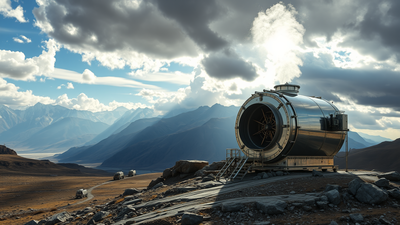
In 2018, Chinese state media announced one of the most ambitious weather engineering projects ever proposed, an attempt to build a permanent airborne water corridor across the Tibetan plateau. Named Tianhe, meaning sky river, the plan aimed to use tens of thousands of fuel burning cloud seeding chambers scattered across an area roughly the size of Alaska, seeding clouds with silver iodide in the hope of diverting monsoon moisture from the Indian Ocean toward China’s drier northern regions. The scheme was billed as a way to add several billion cubic metres of extra rainfall to the country’s water supply every year. Yet years after it was first announced, Tianhe has never come close to delivering on that promise, and the story of why says a lot about the real limits of controlling the weather.
What the sky river project actually promised
The Tianhe project grew out of research at Tsinghua University and was developed further by China’s state owned Aerospace Science and Technology Corporation, the same defence contractor also involved in China’s lunar exploration programme and space station construction. The plan called for covering roughly 1.6 million square kilometres of the Tibetan plateau, an area about three times the size of Spain, with a network of ground based chambers that would burn solid fuel to release silver iodide particles into passing clouds, encouraging moisture to condense and fall as rain or snow closer to where officials wanted it. Backers of the scheme said it could eventually funnel between five and ten billion cubic metres of extra water each year into the Yellow River basin, water that officials hoped would ease chronic shortages across China’s arid north.
Why the Tibetan plateau was chosen as the target
The Tibetan plateau sits at the centre of the plan for good reason, it is often nicknamed Asia’s water tower, since it feeds the headwaters of several of the continent’s largest rivers and supplies fresh water to close to two billion people across the wider region. According to a study published in Scientific Reports examining cloud microphysics over the plateau, its high altitude and unusually clean atmosphere create distinct ice formation and riming processes inside clouds passing overhead, conditions the researchers suggested could make the region unusually efficient at converting airflow into precipitation. This is precisely the kind of natural process planners behind Tianhe hoped to nudge along artificially, seeding clouds already primed to produce rain rather than trying to conjure moisture out of dry air that had none to begin with.
Why scientists were sceptical from the very start
Even as officials pushed ahead, independent researchers raised serious doubts about whether a project on this scale could ever work as intended. According to the World Meteorological Organization’s official statement on weather modification, the organisation neither promotes nor discourages weather modification, but stresses that any credible project must be built on scientifically sound research and rigorous evaluation of results, something critics said Tianhe’s rapid, headline driven rollout never properly established. Geoengineering researchers pointed out that cloud seeding does not create new water out of thin air, it can only redistribute moisture that would likely have fallen somewhere else, meaning any gain for northern China risked coming at the expense of rainfall over neighbouring countries including India, Nepal, Myanmar and Laos, several of which share river systems originating on the same plateau.
The gap between ambition and evidence
Cloud seeding itself is not new technology, China has used various forms of it for around sixty years, mostly for modest, localised goals like easing regional droughts or clearing skies ahead of major events such as the 2008 Beijing Olympics. What set Tianhe apart was simply its scale, attempting to influence weather patterns across an area comparable to an entire country rather than a single valley or city, a leap that far outpaced the scientific evidence available to support it. Verifying whether cloud seeding actually works at all remains difficult even in small, controlled trials, since meteorologists cannot easily prove that rain that did fall would not have fallen anyway without any intervention, and this basic measurement problem becomes almost impossible to solve once a project is stretched across a region as vast and climatically complex as the Tibetan plateau.
What the sky river’s stalled progress reveals
Years on from its initial announcement, Tianhe remains far short of the fully realised, permanent moisture corridor officials once described, even as China has continued expanding its broader weather modification efforts across other parts of the country. The project’s struggles offer a useful lesson about the boundaries of large scale geoengineering more generally, ambitious plans to redirect entire weather systems tend to run headlong into the same basic problem, the atmosphere is an enormously complex, interconnected system that does not take kindly to being redirected at the scale and precision such projects usually promise. For a country that has shown a consistent willingness to pursue extraordinarily large infrastructure solutions to its climate and water problems, Tianhe stands as a reminder that not every environmental challenge can simply be engineered away, no matter how much money or ambition is thrown at it.


