
The NCLT’s Mumbai Bench admitted the insolvency plea in August 2024 over a claimed default of Rs 87.43 crore, and the NCLAT later upheld the order. NEW DELHI: The Supreme Court on Thursday underscored the need to regulate the use of artificial intelligence in judicial proceedings, noting that unverified AI-generated material could undermine the administration of justice.Directing the Bar Council of India (BCI) to set up a committee to examine the use of AI in legal practice and adjudication, the court said there was a clear need for regulatory safeguards. It also urged both the Bar and the Bench to exercise caution while using such technology.The court observed that while AI can assist in adjudication, it should not replace human reasoning or decision-making. It emphasised that human oversight must remain central at every stage of the judicial process.Raising concerns about the use of fabricated or non-existent AI-generated legal precedents, the court warned that such material could adversely affect the integrity of the justice system. Describing the use of fake, non-existent and AI-generated hallucinated legal precedents as “invisible, insidious and catastrophic” to justice, the court likened it to “the release of methyl isocyanate (a highly toxic, flammable, and volatile organic compound) in the field of law and justice”.The observations came while the apex court set aside the National Company Law Tribunal (NCLT) and National Company Law Appellate Tribunal (NCLAT) orders in the Essel Infraprojects insolvency case after finding that the NCLT had relied on non-existent, fake and AI-generated hallucinated judicial precedents while deciding the matter. The court held that such reliance strikes at the integrity of the adjudicatory process and warranted fresh consideration of the dispute.Why the Supreme Court set aside the Essel Infraprojects ordersA bench of justices PS Narasimha and Alok Aradhe was hearing an appeal filed by suspended director Pooja Ramesh Singh against the NCLT’s decision admitting Essel Infraprojects into the corporate insolvency resolution process on a petition filed by Jammu and Kashmir Bank under Section 7 of the Insolvency and Bankruptcy Code.The insolvency proceedings arose from an alleged default linked to a Rs 200 crore credit facility extended by Jammu and Kashmir Bank to Pan India Utilities Distribution Company Limited. The loan was backed by a corporate guarantee from Essel Infraprojects and a mortgage over land in Gorai, Borivali, Mumbai.The NCLT’s Mumbai Bench admitted the insolvency plea in August 2024 over a claimed default of Rs 87.43 crore, and the NCLAT later upheld the order.However, the Supreme Court found that the NCLT had relied on fabricated and non-existent AI-generated judgments as legal precedents while reaching its conclusion.Holding that such reliance cannot be tolerated, the Bench said, “It is necessary for Courts to adopt a zero-tolerance mode for producing, citing or using AI-generated precedents without verification. It is a misconduct on the part of an advocate to cite such judgments without verification.”The court further said it was an equally serious lapse if judges relied on fake or hallucinated AI-generated material while deciding cases.”We have no hesitation in declaring that such a decision is no decision in the eyes of the law, irrespective of whether such material had a direct or indirect bearing on the decision-making. Such decisions are to be set aside even if an iota of fake or hallucinated material enters the decision-making process, as it would violate the sanctity of adjudication,” the Bench observed.Accordingly, the Supreme Court set aside both the NCLT and NCLAT orders and directed the tribunal to decide the matter afresh on the facts of the case.Clarifying the scope of its ruling, the court said it was not examining the technical reasons behind AI hallucinations or ways to eliminate them. Those issues, it said, were for engineers and scientists. The judiciary’s concern was the use of fake, non-existent AI-generated material as legal precedents.Get the latest India news and live updates. Download the TOI App.About the AuthorTOI News DeskThe TOI News Desk comprises a dedicated and tireless team of journalists who operate around the clock to deliver the most current and comprehensive news and updates to the readers of The Times of India worldwide. With an unwavering commitment to excellence in journalism, our team is at the forefront of gathering, verifying, and presenting breaking news, in-depth analysis, and insightful reports on a wide range of topics. The TOI News Desk is your trusted source for staying informed and connected to the ever-evolving global landscape, ensuring that our readers are equipped with the latest developments that matter most.”Read MoreEnd of ArticleFollow Us On Social MediaVideosVijay Govt Challenges Madras HC’s Cow Slaughter Ban Verdict In SCCong Retains Raja Warring As Punjab Chief, Appoints Channi To Head Campaign CommitteeRussia Turns To India For Gasoline Amid Fuel Shortages Triggered By Ukraine Attacks’Highly Deplorable’: India Slams Pakistan Over Demolition Of 125-Year-Old Gurdwara In FarooqabadHealth Concerns Mount As Sonam Wangchuk’s Blood Sugar Falls, Weight Drops As Fast ContinuesDMK Seeks FIR Against CM Vijay, Alleges Plot To Induce MLAs And Alter Assembly NumbersCongress Claims BJP in West Bengal “Will Be Equally Aggressive”; MP Sparks Debate On GovernanceIran Invites BJP Chief Nitin Nabin, Congress Prez Kharge, Pawan Khera To Khamenei’s Funeral: ReportModi Cabinet Reshuffle Buzz: Will NDA Allies And Rebel MPs Find A Place In The Union Cabinet?Three Arrested, Senthil Balaji Under Scanner In Alleged TVK Government Toppling Bid123PhotostoriesOptical illusion: This is not just a woman talking on the phone; only 2% of people can spot all ‘four women’ hidden in this sketchStrength training after 50: 4 simple at-home workouts can build real strength without any fancy gym equipmentSuccess quote of the day by Yash: ‘Don’t let failure or success affect you’Psychology says children stop sharing problems after parents repeatedly do these 7 thingsYour kitchen scrubber could be dirtier than your toilet: Here’s when to replace itHouse names inspired by flowers, rivers and mountains that feel unique, elegant and timelessCould that ‘viral fever’ actually be malaria? Experts explain why the two conditions are often mixed upWhat would you do? My gym trainer keeps messaging me after workouts; here’s what these 5 women did nextFrom Serena Williams to David Beckham: The watches A-listers have been wearing at Wimbledon 2026Can you spot the odd bee? This viral brainteaser claims only people with sharp vision can solve it quickly123Hot PicksTrump tariffsPF withdrawalEPF Scheme 2026Delhi hit-and-runWeather tomorrowMumbai rainDelhi rainMicrosoft layoffsAisha FarooqiTop TrendingCapgemini BengaluruDelhi Hit and RunBengaluru Triple MurderFIFA World Cup 2026EPF Scheme 2026US Iran warAnukalp MishraSergei IvanovIndigo Check-in Bag FaresAyodhya Ram Temple Donation Theft

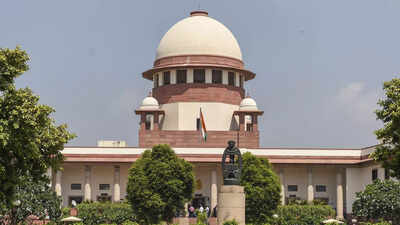
NEW DELHI: The Supreme Court on Thursday underscored the need to regulate the use of artificial intelligence in judicial proceedings, noting that unverified AI-generated material could undermine the administration of justice.Directing the Bar Council of India (BCI) to set up a committee to examine the use of AI in legal practice and adjudication, the court said there was a clear need for regulatory safeguards. It also urged both the Bar and the Bench to exercise caution while using such technology.The court observed that while AI can assist in adjudication, it should not replace human reasoning or decision-making. It emphasised that human oversight must remain central at every stage of the judicial process.Raising concerns about the use of fabricated or non-existent AI-generated legal precedents, the court warned that such material could adversely affect the integrity of the justice system. Describing the use of fake, non-existent and AI-generated hallucinated legal precedents as “invisible, insidious and catastrophic” to justice, the court likened it to “the release of methyl isocyanate (a highly toxic, flammable, and volatile organic compound) in the field of law and justice”.The observations came while the apex court set aside the National Company Law Tribunal (NCLT) and National Company Law Appellate Tribunal (NCLAT) orders in the Essel Infraprojects insolvency case after finding that the NCLT had relied on non-existent, fake and AI-generated hallucinated judicial precedents while deciding the matter. The court held that such reliance strikes at the integrity of the adjudicatory process and warranted fresh consideration of the dispute.
Why the Supreme Court set aside the Essel Infraprojects orders
A bench of justices PS Narasimha and Alok Aradhe was hearing an appeal filed by suspended director Pooja Ramesh Singh against the NCLT’s decision admitting Essel Infraprojects into the corporate insolvency resolution process on a petition filed by Jammu and Kashmir Bank under Section 7 of the Insolvency and Bankruptcy Code.The insolvency proceedings arose from an alleged default linked to a Rs 200 crore credit facility extended by Jammu and Kashmir Bank to Pan India Utilities Distribution Company Limited. The loan was backed by a corporate guarantee from Essel Infraprojects and a mortgage over land in Gorai, Borivali, Mumbai.The NCLT’s Mumbai Bench admitted the insolvency plea in August 2024 over a claimed default of Rs 87.43 crore, and the NCLAT later upheld the order.However, the Supreme Court found that the NCLT had relied on fabricated and non-existent AI-generated judgments as legal precedents while reaching its conclusion.Holding that such reliance cannot be tolerated, the Bench said, “It is necessary for Courts to adopt a zero-tolerance mode for producing, citing or using AI-generated precedents without verification. It is a misconduct on the part of an advocate to cite such judgments without verification.”The court further said it was an equally serious lapse if judges relied on fake or hallucinated AI-generated material while deciding cases.“We have no hesitation in declaring that such a decision is no decision in the eyes of the law, irrespective of whether such material had a direct or indirect bearing on the decision-making. Such decisions are to be set aside even if an iota of fake or hallucinated material enters the decision-making process, as it would violate the sanctity of adjudication,” the Bench observed.Accordingly, the Supreme Court set aside both the NCLT and NCLAT orders and directed the tribunal to decide the matter afresh on the facts of the case.Clarifying the scope of its ruling, the court said it was not examining the technical reasons behind AI hallucinations or ways to eliminate them. Those issues, it said, were for engineers and scientists. The judiciary’s concern was the use of fake, non-existent AI-generated material as legal precedents.


