
The Indian Air Force commemorated its pivotal role on December 5, 1971, the third day of the war. IAF operations crippled Pakistan’s western defenses and devastated enemy airfields. In the east, air superiority paved the way for India’s rapid advance, leading to Bangladesh’s birth. The Battle of Longewala also saw IAF Hunters decisively halt a Pakistani armored thrust, securing Jaisalmer. Image posted by @IAF_MCC NEW DELHI: The Indian Air Force (IAF) on Thursday marked the historic air operations carried out on December 5, the third day of the 1971 war, underscoring how air power proved decisive in shaping the conflict’s outcome and paving the way for India’s victory and the creation of Bangladesh.In a post on X, the IAF recalled its strike on the Sakesar radar station, which crippled Pakistan’s key western air defences for two days.“On the third day of the 1971 war, the IAF was everywhere the enemy looked — and many places where they didn’t expect. Hunters tore through Drigh Road and Karachi, smashing storage hangars. Canberras kept up relentless pressure, delivering 1,44,000 lbs of ordnance across four major airfields,” the post said.The IAF added that 132 missions were flown on the western front, with An-12s and Canberras “raining devastation on enemy concentrations.” On the eastern front, with the Pakistan Air Force effectively grounded, 104 offensive sorties by the IAF cleared the way for the Indian Army’s rapid march into East Pakistan, ultimately leading to the birth of Bangladesh.It also recalled the legendary Battle of Longewala, fought from December 4 to 7, 1971, in Rajasthan’s Longewala sector, where heavily outnumbered Indian troops held their ground against a major Pakistani assault — a defence in which the IAF also played a crucial role.“Four Hunters rewrote history — shattering an enemy armoured thrust and leaving 27 tanks destroyed and 10 more damaged. Jaisalmer stood safe because air power arrived when it mattered,” the post highlighted.The 1971 India–Pakistan war began on December 3 with Pakistan launching pre-emptive strikes on Indian air bases amid the Bangladesh Liberation War in East Pakistan. The conflict ended on December 16 with Pakistan’s defeat, the surrender of 93,000 troops — the largest military capitulation since World War II — and the emergence of Bangladesh as an independent nation.About the AuthorTOI News DeskThe TOI News Desk comprises a dedicated and tireless team of journalists who operate around the clock to deliver the most current and comprehensive news and updates to the readers of The Times of India worldwide. With an unwavering commitment to excellence in journalism, our team is at the forefront of gathering, verifying, and presenting breaking news, in-depth analysis, and insightful reports on a wide range of topics. The TOI News Desk is your trusted source for staying informed and connected to the ever-evolving global landscape, ensuring that our readers are equipped with the latest developments that matter most.”Read MoreEnd of ArticleFollow Us On Social MediaVideosPM Modi, Putin Share Another Car Ride, Russian President Says It Was His Idea To Show FriendshipPutin Sends Strong Message Backing India’s Anti-Terror Stand, Hails Modi For Rising Global Influence“Never Going With RJD Again” Nitish Kumar’s Sharp Swipe At RJD Bloc In AssemblyPM Modi Welcomes President Putin With Warm Hug Ahead Of India-Russia SummitHugs, Handshakes & High Diplomacy: Modi-Putin Bond Defines India-Russia SummitShashi Tharoor Says Strengthening Russia Ties Won’t Affect Relations With US, China‘Light Of My Life’ Swaraj Kaushal Passes Away At 73; Daughter Bansuri Pays Heartfelt TributePM Modi Breaks Protocol, Receives Vladimir Putin With A Hug, Shares Car In Big India-Russia MomentPutin Visit To Boost India-Russia Trade To New Highs, Says WTC ChairmanPiyush Goyal Hails Russia As India’s Trusted Friend, Urges Removal Of Trade Barriers123PhotostoriesLemon water do’s & don’ts: Who shouldn’t drink it and the healthiest way to have it5 red fruits that are natural heart protectors6 signs your soul is quietly preparing to complete its earthly journeyThese 7 things on your child’s study table can help them learn better7 desi foods that can help reverse fatty liver: Lost recipes insideAishwarya Rai Bachchan’s double style tsunami at Red Sea International Film FestivalHow Bhagavad Gita can heal unknown childhood trauma and unlock blockages for success in life5 famous paintings whose original version is no longer availableBaby names for girls born on Friday9 Durga Mantras According To Your Date of Birth123Hot PicksIndigo Flight DelayPutin India VisitWorld NewsGold rate todaySilver rate todayPublic Holidays NovemberBank Holidays NovemberTop TrendingAUS vs ENG LiveLos Angeles LakersJoe RoganCandace OwensAryna SabalenkaDak PrescottTravis KelceKobe BryantJohan OviedoJohan Oviendo
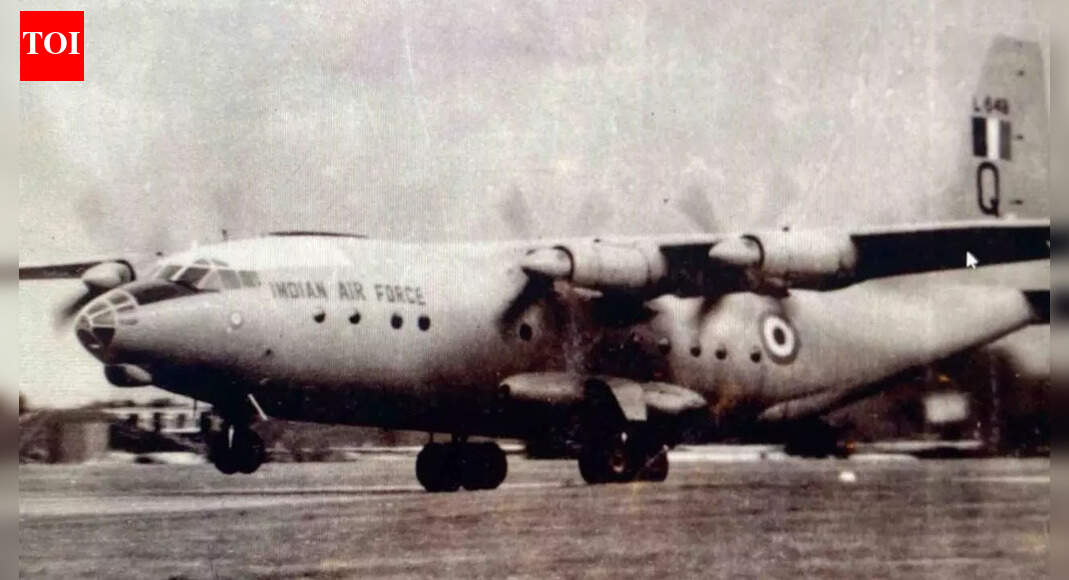

NEW DELHI: The Indian Air Force (IAF) on Thursday marked the historic air operations carried out on December 5, the third day of the 1971 war, underscoring how air power proved decisive in shaping the conflict’s outcome and paving the way for India’s victory and the creation of Bangladesh.In a post on X, the IAF recalled its strike on the Sakesar radar station, which crippled Pakistan’s key western air defences for two days.“On the third day of the 1971 war, the IAF was everywhere the enemy looked — and many places where they didn’t expect. Hunters tore through Drigh Road and Karachi, smashing storage hangars. Canberras kept up relentless pressure, delivering 1,44,000 lbs of ordnance across four major airfields,” the post said.The IAF added that 132 missions were flown on the western front, with An-12s and Canberras “raining devastation on enemy concentrations.” On the eastern front, with the Pakistan Air Force effectively grounded, 104 offensive sorties by the IAF cleared the way for the Indian Army’s rapid march into East Pakistan, ultimately leading to the birth of Bangladesh.It also recalled the legendary Battle of Longewala, fought from December 4 to 7, 1971, in Rajasthan’s Longewala sector, where heavily outnumbered Indian troops held their ground against a major Pakistani assault — a defence in which the IAF also played a crucial role.“Four Hunters rewrote history — shattering an enemy armoured thrust and leaving 27 tanks destroyed and 10 more damaged. Jaisalmer stood safe because air power arrived when it mattered,” the post highlighted.The 1971 India–Pakistan war began on December 3 with Pakistan launching pre-emptive strikes on Indian air bases amid the Bangladesh Liberation War in East Pakistan. The conflict ended on December 16 with Pakistan’s defeat, the surrender of 93,000 troops — the largest military capitulation since World War II — and the emergence of Bangladesh as an independent nation.


