
She was fighting to breathe while carrying her unborn child; then came 2 cardiac arrests, an emergency airlift and a lung transplant

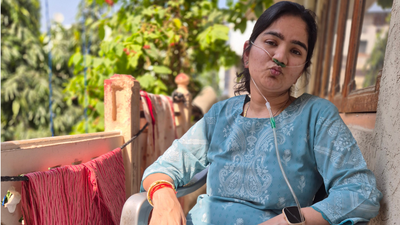
For most people, breathing happens without thought. For this young mother, it slowly became the centre of her life. Walking, talking and climbing a few steps began leaving her breathless. She initially blamed weakness or tiredness. But eventually, she realised her lungs were no longer allowing her to live normally.“The scariest part was realizing that my lungs were no longer allowing me to live the life I wanted,” Supriya Dusad recalled.She was young, had a family and dreams for the future. Yet something as basic as taking a breath had become a daily struggle. Her journey would later take her through pregnancy, long-term oxygen support, an emergency airlift, two cardiac arrests and finally a lung transplant. But the transplant was not the end of the story. It was the beginning of another difficult chapter.
Pregnancy became a reason to keep fighting
Her illness became even harder to handle when she became pregnant.Pregnancy should have been a happy time, but she was carrying her baby while also worrying about whether she would survive. She feared for herself, her unborn child and the future they might have together.Yet her baby became her greatest source of strength.“I have to stay strong because I have someone inside me who is depending on me,” she kept telling herself.Every hospital visit and difficult treatment became something she endured because she wanted to meet her daughter.After her daughter was born, that bond became an even stronger reason to continue fighting.By then, oxygen had also become a permanent part of her daily routine. She had to plan simple activities around cylinders, concentrators, oxygen levels and how much her body could tolerate.“The hardest part wasn’t just carrying the oxygen. It was feeling that my freedom was attached to a machine,” she said.At the same time, oxygen taught her to appreciate things that once seemed ordinary. A walk, a conversation and time with her daughter suddenly felt precious.
The transplant became a fight against time
When doctors told her she needed a lung transplant, fear came first. She understood what those words meant. Her own lungs were no longer able to support the life she wanted. Surgery brought its own risks and uncertainty, while the availability of a suitable donor could not be guaranteed.But another thought became stronger than the fear.“I am not ready to leave.”She had her daughter, husband, mother and family. She still wanted to live. Her condition eventually became critical enough for her to be airlifted to another city for treatment.“Being airlifted was one of the most frightening moments of my life,” she recalled. “I wasn’t just travelling to another city. I was travelling towards a possibility of life.”The journey became even more difficult when she experienced two cardiac arrests. Parts of that period remain blurred in her memory, but she remembers what those events meant.“Two cardiac arrests could have been the end of my story. But they weren’t.”Waiting for a donor was another emotional challenge. A lung transplant cannot simply be scheduled at a convenient time. A suitable donor has to become available, and the recipient must meet the necessary medical and matching requirements.India’s National Organ and Tissue Transplant Organisation (NOTTO), under the Ministry of Health and Family Welfare, explains that organ allocation considers factors such as medical urgency, waiting-list status, blood group, organ size and other medical requirements.The organisation also notes the challenges involved in obtaining suitable donor lungs, making lung transplantation a complex process that depends heavily on timely organ donation.For her, the wait carried another difficult thought. Someone else’s family would have to experience a devastating loss for a donor organ to become available.“That thought carries a deep sense of gratitude and responsibility,” she said.
Waking up meant learning life again
The transplant saved her life, but recovery was far from easy. When she woke up, she could not simply return to normal life. She could not walk properly. Talking and moving were difficult. Her body was extremely weak, and parts of her memory were missing.“Imagine waking up after fighting for your life and then realizing that you have to teach your body everything again,” she said.She had to start from the basics. One movement at a time. One word at a time. One step at a time.There were days when progress felt obvious and others when it seemed as though she had gone backwards.Recovery after a lung transplant can involve extensive rehabilitation, regular monitoring and lifelong medicines. Immunosuppressants are needed to reduce the risk of the body rejecting the transplanted organ, but they can also increase vulnerability to infections.For her, this meant accepting a new set of responsibilities. She has to be careful about medicines, hygiene, food, infections, crowds and her surroundings. There is no point when she can simply say she is “completely cured” and forget about her transplant.“A transplant means protecting the gift you have received every single day,” she said.The restrictions can sometimes feel frustrating. But she has learned to see them differently.“These restrictions are not taking my life away. They’re helping me protect the life I fought so hard to get back.”
Today, ordinary life feels extraordinary
After everything she went through, the first things she wanted were surprisingly simple. She wanted to walk without oxygen. She wanted to breathe without thinking about every breath. She wanted to play with her daughter.She wanted to dance with her.Today, she can do those things.She can walk, exercise, laugh, play and participate in everyday life. Activities that once seemed completely ordinary now carry a different meaning.“Sometimes the greatest miracles are not extraordinary things. Sometimes the miracle is simply waking up and taking a deep breath.”Fear has not disappeared completely. A new symptom, an unexpected test result or a change in her health can bring back memories of the past. But she has learned not to let fear take away the present.“I have spent enough time fighting for tomorrow. Now I want to live today.”Her transplant did not erase the difficult years. Instead, it gave her the opportunity to build a life beyond them. She does not describe herself as strong because she never felt afraid. Her definition is different.“I consider myself strong because I was afraid and still chose to keep going.”Her message to people facing serious illness is equally grounded.“Please don’t measure your future by how difficult your present feels.”There was a time when she could not imagine walking again, breathing independently or dancing with her daughter. Today, those things are part of her life. Her story is ultimately not only about a transplant. It is about what happens after survival.It is about learning to trust the body again, accepting new limitations and finding happiness in things that once went unnoticed. For someone who once had to think about every breath, taking one freely is no longer ordinary. It is a reminder that she got another chance.


