
Scientists discover humidity may help control insects’ biological clocks, not just light and temperature

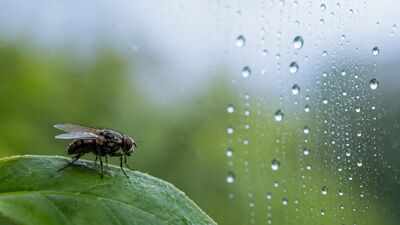
For decades, light and temperature have been regarded as the environmental signals that keep insects aligned with the passing day. Sunrise, sunset and shifting warmth have long been treated as the main forces that help regulate when animals move, feed or rest. Humidity, although it changes just as regularly in many places, has attracted far less attention. That may now be changing. A new study suggests that daily swings between dry and humid conditions can also influence internal biological timing in several insect species, pointing to a previously overlooked way that animals anticipate their surroundings. According to new research published in Nature, titled “Humidity as a potential zeitgeber for circadian entrainment of insect systems,” humidity may function as another environmental time cue capable of synchronising circadian rhythms in many terrestrial insects.
How scientists tested the effects of humidity on insects’ biological clocks
The work examined insects from several different groups, exposing them to carefully controlled cycles of dry and humid air while keeping temperature, light and air pressure constant. That separation was important because it allowed the researchers to isolate humidity from the environmental factors already known to influence biological clocks.Different species did not respond in the same way. Some became more active during dry periods, while fruit flies tended to increase activity around the point where dry conditions shifted towards humid air. Even after the artificial humidity cycle ended and the atmosphere was kept consistently humid, many of the insects continued following the same daily rhythm. That persistence suggested the animals were not simply reacting to changing moisture levels in real time but had adjusted an internal timing system.
How fruit fly experiments showed humidity can reset biological clocks
To investigate the mechanism more closely, the team carried out additional experiments using Drosophila melanogaster, one of biology’s best-studied laboratory insects. When researchers shifted the humidity schedule by several hours, the flies gradually adjusted their activity until it matched the new pattern. After the humidity changes stopped, the revised schedule continued for a time under constant conditions.According to the study, the scientists then tested fruit flies carrying mutations in genes linked with circadian rhythms. Those insects still sensed changes in humidity but struggled to maintain consistent daily activity once the external cue disappeared. A similar pattern appeared in flies with disrupted humidity-sensing systems, indicating that both the biological clock and the insects’ ability to detect moisture were needed for humidity-driven timing to work properly.
Why mosquitoes responded differently to humidity than other insects
The findings were not universal. Mosquitoes behaved differently from several of the other insects included in the study and showed little evidence that humidity acted as a reliable timing signal.As per the study, the researchers suggest there may be a practical explanation. For mosquitoes, humidity is closely linked with locating hosts because warm-blooded animals create moist air through breathing and perspiration. Instead of acting as a predictable daily signal, moisture may serve as an immediate indicator that a potential blood meal is nearby. That distinction could explain why mosquitoes appear to treat humidity as a short-term behavioural cue rather than something that resets their circadian clock.
Why humidity could be a new environmental signal for insects’ biological clocks
The authors describe humidity as a potential zeitgeber, the scientific term for an environmental signal that helps synchronise an organism’s internal clock. Light remains the dominant example, with temperature also recognised as an important regulator, but the study suggests moisture deserves consideration as another contributor to daily biological timing.Understanding how insects interpret humidity could improve predictions of when certain species are active, particularly those vulnerable to drying out. It may also help explain how environmental changes influence behaviour as weather patterns shift. The researchers emphasise that more work is needed to uncover the neural pathways involved and to determine how humidity interacts with light and temperature rather than replacing them. For now, the study offers evidence that something as ordinary as the changing moisture in the air may quietly help insects keep track of time.


