
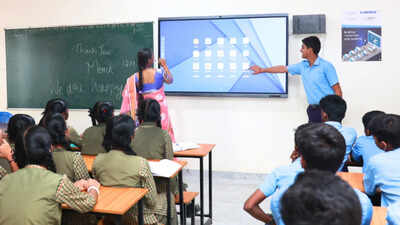
Representative image NEW DELHI: Government schools have made the sharpest gains in internet connectivity over three years, increasing coverage from 46.2% in 2023-24 to 63.1% in 2025-26 and narrowing their gap with aided and private schools from about 28 percentage points to around 16. Their share of functional smart classrooms also rose from 21.2% to 32.2%, though it remains below aided schools at 41% and private unaided schools at 39.9%.The latest UDISE+ report shows 67.4% of schools had internet facilities, up from 63.5% in 2024-25 and 53.9% in 2023-24, and that all schools in Goa have internet coverage while West Bengal lags at 19.7% in 2025-26.Excluding UTs, Andhra Pradesh followed Goa at 99.2% coverage, ahead of Tamil Nadu at 99%, Gujarat at 96.8% and Kerala at 92.6%. At the bottom, Bengal was followed by Arunachal Pradesh at 36%, Meghalaya at 36.4%, Manipur at 38.8% and Tripura at 42.5%.Goa rose from 87.6% in 2023-24 to full coverage and Andhra Pradesh from 93.9% to 99.2%. Among the bottom five, Meghalaya gained nearly 12 points and Tripura over seven, while Bengal edged up from 17.5% to 19.7%.Management-wise, internet access in govt-aided schools rose from 73.3% to 79.7% and private unaided coverage from 74.3% to 79.2%.A similar gap persists in computer availability. Overall, 69.9% of schools had computers in 2025-26 – 66.9% govt, 76.6% aided and 80% private unaided schools. For computers used for teaching, the shares were lower at 59.4%, 73.7% and 74%, respectively.Smart-classroom coverage nationally rose from 24.4% in 2023-24 to 33.9% in 2025-26. Govt schools posted an 11-point gain, compared with increases from 31% to 41% in aided schools and 34.6% to 39.9% in private schools.Digital libraries remained scarce, available in only 7.1% of schools – 5.7% govt, 10.4% aided and 11.2% private unaided institutions.The report says NE envisages schools equipped with “computing devices, internet, libraries” and other infrastructure to create “a safe, inclusive, and effective learning environment”.Get the latest India news and live updates. Download the TOI App.About the AuthorManash Pratim GohainManash Pratim Gohain is a seasoned journalist with over two decades at The Times of India, where he has built a rich body of work spanning education policy, politics, and governance. Renowned for his incisive coverage of the National Education Policy (NEP) 2020, accreditation reforms, and skilling initiatives, he has also reported on student politics, urban policy, and social movements. His political reportage—both reflective and news-driven—adds depth to his writing, bridging policy with public impact. Through his 2,500 articles and related outlets, he has emerged as a trusted voice in national discourse, particularly in linking education reform to broader societal change.Read MoreEnd of ArticleFollow Us On Social MediaVideos’Black Magic, Cow Urine’: Shiv Sena (UBT) Leader’s Daughter-In-Law Makes Shocking Allegations’I Lock Up Religion When…’: Annamalai Confirms ‘We The Leaders’ Will Become Political PartyWatch: Assam CM Himanta Sarma Drives Road Roller, Destroys Seized Drugs’1 Indian Missing’: MEA Condemns Attack On Vessel Carrying Indian Crew Off Oman Coast’Do I Have To Ask Trump?’: Omar Abdullah Launches Attack At Modi Govt Over Jammu-Kashmir StatehoodBJP Rejects Omar Abdullah’s ‘Operation Lotus’ Allegation, Demands Proof Or Public ApologyHapur Woman Critical After Allegedly Drinking Acid From Sealed Water Bottle; Police Launch ProbeElection Commission Updates Form 6 With New SIR DeclarationIndian Army Plans To Induct 450 Carl Gustaf M4 Rocket LaunchersDelhi To Get Its First Solar Tree At Secretariat; Pilot Project May Expand Across The City123PhotostoriesThese 4 signs are said to have the highest IQWomen over 30, especially mothers, face these 5 common health problems: Doctor says early prevention can make all the differenceTrying for a baby? This one dental habit could make a difference”Scrambled egg mein crush…aur phir”: Raj Thackeray shares his unique Egg recipe loved by his father and Bal ThackerayForget crash diets and health hacks: Cardiologist reveals 5 simple daily habits that can transform your health, one day at a timeTop 3 eggs in the world and the right way to consume themnside Sudesh Lehri’s luxurious 4-BHK Mumbai home: A private studio, home theatre and moreWhy seemingly healthy young Indians are collapsing without warning: Doctors explain how AEDS can mean the difference between life and deathKate Middleton ditched soft neutrals for a show-stopping red look at Wimbledon 20265 late-night drinks that help support healthy blood sugar, according to dietitians123Hot PicksAgniveer result 2026DU UG Admissions 2026Vietnam boat accidentSonam Wangchuk Hunger strikeIslam makhachevKarnataka Bus newsBengaluru delivery boyKolkata Mosque prayersHamad bin Khalifa Al ThaniTop TrendingUFC 329 HighlightsNHL Player InjuryErling Haaland FatherFIFA World Cup 2026Chhattisgarh Student MurderTS EAMCET Phase 1 seat allotmentRamesh MhatreDelhi NCR rainGurgaon EncounterIran war

NEW DELHI: Government schools have made the sharpest gains in internet connectivity over three years, increasing coverage from 46.2% in 2023-24 to 63.1% in 2025-26 and narrowing their gap with aided and private schools from about 28 percentage points to around 16. Their share of functional smart classrooms also rose from 21.2% to 32.2%, though it remains below aided schools at 41% and private unaided schools at 39.9%.The latest UDISE+ report shows 67.4% of schools had internet facilities, up from 63.5% in 2024-25 and 53.9% in 2023-24, and that all schools in Goa have internet coverage while West Bengal lags at 19.7% in 2025-26.Excluding UTs, Andhra Pradesh followed Goa at 99.2% coverage, ahead of Tamil Nadu at 99%, Gujarat at 96.8% and Kerala at 92.6%. At the bottom, Bengal was followed by Arunachal Pradesh at 36%, Meghalaya at 36.4%, Manipur at 38.8% and Tripura at 42.5%.Goa rose from 87.6% in 2023-24 to full coverage and Andhra Pradesh from 93.9% to 99.2%. Among the bottom five, Meghalaya gained nearly 12 points and Tripura over seven, while Bengal edged up from 17.5% to 19.7%.Management-wise, internet access in govt-aided schools rose from 73.3% to 79.7% and private unaided coverage from 74.3% to 79.2%.A similar gap persists in computer availability. Overall, 69.9% of schools had computers in 2025-26 – 66.9% govt, 76.6% aided and 80% private unaided schools. For computers used for teaching, the shares were lower at 59.4%, 73.7% and 74%, respectively.Smart-classroom coverage nationally rose from 24.4% in 2023-24 to 33.9% in 2025-26. Govt schools posted an 11-point gain, compared with increases from 31% to 41% in aided schools and 34.6% to 39.9% in private schools.Digital libraries remained scarce, available in only 7.1% of schools – 5.7% govt, 10.4% aided and 11.2% private unaided institutions.The report says NE envisages schools equipped with “computing devices, internet, libraries” and other infrastructure to create “a safe, inclusive, and effective learning environment”.


