
Representative AI image NEW DELHI: Submarines powered by nuclear reactors are often grouped together as “nuclear submarines”, but there are two very different categories: SSNs (nuclear-powered attack submarines) and SSBNs (nuclear-powered ballistic missile submarines). Both use nuclear reactors for propulsion, allowing them to remain underwater for months, but their missions, weapons and strategic roles are fundamentally different.For India, understanding this distinction is crucial because the country already operates SSBNs as part of its nuclear deterrent, while it is only now moving towards building a sizeable fleet of SSNs.The alphabet soup of nuclear submarinesThe designation system originates from the US Navy. The first “S” stands for submarine. The second “S” indicates nuclear propulsion. The final letter defines the submarine’s primary role.An SSN is a nuclear-powered attack submarine. Its primary mission is hunting enemy submarines and warships, gathering intelligence, escorting carrier groups and conducting conventional strike missions. An SSBN, meanwhile, is a nuclear-powered ballistic missile submarine designed primarily to carry nuclear-tipped ballistic missiles and provide a country’s second-strike nuclear capability.Although both use nuclear reactors and can remain submerged for extended periods, they are built for entirely different strategic purposes. One fights wars; the other is designed to prevent them.What exactly is an SSN?An SSN is essentially a stealth hunter. It is among the most versatile naval platforms ever built.Attack submarines are designed to track and destroy enemy submarines, sink surface ships, gather intelligence, monitor sea lanes and, in some cases, launch cruise missiles against land targets. Because they are powered by nuclear reactors, they do not need to surface frequently for fuel, allowing them to operate across vast oceanic distances.Modern SSNs are equipped with torpedoes, anti-ship missiles, land-attack cruise missiles and advanced sonar systems. They are usually faster and more manoeuvrable than ballistic missile submarines because speed and stealth are critical to their missions.The world’s leading SSN operators include the United States, Russia, the United Kingdom, France and China. Their attack submarines routinely shadow adversary fleets, monitor chokepoints and conduct covert surveillance operations.What exactly is an SSBN?An SSBN serves a very different purpose. Rather than hunting enemy vessels, its primary mission is strategic nuclear deterrence.These submarines carry submarine-launched ballistic missiles (SLBMs), many of which can be armed with nuclear warheads. During a conflict, they remain hidden in vast ocean areas, making them extremely difficult to detect and destroy.The logic behind SSBNs is straightforward. Even if an adversary destroys a country’s land-based nuclear missiles and air bases in a surprise attack, hidden SSBNs can survive and retaliate. This guaranteed ability to respond is known as a second-strike capability.Because of this role, SSBNs are often described as the most survivable leg of a nation’s nuclear triad, which consists of land-based missiles, aircraft-delivered nuclear weapons and sea-based nuclear weapons.Why SSBNs are considered the crown jewels of deterrenceThe greatest challenge in nuclear strategy is ensuring survivability. Fixed missile silos can be targeted. Aircraft require airfields. Ballistic missile submarines, however, can disappear into thousands of square kilometres of ocean.A single SSBN can remain submerged for months while carrying enough nuclear warheads to inflict devastating damage. For this reason, countries possessing SSBN fleets regard them as strategic assets of the highest national importance.The United States, Russia, China, Britain, France and India all maintain SSBN forces as part of their nuclear deterrence structures.How SSNs and SSBNs differ in designAlthough they may appear similar externally, the differences are substantial.SSBNs are generally larger because they must carry ballistic missiles housed in vertical launch tubes. Their focus is on stealth and endurance rather than agility. Their patrol routes are carefully protected because preserving their secrecy is vital.SSNs, by contrast, prioritise speed, manoeuvrability and combat flexibility. They carry torpedoes and cruise missiles rather than large ballistic missiles. Their missions frequently involve actively tracking enemy vessels and operating in contested waters.An SSN might spend months stalking an adversary’s submarine. An SSBN might spend the same period avoiding detection entirely.What India has todayIndia currently operates a fleet of nuclear-powered ballistic missile submarines under the Arihant-class programme.The lead vessel, INS Arihant, entered service in 2016 and marked the completion of India’s nuclear triad. It was followed by INS Arighat, while additional boats are at various stages of development and construction.These submarines carry India’s indigenous K-series submarine-launched ballistic missiles, including the K-15 and longer-range K-4 systems. Their primary mission is strategic deterrence rather than conventional naval warfare.In short, India already possesses an operational SSBN capability.What India does not yet haveIndia does not currently operate an indigenous fleet of nuclear-powered attack submarines.The Indian Navy has experience operating SSNs through leased Russian submarines. Most notably, INS Chakra provided valuable operational experience. However, leased platforms are not the same as maintaining a domestically built SSN force.India has approved plans to construct indigenous SSNs, with multiple boats expected under a long-term programme. These submarines are intended to operate across the Indian Ocean Region, monitor Chinese naval activity, protect carrier battle groups and escort Indian SSBNs during patrols.Until these submarines enter service, India remains one of the few major nuclear powers with an SSBN fleet but without an operational indigenous SSN force.Why India needs SSNs even though it has SSBNsThe two submarine types complement each other.SSBNs provide nuclear deterrence, but they also require protection. Enemy attack submarines constantly seek to track ballistic missile submarines because locating them could undermine a country’s second-strike capability.This is where SSNs become essential. They escort SSBNs, hunt adversary submarines and secure maritime approaches. In many navies, attack submarines act as the shield protecting the strategic deterrent force.As China’s naval presence expands in the Indian Ocean and the People’s Liberation Army Navy increases deployments of both conventional and nuclear submarines, Indian planners increasingly view SSNs as necessary for maintaining undersea dominance.The future of India’s undersea forceIndia’s long-term submarine strategy aims to field both strong SSBN and SSN fleets.The Arihant-class and its successors will continue to strengthen the sea-based nuclear deterrent. At the same time, the planned indigenous SSN programme seeks to provide the Indian Navy with a powerful conventional undersea warfare capability.The end goal is similar to that of the United States, Russia, China, Britain and France: a balanced nuclear submarine force in which SSBNs deter nuclear attack while SSNs control the underwater battlespace.An SSBN is a strategic nuclear deterrent platform whose main mission is carrying ballistic missiles and ensuring a second-strike capability. India already possesses this capability through the Arihant-class submarines.An SSN is a nuclear-powered attack submarine designed to hunt enemy vessels, gather intelligence and dominate the underwater domain. India has operated leased examples but has not yet fielded an indigenous operational SSN fleet.Get the latest India news and live updates. Download the TOI App.About the AuthorTOI News DeskThe TOI News Desk comprises a dedicated and tireless team of journalists who operate around the clock to deliver the most current and comprehensive news and updates to the readers of The Times of India worldwide. With an unwavering commitment to excellence in journalism, our team is at the forefront of gathering, verifying, and presenting breaking news, in-depth analysis, and insightful reports on a wide range of topics. The TOI News Desk is your trusted source for staying informed and connected to the ever-evolving global landscape, ensuring that our readers are equipped with the latest developments that matter most.”Read MoreEnd of ArticleFollow Us On Social MediaVideosBJP Defends Shashi Tharoor, Targets Congress Over Pawan Khera’s RemarksKailash Mansarovar Yatra 2026 Begins As First Batch Of Pilgrims Crosses Into China Via Nathu La PassIUML Officially Exits DMK-Led Alliance, Says Future Electoral Tie-Up To Be Decided LaterPM Modi Commissions Three Naval Vessels, Boosts Self-Reliant India MissionKolkata Airport Chaos: Mahua Moitra Questions How Armed Individual Entered Secure ZoneIndia Slams Pakistan Over Remarks On Internal Affairs, Says It Has No Locus Standi’Age Should Not Reduce Human Potential’: PM Modi’s Yoga Day Message’Shashi Tharoor Hears What PM Modi Does Not Say’: Congress Leader Khera Takes SwipeAkal Takht Releases Video Of Bhagwant Mann’s Appearance Before It Over Controversial VideoPM Modi Targets Cong, TMC, Left In Bengal: ‘When There Was Attempt To Make It Pakistan’s Part…’123Photostories9 Gujarati vegetarian dishes so delicious, even non-vegetarians love them8 gaslighting text messages psychologists say you should never ignorePsychology says people who often say “please” and “thank you” have THESE 10 qualitiesThe menopause timeline: What no one tells women about the changes that begin in their 30sFather’s Day 2026: 10 animal dads who prove great parenting isn’t just a human traitBarun Sobti and Pashmeen Manchanda’s love story: ‘We wanted to get married and then travel the world..’Best Mantra for students based on birth date to boost focus and memoryFrom Boiling Rivers to Moving Stones: The world’s most intriguing destinations5 Tips to Activate the Kubera Corner for Wealth and Good FortuneWhy high heels were originally made for men, and how they became a women’s fashion staple123Hot PicksPetrol, diesel rateMilk price hikeIndia-US trade dealJIO IPODelih weatherGwalior-Prayagraj ExpressWeather forecast tomorrowIndane gas KYCKeir Starmer resignationTop TrendingNEET re examUS-Iran WarYoga Day 2026FIFA World Cup 2026Abhijeet DipkeDelhi weatherAbu Dhabi NEET rowUP Police Constable answer keyBengaluru blue line metroCJP protest

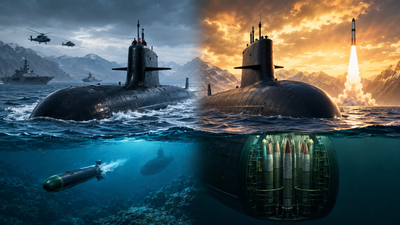
NEW DELHI: Submarines powered by nuclear reactors are often grouped together as “nuclear submarines”, but there are two very different categories: SSNs (nuclear-powered attack submarines) and SSBNs (nuclear-powered ballistic missile submarines). Both use nuclear reactors for propulsion, allowing them to remain underwater for months, but their missions, weapons and strategic roles are fundamentally different.For India, understanding this distinction is crucial because the country already operates SSBNs as part of its nuclear deterrent, while it is only now moving towards building a sizeable fleet of SSNs.
The alphabet soup of nuclear submarines
The designation system originates from the US Navy. The first “S” stands for submarine. The second “S” indicates nuclear propulsion. The final letter defines the submarine’s primary role.An SSN is a nuclear-powered attack submarine. Its primary mission is hunting enemy submarines and warships, gathering intelligence, escorting carrier groups and conducting conventional strike missions. An SSBN, meanwhile, is a nuclear-powered ballistic missile submarine designed primarily to carry nuclear-tipped ballistic missiles and provide a country’s second-strike nuclear capability.Although both use nuclear reactors and can remain submerged for extended periods, they are built for entirely different strategic purposes. One fights wars; the other is designed to prevent them.
What exactly is an SSN?
An SSN is essentially a stealth hunter. It is among the most versatile naval platforms ever built.Attack submarines are designed to track and destroy enemy submarines, sink surface ships, gather intelligence, monitor sea lanes and, in some cases, launch cruise missiles against land targets. Because they are powered by nuclear reactors, they do not need to surface frequently for fuel, allowing them to operate across vast oceanic distances.Modern SSNs are equipped with torpedoes, anti-ship missiles, land-attack cruise missiles and advanced sonar systems. They are usually faster and more manoeuvrable than ballistic missile submarines because speed and stealth are critical to their missions.The world’s leading SSN operators include the United States, Russia, the United Kingdom, France and China. Their attack submarines routinely shadow adversary fleets, monitor chokepoints and conduct covert surveillance operations.
What exactly is an SSBN?
An SSBN serves a very different purpose. Rather than hunting enemy vessels, its primary mission is strategic nuclear deterrence.These submarines carry submarine-launched ballistic missiles (SLBMs), many of which can be armed with nuclear warheads. During a conflict, they remain hidden in vast ocean areas, making them extremely difficult to detect and destroy.The logic behind SSBNs is straightforward. Even if an adversary destroys a country’s land-based nuclear missiles and air bases in a surprise attack, hidden SSBNs can survive and retaliate. This guaranteed ability to respond is known as a second-strike capability.Because of this role, SSBNs are often described as the most survivable leg of a nation’s nuclear triad, which consists of land-based missiles, aircraft-delivered nuclear weapons and sea-based nuclear weapons.
Why SSBNs are considered the crown jewels of deterrence
The greatest challenge in nuclear strategy is ensuring survivability. Fixed missile silos can be targeted. Aircraft require airfields. Ballistic missile submarines, however, can disappear into thousands of square kilometres of ocean.A single SSBN can remain submerged for months while carrying enough nuclear warheads to inflict devastating damage. For this reason, countries possessing SSBN fleets regard them as strategic assets of the highest national importance.The United States, Russia, China, Britain, France and India all maintain SSBN forces as part of their nuclear deterrence structures.
How SSNs and SSBNs differ in design
Although they may appear similar externally, the differences are substantial.SSBNs are generally larger because they must carry ballistic missiles housed in vertical launch tubes. Their focus is on stealth and endurance rather than agility. Their patrol routes are carefully protected because preserving their secrecy is vital.SSNs, by contrast, prioritise speed, manoeuvrability and combat flexibility. They carry torpedoes and cruise missiles rather than large ballistic missiles. Their missions frequently involve actively tracking enemy vessels and operating in contested waters.An SSN might spend months stalking an adversary’s submarine. An SSBN might spend the same period avoiding detection entirely.
What India has today
India currently operates a fleet of nuclear-powered ballistic missile submarines under the Arihant-class programme.The lead vessel, INS Arihant, entered service in 2016 and marked the completion of India’s nuclear triad. It was followed by INS Arighat, while additional boats are at various stages of development and construction.These submarines carry India’s indigenous K-series submarine-launched ballistic missiles, including the K-15 and longer-range K-4 systems. Their primary mission is strategic deterrence rather than conventional naval warfare.In short, India already possesses an operational SSBN capability.
What India does not yet have
India does not currently operate an indigenous fleet of nuclear-powered attack submarines.The Indian Navy has experience operating SSNs through leased Russian submarines. Most notably, INS Chakra provided valuable operational experience. However, leased platforms are not the same as maintaining a domestically built SSN force.India has approved plans to construct indigenous SSNs, with multiple boats expected under a long-term programme. These submarines are intended to operate across the Indian Ocean Region, monitor Chinese naval activity, protect carrier battle groups and escort Indian SSBNs during patrols.Until these submarines enter service, India remains one of the few major nuclear powers with an SSBN fleet but without an operational indigenous SSN force.
Why India needs SSNs even though it has SSBNs
The two submarine types complement each other.SSBNs provide nuclear deterrence, but they also require protection. Enemy attack submarines constantly seek to track ballistic missile submarines because locating them could undermine a country’s second-strike capability.This is where SSNs become essential. They escort SSBNs, hunt adversary submarines and secure maritime approaches. In many navies, attack submarines act as the shield protecting the strategic deterrent force.As China’s naval presence expands in the Indian Ocean and the People’s Liberation Army Navy increases deployments of both conventional and nuclear submarines, Indian planners increasingly view SSNs as necessary for maintaining undersea dominance.
The future of India’s undersea force
India’s long-term submarine strategy aims to field both strong SSBN and SSN fleets.The Arihant-class and its successors will continue to strengthen the sea-based nuclear deterrent. At the same time, the planned indigenous SSN programme seeks to provide the Indian Navy with a powerful conventional undersea warfare capability.The end goal is similar to that of the United States, Russia, China, Britain and France: a balanced nuclear submarine force in which SSBNs deter nuclear attack while SSNs control the underwater battlespace.An SSBN is a strategic nuclear deterrent platform whose main mission is carrying ballistic missiles and ensuring a second-strike capability. India already possesses this capability through the Arihant-class submarines.An SSN is a nuclear-powered attack submarine designed to hunt enemy vessels, gather intelligence and dominate the underwater domain. India has operated leased examples but has not yet fielded an indigenous operational SSN fleet.


