
(Photo credit: X) NEW DELHI: The iconic “Dancing Girl” of Mohenjo-daro, one of the most celebrated artefacts of the Indus Valley Civilisation, appeared in an altered form in the NCERT’s new Class 9 arts textbook, with its traditionally bare torso visually covered, sparking debate over the representation.The 4,500-year-old bronze figurine, traditionally depicted with its bare torso visible, appears with shaded modifications in NCERT’s new Class 9 arts textbook Madhurima, obscuring anatomical details seen in the original sculpture.The image features in the opening chapter, History of Arts. Compared with photographs of the original artefact, the figurine’s upper body appears visually altered, drawing attention to how one of India’s best-known archaeological treasures is being presented to students.Notably, the same artefact appears in NCERT’s Class 6 Social Science textbook in a form much closer to the original bronze sculpture.What is the Dancing Girl?Discovered at Mohenjo-daro, the “Dancing Girl” is among the most celebrated artefacts of the Indus Valley Civilisation.The original bronze statuette stands just 10.5 cm tall and is noted for its naturalistic depiction. The figure is shown unclothed except for jewellery, including multiple bangles on one arm and a necklace, ANI reported.In the new textbook, however, the figurine appears in a darker shade, with parts of the torso visually covered compared to the original sculpture.The chapter identifies the “Dancing Girl” as a bronze figurine from Mohenjo-daro dating to around 2600 BCE. According to the textbook, the sculpture was created using the “lost-wax technique prevalent in West Bengal, Jharkhand, and Chhattisgarh.””This sculpture depicts a posture with one knee bent, one hand on the waist and a slightly lifted chin,” the textbook states.’Not age-appropriate’Michel Danino, who headed the textbook development committee for NCERT’s new Class 6 Social Science books, said he had earlier been informed that the Dancing Girl image was considered unsuitable for younger students.”This refers to our Grade 6 Social Science textbook. The reason I was given was that the image of the Dancing Girl was not age-appropriate. Our team disagreed; we even checked with teachers of class 6, and they told us there was never a problem with the Dancing Girl,” Danino told PTI.”The notion that nudity is inappropriate is, in my opinion, an obsolete Victorian view. Yet we speak of decolonising Indian education,” he added.Reacting to the modified image in the Class 9 arts textbook, he said he was initially taken aback. “If the Dancing Girl cannot figure as she is, and with proper dimensions, in a chapter on Indian art, then we have a serious problem,” he added.’Misrepresents the original artefact’Danino strongly criticised the alteration, arguing that it distorts the historical object. “The modification misrepresents the original artefact just as the Church’s addition of a fig leaf to Michelangelo’s statue of David in the Middle Ages misrepresented that beautiful work of art,” he said.”Unless this is clearly done to indicate the possible reconstruction of a partial artefact, altering such an image amounts to creating a fake artefact. It points to a serious lack of understanding of how historical artefacts are to be pictured,” Danino added.Discussing the figurine’s significance, he noted that archaeologists have long debated its meaning and context. However, he pointed out that the same akimbo posture has been found on at least two potsherds from the Harappan site of Bhirrana in Rajasthan, suggesting it carried “a precise cultural value, probably an artistic one.”NCERT reviewing the matterAccording to ANI, an NCERT official said the issue has been referred to the textbook development team for examination.”The matter has been referred to the textbook development team. They are looking into it. There is no specific reason. In the Grade 6 Social Science textbook, the Dancing Girl appears in its original form along with many other artefacts,” the official said.The Dancing Girl has previously been at the centre of debates over representation. In May 2023, Prime Minister Narendra Modi unveiled the mascot for the International Museum Expo at Delhi’s Pragati Maidan. The mascot was a modern adaptation of the Dancing Girl and was described by organisers as a contemporary interpretation of the ancient figure.However, the over five-foot-tall version drew criticism from historians and archaeologists because it significantly altered the appearance of the original artefact. While the ancient bronze figurine is dark in colour and largely unclothed except for jewellery, the expo mascot featured a fairer complexion and was dressed in a bright pink blouse and an off-white waistcoat.Get the latest India news and live updates. Download the TOI App.About the AuthorTOI News DeskThe TOI News Desk comprises a dedicated and tireless team of journalists who operate around the clock to deliver the most current and comprehensive news and updates to the readers of The Times of India worldwide. With an unwavering commitment to excellence in journalism, our team is at the forefront of gathering, verifying, and presenting breaking news, in-depth analysis, and insightful reports on a wide range of topics. The TOI News Desk is your trusted source for staying informed and connected to the ever-evolving global landscape, ensuring that our readers are equipped with the latest developments that matter most.”Read MoreEnd of ArticleFollow Us On Social MediaVideosRSS Event Row: BJP Targets Kerala CM Over Remarks Against Vice-ChancellorsOver 500 Indian Sailors Stuck In Strait Of Hormuz For 107 Days As Maritime Crisis DeepensTMC Split Deepens: Sudip Bandyopadhyay Says Rebels Will Seek Trinamool Name And Symbol In JulyPunjab Elections Could Be Held In November This Year, Claims Kejriwal Amid Early Poll BuzzNoida International Airport Opens For Flights; Passengers Praise Faster AccessAbhishek Banerjee Writes To Speaker Om Birla Against Recognition Of Rebel TMC FactionIndia Eyes Local Production Of 114 Rafale Fighter Jets In Landmark France DealBritish Kashmiris protest outside UK Parliament over crackdown in PoJK by Pakistani forcesNirmala Sitharaman Rejects Karnataka Fund Bias Claims, Attacks Congress Over ‘Adani-Ambani’ ChargeRebel TMC MPs To Merge With Nationalist Citizens Party, Support NDA123Photostories5 snakes that love swimming pools and important checks to do before plunging in that cool blue hotel poolShe is in her 40s, but looks mid-20s: 5 things the woman quit for glowing skin and youthfulness5 easy ways to use neem for skin and wellness during summerWhich Surya mantra should you chant? find out based on your birth dateThe one habit that separates high achievers from the rest, according to popular Indian founder Dr. A Velumani6 common phrases used for gaslighting and how to respond, as per psychologistHollywood villians who moved us with their tragic pastsCurd vs hung curd vs Greek yogurt: What is the difference and which has more proteinWhy the Sahyadri mountains are among Maharashtra’s most spectacular travel destinationsThai love proverb of the day: “When in love, even boiled vegetable broth tastes sweet; when hating…”123Hot PicksIndia A vs Sri Lanka A live scoreAP Inter Supplementary ResultsNEET Admit CardMHT CET PCM ResultMahua MoitraBaba Milandas murderNoida airportStock Market LiveGold rate todayTop TrendingKerala HSCAP first allotment result 2026UPSC Prelims ResultNEET Admit Card 2026FIFA World Cup 2026Women T20 World CupNoida AirportIlia TopuriaCBSE 10th Second Board Result 2026Shreyanka PatilSpain vs Cabo Match Preview

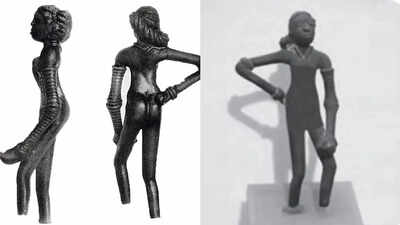
NEW DELHI: The iconic “Dancing Girl” of Mohenjo-daro, one of the most celebrated artefacts of the Indus Valley Civilisation, appeared in an altered form in the NCERT’s new Class 9 arts textbook, with its traditionally bare torso visually covered, sparking debate over the representation.The 4,500-year-old bronze figurine, traditionally depicted with its bare torso visible, appears with shaded modifications in NCERT’s new Class 9 arts textbook Madhurima, obscuring anatomical details seen in the original sculpture.The image features in the opening chapter, History of Arts. Compared with photographs of the original artefact, the figurine’s upper body appears visually altered, drawing attention to how one of India’s best-known archaeological treasures is being presented to students.Notably, the same artefact appears in NCERT’s Class 6 Social Science textbook in a form much closer to the original bronze sculpture.
What is the Dancing Girl?
Discovered at Mohenjo-daro, the “Dancing Girl” is among the most celebrated artefacts of the Indus Valley Civilisation.The original bronze statuette stands just 10.5 cm tall and is noted for its naturalistic depiction. The figure is shown unclothed except for jewellery, including multiple bangles on one arm and a necklace, ANI reported.In the new textbook, however, the figurine appears in a darker shade, with parts of the torso visually covered compared to the original sculpture.The chapter identifies the “Dancing Girl” as a bronze figurine from Mohenjo-daro dating to around 2600 BCE. According to the textbook, the sculpture was created using the “lost-wax technique prevalent in West Bengal, Jharkhand, and Chhattisgarh.”“This sculpture depicts a posture with one knee bent, one hand on the waist and a slightly lifted chin,” the textbook states.
‘Not age-appropriate’
Michel Danino, who headed the textbook development committee for NCERT’s new Class 6 Social Science books, said he had earlier been informed that the Dancing Girl image was considered unsuitable for younger students.“This refers to our Grade 6 Social Science textbook. The reason I was given was that the image of the Dancing Girl was not age-appropriate. Our team disagreed; we even checked with teachers of class 6, and they told us there was never a problem with the Dancing Girl,” Danino told PTI.“The notion that nudity is inappropriate is, in my opinion, an obsolete Victorian view. Yet we speak of decolonising Indian education,” he added.Reacting to the modified image in the Class 9 arts textbook, he said he was initially taken aback. “If the Dancing Girl cannot figure as she is, and with proper dimensions, in a chapter on Indian art, then we have a serious problem,” he added.
‘Misrepresents the original artefact’
Danino strongly criticised the alteration, arguing that it distorts the historical object. “The modification misrepresents the original artefact just as the Church’s addition of a fig leaf to Michelangelo’s statue of David in the Middle Ages misrepresented that beautiful work of art,” he said.“Unless this is clearly done to indicate the possible reconstruction of a partial artefact, altering such an image amounts to creating a fake artefact. It points to a serious lack of understanding of how historical artefacts are to be pictured,” Danino added.Discussing the figurine’s significance, he noted that archaeologists have long debated its meaning and context. However, he pointed out that the same akimbo posture has been found on at least two potsherds from the Harappan site of Bhirrana in Rajasthan, suggesting it carried “a precise cultural value, probably an artistic one.”
NCERT reviewing the matter
According to ANI, an NCERT official said the issue has been referred to the textbook development team for examination.“The matter has been referred to the textbook development team. They are looking into it. There is no specific reason. In the Grade 6 Social Science textbook, the Dancing Girl appears in its original form along with many other artefacts,” the official said.The Dancing Girl has previously been at the centre of debates over representation. In May 2023, Prime Minister Narendra Modi unveiled the mascot for the International Museum Expo at Delhi’s Pragati Maidan. The mascot was a modern adaptation of the Dancing Girl and was described by organisers as a contemporary interpretation of the ancient figure.However, the over five-foot-tall version drew criticism from historians and archaeologists because it significantly altered the appearance of the original artefact. While the ancient bronze figurine is dark in colour and largely unclothed except for jewellery, the expo mascot featured a fairer complexion and was dressed in a bright pink blouse and an off-white waistcoat.


