
NTA ‘significantly’ expanded the pool from which the final 180-question paper was drawn NEW DELHI: A larger question bank, more paper-setters and restrictions ensuring nobody can know or see the final paper formed the core of the redesigned question-setting system for the June 21 NEET-UG retest – a part of the high-security process undertaken following a leak that led to the medical entrance exam’s cancellation in May.National Testing Agency (NTA) “significantly” expanded the pool from which the final 180-question paper was drawn and increased the number of experts drafting questions, sources said. The aim was to reduce the value of partial access at the source. Under the revised system, a question written by an expert could be used in the retest, kept for another exam, or not used at all.The shift was from guarding only the printed paper to guarding paper-making. If questions come from a small pool, anyone who sees a part of these can claim to know the exam. But if the pool is larger, little can be inferred.The cancelled May 3 paper reportedly overlapped with a pre-circulated guess paper on more than 120 questions. “If the pool is small, even a so-called guess paper can come dangerously close to the final paper,” an official familiar with the process said.Officials said experts were asked to contribute to the central question bank without being told how, when or whether their questions would be used in the final NEET paper. In this system – designed to ensure that no individual has a complete view of questions – experts don’t even know if their submitted questions are meant for NEET, JEE or another test – or for which sitting. The new architecture strips value from any insider who claims to “know” the paper.Investigators are examining whether the breach took place during the confidential paper-setting process, and not merely during transport or at an exam centre.Security around delivery has also been overhauled in parallel. Over five lakh personnel will be deployed, with CCTV and AI-based surveillance at centres, Aadhaar biometric verification of candidates, and question papers flown in by the IAF. Officials said the larger bank was also the groundwork for the shift of NEET-UG to computer-based testing from 2027.Get the latest India news and live updates. Download the TOI App.About the AuthorManash Pratim GohainManash Pratim Gohain is a seasoned journalist with over two decades at The Times of India, where he has built a rich body of work spanning education policy, politics, and governance. Renowned for his incisive coverage of the National Education Policy (NEP) 2020, accreditation reforms, and skilling initiatives, he has also reported on student politics, urban policy, and social movements. His political reportage—both reflective and news-driven—adds depth to his writing, bridging policy with public impact. Through his 2,500 articles and related outlets, he has emerged as a trusted voice in national discourse, particularly in linking education reform to broader societal change.Read MoreEnd of ArticleFollow Us On Social MediaVideosContradicting Supreme Court and Tribunal Orders?: TN Assembly’s Firm Stand Against ProjectRare Handshake At LoC During Pakistani National’s Repatriation Draws Attention Across BorderJaishankar Says Global Appreciation For Indian Talent Is Growing RapidlyCongress Wins 5 Of 7 Karnataka MLC Seats, BJP Probes Suspected Cross-VotingRSS At 100: Why The Organisation Remains Unregistered And Why The Issue Keeps Returning?From Net-Zero Design To Cargo Hub: What Makes Jewar Airport Different?Why Brahmins Are Suddenly At The Centre Of UP’s 2027 Political Battle | SP vs BSP vs BJP ExplainedTMC Escalates Battle To Delhi As Abhishek Banerjee Seeks Action On Rebel MPsJio Files DRHP With SEBI | Mukesh Ambani Hands IPO Leadership To Isha, Akash & AnantFrom ‘Brother-in-Ideals’ To A Cold Greeting: Stalin’s Message Exposes DMK-Congress Rift123PhotostoriesLove Poha for breakfast? 6 ways to add 20 gms protein to each servingNew York’s first lady Rama Duwaji made bootleg Knicks merch look runway-readyFrom earning Rs 700 in his first job to doing plays with Dilip Joshi and Disha Vakani: When Taarak Mehta Ka Ooltah Chashmah’s Tanmay Vekaria Aka Bagha got candid about his life5 signs of emotional manipulation in relationships, as per mental health counselor10 regional jackfruit dishes from across the world and why it is celebrated so muchFrom respecting Gauri Khan’s space to teaching his sons to respect women: 5 times Shah Rukh Khan proved he is Bollywood’s ultimate green flag10 baby girl names that mean pure in different languagesFrom Alia Bhatt to Katrina Kaif: Inside the pilates routine that keeps these Bollywood divas fit6 most beautiful hidden villages in India that are absolutely worth a tripWhy were women banned from doing makeup on Bollywood sets? Sonam Kapoor’s makeup artist explains the breaking of the 59-year-old barrier123Hot PicksEngland vs New ZealandYuvraj SinghUSA Vs AustraliaAP SSC resultsKannur University FYUGP TrialShiv SenaJD VanceStrait of HormuzHormoz nuclear power plantTop TrendingBihar gang-rapeUS-Iran Peace DealStock Market LiveFIFA World Cup 2026What is Legacy BadgeBEST bus strikeAIIMS BSc Nursing Admit CardMHT CET PCM 2nd attempt resultsGold rate todayIndia-UK FTA

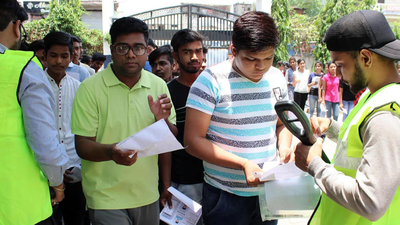
NEW DELHI: A larger question bank, more paper-setters and restrictions ensuring nobody can know or see the final paper formed the core of the redesigned question-setting system for the June 21 NEET-UG retest – a part of the high-security process undertaken following a leak that led to the medical entrance exam’s cancellation in May.National Testing Agency (NTA) “significantly” expanded the pool from which the final 180-question paper was drawn and increased the number of experts drafting questions, sources said. The aim was to reduce the value of partial access at the source. Under the revised system, a question written by an expert could be used in the retest, kept for another exam, or not used at all.The shift was from guarding only the printed paper to guarding paper-making. If questions come from a small pool, anyone who sees a part of these can claim to know the exam. But if the pool is larger, little can be inferred.The cancelled May 3 paper reportedly overlapped with a pre-circulated guess paper on more than 120 questions. “If the pool is small, even a so-called guess paper can come dangerously close to the final paper,” an official familiar with the process said.Officials said experts were asked to contribute to the central question bank without being told how, when or whether their questions would be used in the final NEET paper. In this system – designed to ensure that no individual has a complete view of questions – experts don’t even know if their submitted questions are meant for NEET, JEE or another test – or for which sitting. The new architecture strips value from any insider who claims to “know” the paper.Investigators are examining whether the breach took place during the confidential paper-setting process, and not merely during transport or at an exam centre.Security around delivery has also been overhauled in parallel. Over five lakh personnel will be deployed, with CCTV and AI-based surveillance at centres, Aadhaar biometric verification of candidates, and question papers flown in by the IAF. Officials said the larger bank was also the groundwork for the shift of NEET-UG to computer-based testing from 2027.


