
New research highlights how children in India exceed global screen time guidelines, with lasting impact on health and cognitive abilitiesMultiple screens have become an integral part of children’s lives. But is it safe for young adolescents to be spending so much time on screen? Findings from existing research suggest that while devices like smartphones, laptops, tablets and TVs can aid learning, their excessive use is linked to adverse health and developmental outcomes.A recent study*, published in Indian Journal of Psychiatry, examined children and adolescents with mental disorders to assess their screen use habits. The findings are striking: Average daily screen time was 3.1 hours. Importantly, two-thirds of the 212 study participants (average age 13 years) exceeded the recommended screen time limits set by the American Academy of Pediatrics (AAP) and World Health Organization (WHO).Israel Iran WarUS-Israel-Iran War News Live Updates: Saudi intercepts drone headed to Shaybah oil field; Israeli strikes 10 Hezbollah targets in Beirut’Legitimate targets’: Iran issues warning to US tech firms including Google, Amazon, Microsoft, NvidiaSafe Passage For Indian Vessels: Iran clears Indian-flagged ships in Hormuz; US, Europe, Israel face curbs These guidelines recommend no screen exposure for children under two years (except video calls), less than one hour per day for ages two to four, and a maximum of two hours daily for those five years and older. The study revealed that television (66%) and mobile phones (70.3%) were the most commonly used devices, among 212 children and adolescents who were part of the study. Alarmingly, 22.2% of children met the criteria for screen media addiction, based on DSM-5 standards for Internet Gaming Disorder. DSM-5 is Diagnostics and Statistical Manual of Mental Disorders, fifth edition, a guide used by researchers to diagnose, classify and treat mental health disorders.Addiction was more prevalent among boys, those from joint or extended families, and children diagnosed with neurodevelopmental or disruptive disorders.Excessive screen use contributes to obesity, sedentary behaviour, poor dietary habits, and disrupted sleep. Cognitively, prolonged exposure can impair language development, executive functioning and emergent literacy skills. Research even suggests structural brain changes in preschool children with high screen exposure, particularly affecting white matter tracts (which act as brain’s communication networks), critical for learning and communication.Psychosocially, children addicted to screen media often display deception (sneaking or lying to use devices), preoccupation, withdrawal symptoms and conflicts within families. Screen use also interferes with friendships and family activities, while increasing vulnerability to cyberbullying, unsafe online content and negative emotional states.The study underscores the urgent need for parental awareness and regulation. Parents often allow children with neurodevelopmental disorders extra screen time as a coping mechanism, but this leads to more problems. In joint family settings, inconsistent parenting rules can further exacerbate the issue.In conclusion, screen media use among children is not inherently harmful, but its excessive and unregulated use poses significant risks to physical health, cognitive development and emotional well-being. With nearly one-fourth of children in psychiatric care showing signs of addiction, routine evaluation of screen habits and strict adherence to recommended guidelines are essential steps toward safeguarding the next generation.(* Problematic screen media use in children and adolescents attending child and adolescent psychiatric services in a tertiary care center in North India, by Venkatesh Raju, Akhilesh Sharma, Ruchita Shah, Ravikanth Tangella, Sana Devi Yumnam, Jyoti Singh, Jaivinder Yadav, and Sandeep Grover)About the AuthorShelley SinghIt’s been a roller coaster ride of more than two decades in journalism across two magazines and three newspapers. I have been at The Economic Times for more than a decade and in June 2021 I joined ET Prime. I have written features across topics including technology, digital disruption, social media, telecom, startups, e-commerce, strategy, management and private equity. I have also moderated various panel discussions on business and technology matters. I was the first winner from India of the Citi Journalistic Excellence Award, Columbia University, 2015. I have also won the Shriram Award for Journalism in 2019, the Polestar award for business & tech journalism and the British Chevening Scholarship in 2002. Twitter: @shelley_singh1 | E-mail: shelley.singh1@timesinternet.inRead MoreEnd of ArticleFollow Us On Social MediaVideos“Public Interest Will Guide Every Decision,” PM Modi Reassures Nation Amid Global UncertaintyIndian Crew Hit In Iran War Shipping Chaos: 3 Dead, 4 InjuredCentre Urges Citizens To Avoid Panic Booking As India Assures Stable LPG, Fuel Supply Amid WarChief Of Integrated Staff Air Marshal Dixit Says India Not Dealing With Same Pakistan After Operation SindoorEpstein Chants Greet Hardeep Puri In Lok Sabha Amid Rahul Gandhi’s Dig At Minister, Birla Steps In“Energy Security Compromised”: Rahul Gandhi Sounds Alarm In Parliament’India’s Fuel Supply Stable’: Hardeep Singh Puri Rejects LPG Shortage, Oil Crisis Fears In Lok Sabha’I Heard A Cracker Sound…’: Farooq Abdullah Opens Up About Assassination AttemptRahul Gandhi Warns Of Fuel Crisis Amid Middle East Conflict, BJP MP Dubey Hits Back With Soros JibeAmid US-Iran War, First Crude Tanker Shenlong Safely Reaches Mumbai Port Through Strait Of Hormuz123PhotostoriesCelebrity parents 2026: Ellie Goulding, Meghan Trainor, Kat Graham and other Hollywood stars who expanded their familiesLPG, Induction, Air fryer, or Microwave: Which is cheaper and efficient to cook with8 high-protein no-cook breakfast dishes to save LPGExclusive – Ridhima Pandit accuses Vanshaj Singh of inciting hate; says she received ra*e and death threats, claims Karan Patel slept through The 50 and wanted to quitThin but diagnosed with fatty liver? Doctors explain why lean people can develop NAFLD and how lifestyle changes can reverse it6 foods to add to coconut water to make it an even more hydrating morning drinkOprah Winfrey once said, “Turn your wounds into wisdom”: 4 lessons it teaches studentsNormal cholesterol but early heart attack risk? Doctors say Lipoprotein(a) test can reveal hidden danger6 superbikes famous for their thrilling engine roarAhead of ‘Dhurandhar: The Revenge’ release, revisiting Ranveer Singh’s iconic characters like Khilji, Bajirao, Rocky Randhawa123Hot PicksUAE newsSaudi oil tanker arrivalQatar newsPune restaurantsIncome Tax CalculatorPublic holidays March 2026Bank Holidays MarchTop TrendingCardi BIPL Teams Match ScheduleUS oil tanker hitUS Stock Market NewsLPG Shortage in MumbaiFixed-term employmentJones ActIran US WarReliance Oil Refinery in USMiddle East War


New research highlights how children in India exceed global screen time guidelines, with lasting impact on health and cognitive abilitiesMultiple screens have become an integral part of children’s lives. But is it safe for young adolescents to be spending so much time on screen? Findings from existing research suggest that while devices like smartphones, laptops, tablets and TVs can aid learning, their excessive use is linked to adverse health and developmental outcomes.A recent study*, published in Indian Journal of Psychiatry, examined children and adolescents with mental disorders to assess their screen use habits. The findings are striking: Average daily screen time was 3.1 hours. Importantly, two-thirds of the 212 study participants (average age 13 years) exceeded the recommended screen time limits set by the American Academy of Pediatrics (AAP) and World Health Organization (WHO). These guidelines recommend no screen exposure for children under two years (except video calls), less than one hour per day for ages two to four, and a maximum of two hours daily for those five years and older.
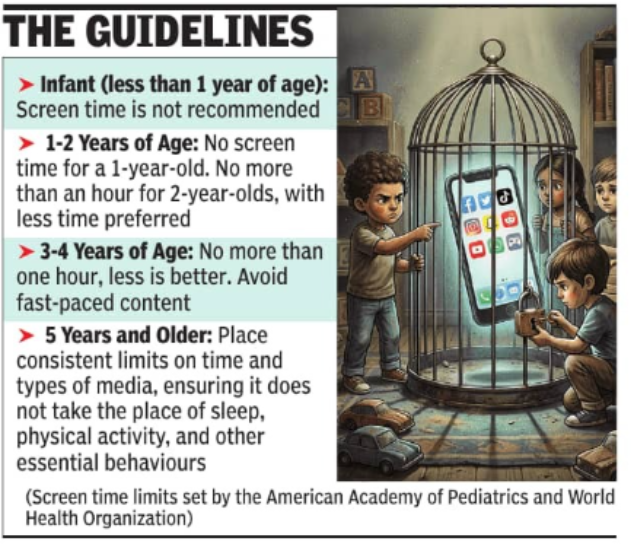
The study revealed that television (66%) and mobile phones (70.3%) were the most commonly used devices, among 212 children and adolescents who were part of the study. Alarmingly, 22.2% of children met the criteria for screen media addiction, based on DSM-5 standards for Internet Gaming Disorder. DSM-5 is Diagnostics and Statistical Manual of Mental Disorders, fifth edition, a guide used by researchers to diagnose, classify and treat mental health disorders.Addiction was more prevalent among boys, those from joint or extended families, and children diagnosed with neurodevelopmental or disruptive disorders.Excessive screen use contributes to obesity, sedentary behaviour, poor dietary habits, and disrupted sleep. Cognitively, prolonged exposure can impair language development, executive functioning and emergent literacy skills. Research even suggests structural brain changes in preschool children with high screen exposure, particularly affecting white matter tracts (which act as brain’s communication networks), critical for learning and communication.Psychosocially, children addicted to screen media often display deception (sneaking or lying to use devices), preoccupation, withdrawal symptoms and conflicts within families. Screen use also interferes with friendships and family activities, while increasing vulnerability to cyberbullying, unsafe online content and negative emotional states.The study underscores the urgent need for parental awareness and regulation. Parents often allow children with neurodevelopmental disorders extra screen time as a coping mechanism, but this leads to more problems. In joint family settings, inconsistent parenting rules can further exacerbate the issue.In conclusion, screen media use among children is not inherently harmful, but its excessive and unregulated use poses significant risks to physical health, cognitive development and emotional well-being. With nearly one-fourth of children in psychiatric care showing signs of addiction, routine evaluation of screen habits and strict adherence to recommended guidelines are essential steps toward safeguarding the next generation.(* Problematic screen media use in children and adolescents attending child and adolescent psychiatric services in a tertiary care center in North India, by Venkatesh Raju, Akhilesh Sharma, Ruchita Shah, Ravikanth Tangella, Sana Devi Yumnam, Jyoti Singh, Jaivinder Yadav, and Sandeep Grover)


