
. NEW DELHI: Justice Ahsanuddin Amanullah, part of a nine-judge Supreme Court bench, on Thursday said everyone must know that since the days of the Prophet, there was no ban on entry of women into mosques to offer namaz though there were customs and procedures in Islam regulating the manner of how can they offer prayer.When senior advocate M R Shamshad argued that the custom of providing separate space for Muslim women to offer namaz could not be questioned by a court and said though there was no ban on Muslim women offering namaz in a mosque, it was preferable that they did so in their homes. Justice Amanullah said, “A reason for Islam to prefer women offering namaz at home is that if every adult of a family goes to a mosque to offer namaz, who will take care of the children?”Taking the opportunity of the debate over faith vs fundamental rights arising from the Sabarimala temple entry case, Shamshad said the nine-judge bench must overrule the 1994 SC judgment in Ismail Farooqui case, relating to Ram Janmaboomi case, which had ruled that mosque is not essential for namaz.”Masjid is the essence of Islam, the core belief of Muslims. All religious practices are related to masjid. But in Ismail Farooqui, the SC illogically ruled that since namaz can be offered in an open ground, a mosque is not essential for namaz,” Shamshad argued.. He said the PIL seeking equal treatment of women in offering namaz in a mosque and seeking front row place in the congregation for them was not provided for in the Quran. “There is no concept of sanctum sanctorum, like in a temple, in a mosque, where the entry of women is barred,” he added.Justice Amanullah said, “Whether women stand in the front row or offer namaz in a separate enclosure is decided by the custom which has been in practice for 1,200 years.” End of ArticleFollow Us On Social MediaVideos‘Uninformed, Inappropriate’: India Responds To Trump’s ‘Hell-hole’ Comment‘In Touch With Iran’: MEA Confirms Indian Crew Safe After Hormuz FiringViolent Clashes Mar Bengal Phase 1 Voting As Tamil Stars Contribute To 82% TurnoutFrance Waives Airport Transit Visa For Indian Nationals, Boosts Travel EaseTop Military Leadership Of India And US Engage To Discuss Common Concerns In The Indo-pacificEx-Domestic Worker Arrested in Delhi IIT Graduate Murder; Linked to Alwar CaseTrump Sparks Outrage After Reposting ‘Hellholes’ Remark on India, China Amid Citizenship DebateUS Congressman Urges Pakistan To Act Against LeT, JeM; Renews Focus On Cross-Border TerrorWest Bengal Poll Violence: Blast In Murshidabad Injures Multiple During VotingVijay Writes To EC Seeking Poll Extension Amid 17.69% Early Turnout In Tamil Nadu123Photostories7 air-purifying plants for terrace gardensAre you using the right spoon? Here’s what each type of spoon is actually designed forGarad to Tangail: 5 underrated textiles from West Bengal you need to knowRoyal birthdays in May 2026: List of upcoming birthdays of Royals across the worldExclusive – Parth Samthaan on Mahid’s popularity, Sehar Hone Ko Hai and work-life balance: ‘We never tried to create controversy or show religion as propaganda’7 ways to make your first home feel right—cozy, functional, and personalMeghan Markle to Katy Perry: Ultimate celebrity backyards that serve as private hideawaysTop 5 elite residential neighbourhoods in Lucknow for end-users and investorsHow to identify a papaya which has been artificially ripenedWhy did Prime Minister Narendra Modi praise Indian cheese in a social media post123Hot PicksBengal Election 2026UP Board Class 10 result 2026Bengal election dos and don’tsTamil Nadu pollsSIR ProtestTN election dos and don’tsBank Holidays AprilTop TrendingWest Bengal electionTamil Nadu electionDianna RussiniNFL TradeTaylor SwiftMike VrabelUPMSP 12th ResultAnna KournikovasDNA TestIPL Orange Cap

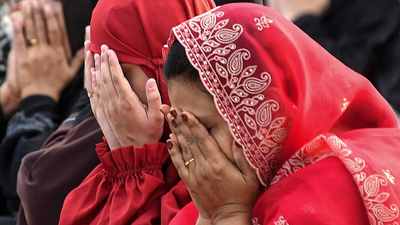
NEW DELHI: Justice Ahsanuddin Amanullah, part of a nine-judge Supreme Court bench, on Thursday said everyone must know that since the days of the Prophet, there was no ban on entry of women into mosques to offer namaz though there were customs and procedures in Islam regulating the manner of how can they offer prayer.When senior advocate M R Shamshad argued that the custom of providing separate space for Muslim women to offer namaz could not be questioned by a court and said though there was no ban on Muslim women offering namaz in a mosque, it was preferable that they did so in their homes. Justice Amanullah said, “A reason for Islam to prefer women offering namaz at home is that if every adult of a family goes to a mosque to offer namaz, who will take care of the children?”Taking the opportunity of the debate over faith vs fundamental rights arising from the Sabarimala temple entry case, Shamshad said the nine-judge bench must overrule the 1994 SC judgment in Ismail Farooqui case, relating to Ram Janmaboomi case, which had ruled that mosque is not essential for namaz.“Masjid is the essence of Islam, the core belief of Muslims. All religious practices are related to masjid. But in Ismail Farooqui, the SC illogically ruled that since namaz can be offered in an open ground, a mosque is not essential for namaz,” Shamshad argued.. He said the PIL seeking equal treatment of women in offering namaz in a mosque and seeking front row place in the congregation for them was not provided for in the Quran. “There is no concept of sanctum sanctorum, like in a temple, in a mosque, where the entry of women is barred,” he added.Justice Amanullah said, “Whether women stand in the front row or offer namaz in a separate enclosure is decided by the custom which has been in practice for 1,200 years.”


