
. NEW DELHI: In a significant statement, apparently in conflict with the judgment that quashed the Sabarimala Ayyappa temple’s custom of barring entry of women in the 10-50 age group, the Supreme Court on Thursday prima facie agreed that devotees’ right to decide the mode and manner of worshipping God was non-justiciable.SC’s remark came following senior advocate J Muth Raj’s argument that in Hinduism, every village had a ‘gram devta’, every family had a ‘kul devta’ and ‘ishta devta’, all of whom were worshipped differently, and it was impossible for the court to scrutinise the essentiality of such practices while tracing it to the umbrella religion.Conscience and faith private to individuals: SCThe bench hearing the Sabarimala case comprised CJI Surya Kant and Justices B V Nagarathna, M M Sundresh, Ahsanuddin Amanulla, Aravind Kumar, A G Masih, P B Varale, R Mahadevan and J Bagchi. CJI Kant and Justices Nagarathna, Sundresh, Kumar and Mahadevan, through their observations, appeared to agree that it would be difficult for the court to put its judicial lens to examine the validity of the mode and manner a devotee chooses to worship God. Raj asked that as no religious text prescribed such worship, what would be the baseline for the judicial scrutiny? The CJI and Justice Nagarathna said conscience and faith were private to an individual.Justice Sundresh said, “Article 25 rights protect a believer from a non-believer. It gives importance to the conscience of a person to practise, profess and propagate religion. The manner of worship is part of conscience and a space private to the devotee and God. This cannot be given a restrictive meaning.” Justice Mahadevan added, “Faith is faith. Its validity can’t be tested.”All major religious communities represented by senior advocates N K Kaul, K Radhakrishnan, Krishnan Venugopal, Guru Krishna Kumar, Shyam Divan and Arvind Datar — argued in unison that long-standing customs, as in the Sabarimala temple, were based on faith and were non-justiciable.End of ArticleFollow Us On Social MediaVideos‘Uninformed, Inappropriate’: India Responds To Trump’s ‘Hell-hole’ Comment‘In Touch With Iran’: MEA Confirms Indian Crew Safe After Hormuz FiringViolent Clashes Mar Bengal Phase 1 Voting As Tamil Stars Contribute To 82% TurnoutFrance Waives Airport Transit Visa For Indian Nationals, Boosts Travel EaseTop Military Leadership Of India And US Engage To Discuss Common Concerns In The Indo-pacificEx-Domestic Worker Arrested in Delhi IIT Graduate Murder; Linked to Alwar CaseTrump Sparks Outrage After Reposting ‘Hellholes’ Remark on India, China Amid Citizenship DebateUS Congressman Urges Pakistan To Act Against LeT, JeM; Renews Focus On Cross-Border TerrorWest Bengal Poll Violence: Blast In Murshidabad Injures Multiple During VotingVijay Writes To EC Seeking Poll Extension Amid 17.69% Early Turnout In Tamil Nadu123PhotostoriesAre you using the right spoon? Here’s what each type of spoon is actually designed forGarad to Tangail: 5 underrated textiles from West Bengal you need to knowRoyal birthdays in May 2026: List of upcoming birthdays of Royals across the worldExclusive – Parth Samthaan on Mahid’s popularity, Sehar Hone Ko Hai and work-life balance: ‘We never tried to create controversy or show religion as propaganda’7 ways to make your first home feel right—cozy, functional, and personalMeghan Markle to Katy Perry: Ultimate celebrity backyards that serve as private hideawaysTop 5 elite residential neighbourhoods in Lucknow for end-users and investorsHow to identify a papaya which has been artificially ripenedWhy did Prime Minister Narendra Modi praise Indian cheese in a social media postInside ‘Dhurandhar’ director Aditya Dhar and Yami Gautam’s Rs 20 crore Bandra home: Minimalism, nature and quiet luxury123Hot PicksBengal Election 2026UP Board Class 10 result 2026Bengal election dos and don’tsTamil Nadu pollsSIR ProtestTN election dos and don’tsBank Holidays AprilTop TrendingWest Bengal electionTamil Nadu electionDianna RussiniNFL TradeTaylor SwiftMike VrabelUPMSP 12th ResultAnna KournikovasDNA TestIPL Orange Cap

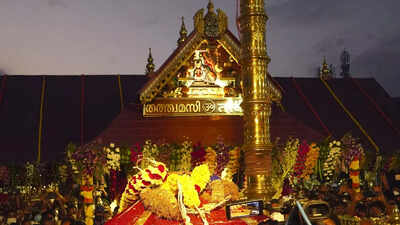
NEW DELHI: In a significant statement, apparently in conflict with the judgment that quashed the Sabarimala Ayyappa temple’s custom of barring entry of women in the 10-50 age group, the Supreme Court on Thursday prima facie agreed that devotees’ right to decide the mode and manner of worshipping God was non-justiciable.SC’s remark came following senior advocate J Muth Raj’s argument that in Hinduism, every village had a ‘gram devta’, every family had a ‘kul devta’ and ‘ishta devta’, all of whom were worshipped differently, and it was impossible for the court to scrutinise the essentiality of such practices while tracing it to the umbrella religion.
Conscience and faith private to individuals: SC
The bench hearing the Sabarimala case comprised CJI Surya Kant and Justices B V Nagarathna, M M Sundresh, Ahsanuddin Amanulla, Aravind Kumar, A G Masih, P B Varale, R Mahadevan and J Bagchi. CJI Kant and Justices Nagarathna, Sundresh, Kumar and Mahadevan, through their observations, appeared to agree that it would be difficult for the court to put its judicial lens to examine the validity of the mode and manner a devotee chooses to worship God. Raj asked that as no religious text prescribed such worship, what would be the baseline for the judicial scrutiny? The CJI and Justice Nagarathna said conscience and faith were private to an individual.Justice Sundresh said, “Article 25 rights protect a believer from a non-believer. It gives importance to the conscience of a person to practise, profess and propagate religion. The manner of worship is part of conscience and a space private to the devotee and God. This cannot be given a restrictive meaning.” Justice Mahadevan added, “Faith is faith. Its validity can’t be tested.”All major religious communities represented by senior advocates N K Kaul, K Radhakrishnan, Krishnan Venugopal, Guru Krishna Kumar, Shyam Divan and Arvind Datar — argued in unison that long-standing customs, as in the Sabarimala temple, were based on faith and were non-justiciable.


