
. NEW DELHI: Isro’s PSLV-C62 rocket’s “deviating from its planned flight path” during the launch on Monday is a big setback for not only security agencies that lost crucial defence satellite EOS-N1 (Anvesha) but also several Indian and foreign institutions, startups and companies that lost 15 satellites possessing disruptive technologies that would have brought revolutionary changes in the space sector if they had reached their sun-synchronous orbit home at an altitude of 512 km.“We attempted the PSLV-C62 EOS-N1 mission. The PSLV is a four-stage vehicle – the first stage is a solid motor with two strap-ons, the second stage is liquid, the third stage is solid, and the fourth stage is liquid. The performance of the vehicle close to the third stage was as expected and as predicted,” Isro chairman V Narayanan said after the botched launch at the Sriharikota spaceport.“However, near the end of the third stage, we observed some disturbance in the vehicle, and there was a deviation in its flight path. As a result, the mission could not proceed as expected. We are now analysing the data from all ground stations, and once the analysis is complete, we will come back to you,” he said.DRDO’s EOS-N1 (Anvesha), a strategic super-eye, was a hyperspectral imaging satellite capable of “seeing” in hundreds of wavelengths to identify materials on the ground—making it a high-priority asset for national security and surveillance. Had it been placed in orbit, it would have helped India secure its borders through its advanced remote sensing capabilities and would have also seen civilian application in areas such as agriculture, urban mapping and environmental observation.Last year too, India lost a crucial defence satellite, EOS-09, in space when the PSLV-C61 mission failed on May 18, 2025, due to an anomaly in the third stage, like this time. EOS-09 was an advanced Indian radar imaging satellite designed for all-weather, day-and-night surveillance, crucial for border monitoring, disaster response and resource management.The PSLV-C62 mission was also carrying KID or Kestrel Initial Technology Demonstrator from a Spanish startup. It was a small-scale prototype of a re-entry vehicle developed by the startup. KID was scheduled to be the last co-passenger to be injected, after which it was slated to re-enter the earth’s atmosphere towards splashdown in the South Pacific Ocean.Bengaluru-based space startup OrbitAID Aerospace was poised to make history with AayulSAT, India’s first on-orbit satellite refuelling payload. AayulSAT was aimed at extending satellite lifespans by enabling refuelling and servicing in orbit, addressing space debris and sustainability challenges.Hyderabad startups TakeMe2Space and Eon Space Labs were launching India’s first orbital AI lab. It featured the MIRA telescope and a disruptive model to slash space data costs. Satellite MOI-1 would have taken photos from an altitude of 500 km and also processed them there itself.Other secondary payloads were cubesats developed by students of several universities and Indian startups, including CV Raman Global University’s CGUSAT-1, Dhruva Space’s DA-1, Space Kidz India’s SR-2, Assam Don Bosco University’s Lachit-1, Akshath Aerospace’s Solaras-S4 and Dayanand Sagar University’s DSAT-1. All satellites are now lost in space.End of ArticleFollow Us On Social MediaVideosCongress MP says India remains “heavily invested emotionally and politically” in Bangladesh”Our Youth Is Creative And Innovative,” PM Modi At Viksit Bharat Dialogue“Deeply Impressed,” CEOs Share Takeaways After Meeting PM Modi | VideoFrom Defence To AI: PM Modi Urges German CEOs To Make India Their Global Manufacturing Base’Real Friends Always…’: Trump’s New Envoy Sergio Gor Pledges To Reset India-US TiesNot Trade Or Defence: Why Four-Year Old Baby Ariha Shah Became Key Topic In Modi–Germany TalksAAP’s Raghav Chadha Turns Blinkit Delivery Agent for a Day Amid Gig Workers’ Row’Will Come to Mumbai, Try Cutting My Legs: Annamalai Hits Back at Raj ThackerayIndia Tests Indigenous Fire And Forget Anti-Tank Missile With Top Attack Strike On Moving TargetsShaksgam Valley Row Deepens As China Rejects India’s Claim And Defends CPEC Infra Project With Pak123PhotostoriesBreathtaking pictures of Nupur Sanon and Stebin Ben’s stylish Hindu wedding5 animals that survive by pretending to be deadHow to make Halwai Style Aloo Sabji at homeFrom mindful portions to intermittent fasting: When Taarak Mehta Ka Ooltah Chashmah’s Munmun Dutta gave a peek into her disciplined diet and daily routineTimothée Chalamet to Jacob Elordi: The Men of the 2026 Golden Globes who delivered a masterclass in modern tailoringThalapathy Vijay’s ‘Jana Nayagan’ delayed: 8 must-watch OTT hits to streamTamil Nadu Assembly Elections 2026: Alliances, numbers and the battle for 234 seats5 jungle survival tips Bear Grylls swears by, and how they apply beyond the wildChef Sanjeev Kapoor shares 5 crunchy snack recipes to enjoy with chai during winter `Best horror dramas on Apple TV: ‘The Enfield Poltergeist’, ‘Servant’ and more123Hot PicksISRO PSLV-C62 missionTrump tariffsGold rate todayBengaluru newsCigarette price hikePublic holidays January 2026Bank Holidays JanuaryTop TrendingNFL Football Playoff Schedule 2026George Kittle InjuryVanessa Bryant and Natalia Bryant Net WorthBrooks Koepka and Jena Sims Net WorthMorgan GeekieBryce Harper Net WorthTravis Kelce WeddingDonovan MitchellLeBron JamesBudget 2026
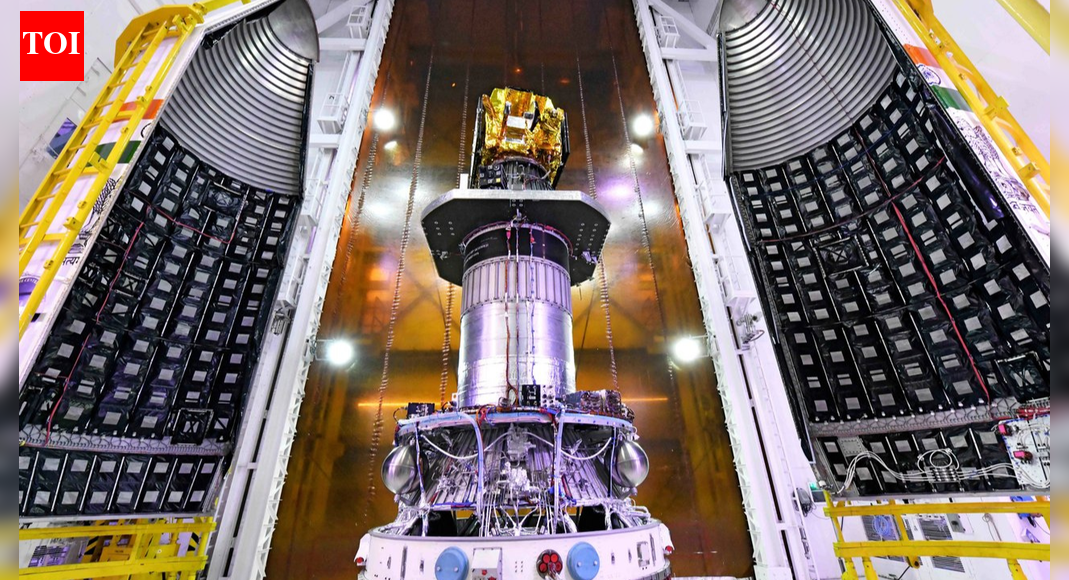
NEW DELHI: Isro’s PSLV-C62 rocket’s “deviating from its planned flight path” during the launch on Monday is a big setback for not only security agencies that lost crucial defence satellite EOS-N1 (Anvesha) but also several Indian and foreign institutions, startups and companies that lost 15 satellites possessing disruptive technologies that would have brought revolutionary changes in the space sector if they had reached their sun-synchronous orbit home at an altitude of 512 km.“We attempted the PSLV-C62 EOS-N1 mission. The PSLV is a four-stage vehicle – the first stage is a solid motor with two strap-ons, the second stage is liquid, the third stage is solid, and the fourth stage is liquid. The performance of the vehicle close to the third stage was as expected and as predicted,” Isro chairman V Narayanan said after the botched launch at the Sriharikota spaceport.“However, near the end of the third stage, we observed some disturbance in the vehicle, and there was a deviation in its flight path. As a result, the mission could not proceed as expected. We are now analysing the data from all ground stations, and once the analysis is complete, we will come back to you,” he said.DRDO’s EOS-N1 (Anvesha), a strategic super-eye, was a hyperspectral imaging satellite capable of “seeing” in hundreds of wavelengths to identify materials on the ground—making it a high-priority asset for national security and surveillance. Had it been placed in orbit, it would have helped India secure its borders through its advanced remote sensing capabilities and would have also seen civilian application in areas such as agriculture, urban mapping and environmental observation.Last year too, India lost a crucial defence satellite, EOS-09, in space when the PSLV-C61 mission failed on May 18, 2025, due to an anomaly in the third stage, like this time. EOS-09 was an advanced Indian radar imaging satellite designed for all-weather, day-and-night surveillance, crucial for border monitoring, disaster response and resource management.The PSLV-C62 mission was also carrying KID or Kestrel Initial Technology Demonstrator from a Spanish startup. It was a small-scale prototype of a re-entry vehicle developed by the startup. KID was scheduled to be the last co-passenger to be injected, after which it was slated to re-enter the earth’s atmosphere towards splashdown in the South Pacific Ocean.Bengaluru-based space startup OrbitAID Aerospace was poised to make history with AayulSAT, India’s first on-orbit satellite refuelling payload. AayulSAT was aimed at extending satellite lifespans by enabling refuelling and servicing in orbit, addressing space debris and sustainability challenges.Hyderabad startups TakeMe2Space and Eon Space Labs were launching India’s first orbital AI lab. It featured the MIRA telescope and a disruptive model to slash space data costs. Satellite MOI-1 would have taken photos from an altitude of 500 km and also processed them there itself.Other secondary payloads were cubesats developed by students of several universities and Indian startups, including CV Raman Global University’s CGUSAT-1, Dhruva Space’s DA-1, Space Kidz India’s SR-2, Assam Don Bosco University’s Lachit-1, Akshath Aerospace’s Solaras-S4 and Dayanand Sagar University’s DSAT-1. All satellites are now lost in space.


