
NEW DELHI: Former Chief of Defence Staff Anil Chauhan on Tuesday said India may have hit Pakistan’s Kirana Hills during Operation Sindoor last year, but the strike was unintentional.Speaking at the ‘VIMARSH’ event on Operation Sindoor and its aftermath at the Vivekanand International Foundation, Chauhan said Indian loitering missions sent to search for radars around Sargodha ran out of fuel and ended up hitting Kirana Hills — a site associated with Pakistan’s nuclear facilities.”At occasions, it’s been asked whether Kirana Hills were hit or not, which is where their (Pakistan’s) nuclear facilities are… Before those strikes, we had sent in a lot of loitering missions at Sargodha and Kirana Hills is about 10 kilometers north of Sargodha,” Chauhan said.”So the loitering mission is looking for radars which are in and around Sargodha, and it has a lifetime, which means it will loiter for about 2 hours and once it does not find a target, it comes down and hits somewhere. It must have come and hit one of those hills. So that could be one of the reasons as to what people asked, because Pakistani media also showed some kind of images in which there was smoke coming out from Kirana Hills,” he added.Chauhan also revealed details of another episode during the operation, saying the Air Chief sought his approval to strike Sargodha after Pakistan requested talks. However the target was changed to Bholari due to bad weather.”Once the Pakistanis had picked up the phone and said they wanted to talk at about 10 AM. The Air Chief asked me whether he should strike Sargodha, I said, Go ahead. I said, could you please identify two more targets, so one of the targets he identified was Skardu,” Chauhan said.Join conversationView All Comments →Share your thoughts in the commentsInsightfulAgreeDisagreeSkepticalConcerningPromisingWorth ReadingBig DevelopmentPost CommentBe respectful · TOI community guidelines”We gave a yes, but after some time, the weather was bad over it and they had to change over to Bholari,” he added.During his address, Chauhan also stressed that military decisions involve varying levels of risk and must be assessed against the political objectives they are intended to achieve.”Each option has a certain kind of risk involved in it, and also it will satisfy the political need for which it was to be used. So, it’s an interplay between risk and attainment of political objectives,” he said.Chauhan said the operation remains relevant nearly 15 months after its major active phase ended. He said its assessment should take into account deficiencies identified during the operation, measures taken to address them and the changing nature of warfare.He added that these factors, along with wider global uncertainties, are creating new challenges for military planners.Get the latest India News and Live updates. Download the TOI app.About the AuthorRohitashwa RanjanRohitashwa Ranjan is a digital journalist with The Times of India, where he decodes Indian politics as a carefully staged production with scripts, subtext and everything behind. His stories track elections, party dynamics and the things that often are buried beneath the headlines. When not parsing vote shares or alliances, he is usually reading between the lines, where the real story tends to reside.Read MoreEnd of ArticleFollow Us On Social MediaVideosBihar BPSC Protest Explodes In Patna As Students Break Barricades, Police Use Water Cannons | WatchIndia Opens DRDO Missile Technologies To Defence Firms In Major Push For Indigenous ProductionXi-Modi Meeting In Delhi? China Prepares Massive Delegation As India-China Ties Show Fresh ThawExplained: Why Are Sugar Prices Rising In India Despite Record Sugarcane Production?Supreme Court Notice To 20 Rebel TMC MPs On Abhishek Banerjee’s Disqualification Plea’People Were Shot In The Head’: Sonam Wangchuk Seeks Inquiry Report Into 2025 Ladakh ViolenceAjeet Bharti EXCLUSIVE On ‘Reservation Hatao Andolan’, Harsh Dubey, CJP & His Criticism Of BJPTMC’s Abhishek Banerjee Moves Supreme Court Over Delay In Disqualification Of 20 Rebel TMC MPsTrump Pushes $103,265 H-1B Fee; 71% Indian Professionals Brace For Major Immigration BlowJaishankar Meets Putin In Moscow, India-Russia Trade Soars As Both Sides Target $100 Billion By 2030123Photostories5 iconic places in Maharashtra where Ganesh Chaturthi is more than a festivalChinese singer Liu Yu’s Manish Malhotra couture moment in Paris is proof that Indian craftsmanship needs no introduction10 baby girl names that sound modern but have ancient roots5 traditional Bengali sarees you probably haven’t heard ofFrom castor to coconut oil: Natural oils for faster beard growthTraitors 2: From Shalini Passi’s over Rs 2,000 crore family wealth to Mallika Sherawat’s Rs 170 crore fortune, here’s a look at the net worth of popular contestantsYour blood pressure could be rising because of these 7 everyday habits you may think are completely harmless7 simple ways to live every day like a holiday like Dua Lipa, despite working full-timeUrvashi Rautela makes a tricolour statement in a one-of-a-kind gown that took 3 months to createOptical illusion personality test: The object you spot first reveals the trait you’re probably in denial about123Hot PicksBPSC exam rowSugar priceNew Zealand social media banTrump tariffICSI CS june resultNEET UG 2026Sridhar VembuTrump’s SpaceXNEET PG 2026 admit cardTop TrendingBandra Parsi BungalowSuresh GowdaRupali ChakankarKarnataka Food Licence SuspensionAllahabad High CourtMumbai Airport DemolitionRam RahimDelhi Women AccidentDelhi Gurgaon RainMaharashtra Hill Tragedy

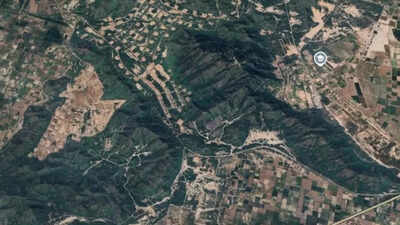
NEW DELHI: Former Chief of Defence Staff Anil Chauhan on Tuesday said India may have hit Pakistan’s Kirana Hills during Operation Sindoor last year, but the strike was unintentional.Speaking at the ‘VIMARSH’ event on Operation Sindoor and its aftermath at the Vivekanand International Foundation, Chauhan said Indian loitering missions sent to search for radars around Sargodha ran out of fuel and ended up hitting Kirana Hills — a site associated with Pakistan’s nuclear facilities.“At occasions, it’s been asked whether Kirana Hills were hit or not, which is where their (Pakistan’s) nuclear facilities are… Before those strikes, we had sent in a lot of loitering missions at Sargodha and Kirana Hills is about 10 kilometers north of Sargodha,” Chauhan said.“So the loitering mission is looking for radars which are in and around Sargodha, and it has a lifetime, which means it will loiter for about 2 hours and once it does not find a target, it comes down and hits somewhere. It must have come and hit one of those hills. So that could be one of the reasons as to what people asked, because Pakistani media also showed some kind of images in which there was smoke coming out from Kirana Hills,” he added.Chauhan also revealed details of another episode during the operation, saying the Air Chief sought his approval to strike Sargodha after Pakistan requested talks. However the target was changed to Bholari due to bad weather.“Once the Pakistanis had picked up the phone and said they wanted to talk at about 10 AM. The Air Chief asked me whether he should strike Sargodha, I said, Go ahead. I said, could you please identify two more targets, so one of the targets he identified was Skardu,” Chauhan said.
Share your thoughts in the comments
Be respectful · TOI community guidelines
“We gave a yes, but after some time, the weather was bad over it and they had to change over to Bholari,” he added.During his address, Chauhan also stressed that military decisions involve varying levels of risk and must be assessed against the political objectives they are intended to achieve.“Each option has a certain kind of risk involved in it, and also it will satisfy the political need for which it was to be used. So, it’s an interplay between risk and attainment of political objectives,” he said.Chauhan said the operation remains relevant nearly 15 months after its major active phase ended. He said its assessment should take into account deficiencies identified during the operation, measures taken to address them and the changing nature of warfare.He added that these factors, along with wider global uncertainties, are creating new challenges for military planners.


