
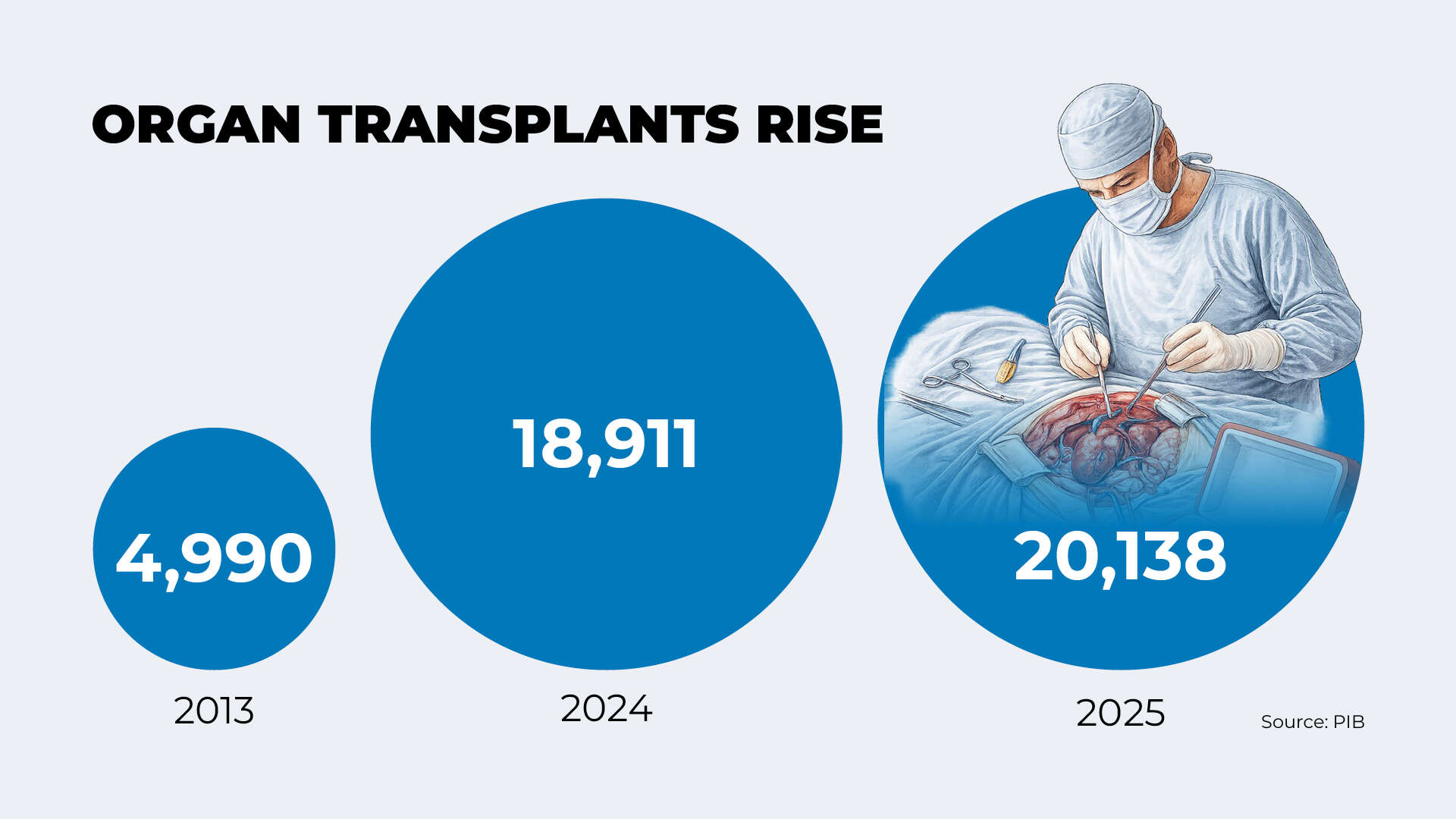
Organ transplant in India. Photo credit: AP India’s transplant system has grown rapidly, from 4,990 transplants in 2013 to 20,138 in 2025. But for a patient, a transplant is far more than a surgical procedure. It is a journey through medical tests, clearances, documentation, waiting, uncertainty, organ matching and, eventually, surgery and lifelong follow-up.Transplant hospitals and coordinators are at the centre of this system, working within the wider network of the National Organ and Tissue Transplant Organisation (NOTTO), Regional Organ and Tissue Transplant Organisations (ROTTOs) and State Organ and Tissue Transplant Organisations (SOTTOs).Yet statistics and institutional structures can obscure what the process actually feels like for the person waiting for an organ. For recipients such as Hemant Kumar Thakur and Shrishti Sinha, the reality is one of uncertainty, exhaustion and fear — followed by the possibility of a second chance at life.India’s organ transplant system works through a three-tier hierarchical network coordinated by NOTTO, ROTTO, and SOTTOThe journey begins before surgeryA patient with advanced organ failure is first evaluated at a registered transplant centre. The assessment can involve blood tests, imaging, organ-specific investigations and evaluation by a multidisciplinary team. If found medically suitable, the patient is registered in the relevant transplant system.Being on a waiting list, however, does not simply mean waiting in chronological order. Allocation depends on the organ and applicable rules, including factors such as medical urgency, compatibility and, for some organs, time spent on the list. NOTTO’s framework also provides for urgent and super-urgent categories. For kidney patients, for instance, time on dialysis is among the factors considered.Live Kidneys lead India’s transplant numbers. NOTTO coordinates the system nationally, while ROTTOs and SOTTOs connect regional and state-level transplant activity. The State Appropriate Authority separately oversees regulatory compliance, including the registration of transplant centres and adherence to legal and ethical requirements.For recipients, however, the elaborate network can feel much simpler: a long wait, a stream of tests and paperwork, and the constant question of what happens next.“The process is not smooth”Hemant Kumar Thakur, from Jamshedpur, Jharkhand, underwent a kidney transplant at Apollo Hospitals in Kolkata, with his wife, Kanchan Mala, donating a kidney. For him, the hardest part was not the operation but navigating the process beforehand.Because he lived in Jharkhand while the transplant took place in West Bengal, Hemant had to deal with inter-state approvals and paperwork.“Because the procedure involved two different states — Jharkhand and West Bengal — I had to obtain No Objection Certificates (NOCs) from both states before the transplant could proceed,” he said.The transplant journey begins long before the operating room, with a long road of tests, paperwork and waiting.Despite the difficulties, Hemant was fortunate to have a compatible donor within his family.“The process is not smooth; it is quite challenging. I was lucky that the match was found within my own family, with my wife,” he said.His experience also made him aware of the uncertainty faced by patients without a matching family donor. He recalled seeing patients who had found donors and completed much of the paperwork, only for the donor to later withdraw.“After going through the entire process, they were back where they had started — back to square one,” he said.Consent can change the courseIndia’s transplant framework is governed by the Transplantation of Human Organs and Tissues Act, 1994 (THOTA) and related rules. Organ donation must be voluntary and free from commercial dealings, while transplantation is permitted only through authorised institutions.Dr Ankur Garg, GI Surgeon and Liver Transplant Specialist at Paras Health in Gurugram, says legitimate organisations and transplant coordinators play an important role in educating patients, facilitating listing and supporting families when brain-stem death is declared.But he warns that patients can also be targeted by unscrupulous intermediaries.“There will always be unsocial elements, touts, agents in society luring needy patients and families and giving false hopes and promises of early organ allocation, lesser waiting times and so much extra,” he said.Consent can also change during the donation process. Dr Garg explains that once brain-stem death has been declared and the family consents to donation, the process of identifying eligible recipients begins. But consent can still be withdrawn before organ retrieval.“Before wheeling into the operation theatre where organ harvesting happens, anyone can withdraw consent, and the whole process will stop,” he said.For recipients, that possibility can mean losing an organ they had been preparing to receive and returning to the uncertainty of the waiting list.Once an organ is allocated, the recipient is prepared for surgery and then closely monitored for complications and organ functionLiving donation: another route, but not a simple oneNot every patient has to depend on a deceased donor. Certain organs, particularly kidneys and part of the liver, can be donated by living donors after medical, legal and ethical evaluation.The donor’s compatibility and health are assessed, while the legal process depends partly on the relationship between donor and recipient. Near-relative donations follow the applicable framework, while other living-donor relationships may require scrutiny by an Authorisation Committee.Dr Garg says a patient cannot simply register at multiple centres and wait for whichever offers an organ first.“As per the rule, any patient is allowed to register at one place only. Under NOTTO guidelines and Indian transplant regulations, a patient cannot be registered on a deceased donor waiting list at multiple hospitals or centres simultaneously,” he said.He said the listing process requires a medical summary, blood group, relevant reports and valid Aadhaar or national identification.Following the surgery, transplant centres also continue monitoring recipient information and clinical status.The surgery is only the beginningOnce an organ is allocated, the recipient is prepared for surgery and then closely monitored for complications and organ function. But leaving the hospital does not mean leaving the transplant journey behind.Recipients must take prescribed immunosuppressive medicines consistently, attend follow-up appointments and undergo regular investigations. Transplant centres also continue monitoring recipient information and clinical status.Hemant said his own transplant was comparatively smooth once the approvals and paperwork were completed, but the financial and medical commitments continued.He spent approximately Rs 15–20 lakh on the transplant and related treatment in 2020.“I do not have any additional complications. I just go for routine check-ups every six months and have to take medication for the rest of my life,” he said.He currently spends around Rs 7,000–8,000 a month on medicines, although he noted that aftercare and medication costs vary between patients.Hemant also contrasted the long-term experience of the recipient with that of his living donor, his wife.“The donor has to take medicines for about three months after the transplant and can lead a normal life,” he said.The emotional toll of transplantationShrishti Sinha, an engineer who now works as a freelancer in Delhi, describes her transplant journey through a different lens: uncertainty, gratitude, fear and the possibility of rebuilding a future. Watch What Happens After You Apply For A Transplant?“There are many moments of uncertainty. There are medical tests, clearances, waiting for updates and constantly wondering what comes next,” she says.Even hope was fragile.“Not completely. As if one moment hope was rising, the next it was gone. There were cases more severe than mine, or someone who had a higher percentage of surviving,” she recalls.Shrishti underwent treatment at R&R Hospital in Delhi and remembers her doctors as a source of encouragement.“It was R&R Hospital, Delhi, and the doctors were positive and kept trying to cheer me up,” she says.When she finally realised she would receive an organ, her response was deeply personal.“I was crying and feeling grateful that I was going to live, that I would get to spend more time with my husband and create a future,” she recalls.Recovery brings a new set of challengesThe transplant did not instantly restore normal life. Shrishti found recovery difficult, from eating and drinking to physiotherapy.“Recovery was not straightforward. There were challenges with eating, drinking and physiotherapy. Seeing the scar for the first time was scary,” she says.There were unexpected experiences, too.“The weirdest thing was having strange cravings that I never used to have,” she recalls.Five years later, however, she says the biggest change is her ability to think beyond her illness.“The biggest change is that I can think about the future again. Before the transplant, so much of my life revolved around my health and whether my condition would deteriorate further.”Join conversationView All Comments →Share your thoughts in the commentsInsightfulAgreeDisagreeSkepticalConcerningPromisingWorth ReadingBig DevelopmentPost CommentBe respectful · TOI community guidelinesShe now marks the day of her operation as something more than a medical milestone.“Five years later, I have started treating my operation day as my second birthday, a chance to live,” she says.Behind every transplant statistic is a patient who has waited, a donor who has made an extraordinary decision, and a family navigating a system in which every clearance, consent and organ offer can change the course of a life.Beyond the numbersIndia’s transplant system may be measured in hospitals, registries, waiting lists and annual numbers. But for the person inside it, transplantation is much more intimate: months of paperwork, uncertainty and waiting, followed by surgery and the lifelong responsibility of protecting the new organ.Behind every transplant statistic is a patient who has waited, a donor who has made an extraordinary decision, and a family navigating a system in which every clearance, consent and organ offer can change the course of a life.For recipients like Hemant and Shrishti, the transplant is ultimately not just about surviving. It is about being able to imagine tomorrow again.Get the latest India News and Live updates. Download the TOI app.About the AuthorSubhadra SrivastavaSubhadra Srivastava is a journalist with The Times of India, covering geopolitics, international and national affairs. With over three years of experience, she focuses on national and global developments, conflict, diplomacy and their impact on India. Her work combines breaking news with in-depth analysis, offering readers context and clarity on the stories shaping the world.Read MoreEnd of ArticleFollow Us On Social MediaVideosExplained: Why Are Sugar Prices Rising In India Despite Record Sugarcane Production?Supreme Court Notice To 20 Rebel TMC MPs On Abhishek Banerjee’s Disqualification Plea’People Were Shot In The Head’: Sonam Wangchuk Seeks Inquiry Report Into 2025 Ladakh ViolenceAjeet Bharti EXCLUSIVE On ‘Reservation Hatao Andolan’, Harsh Dubey, CJP & His Criticism Of BJPTMC’s Abhishek Banerjee Moves Supreme Court Over Delay In Disqualification Of 20 Rebel TMC MPsTrump Pushes $103,265 H-1B Fee; 71% Indian Professionals Brace For Major Immigration BlowJaishankar Meets Putin In Moscow, India-Russia Trade Soars As Both Sides Target $100 Billion By 2030Fresh Kashmiri Pandit Threat: Hit List Reveals Addresses, Phone Numbers, Vehicle Details OnlineDelhi-NCR Rain Fury: Gurugram Under Orange Alert, Work From Home Advisory Issued For August 25’Ram-Ram Inside, Fish Feast Outside’: Yogi Adityanath Slams Cong Over Ayodhya Event; Ajay Rai Reacts123Photostories5 traditional Bengali sarees you probably haven’t heard ofFrom castor to coconut oil: Natural oils for faster beard growthTraitors 2: From Shalini Passi’s over Rs 2,000 crore family wealth to Mallika Sherawat’s Rs 170 crore fortune, here’s a look at the net worth of popular contestantsYour blood pressure could be rising because of these 7 everyday habits you may think are completely harmless7 simple ways to live every day like a holiday like Dua Lipa, despite working full-timeUrvashi Rautela makes a tricolour statement in a one-of-a-kind gown that took 3 months to createOptical illusion personality test: The object you spot first reveals the trait you’re probably in denial about‘They don’t love you, they love your name’:Asim Riaz takes explosive dig at ex Himanshi Khurana, calls her a ‘fame digger’First egg, now chicken? 7 things to know about the Salmonella outbreak in the UKHow to remove coconut flesh from the shell easily: 5 simple tricks without wasting the coconut123Hot PicksBPSC exam rowSugar priceNew Zealand social media banTrump tariffICSI CS june resultNEET UG 2026Sridhar VembuTrump’s SpaceXNEET PG 2026 admit cardTop TrendingBandra Parsi BungalowSuresh GowdaRupali ChakankarKarnataka Food Licence SuspensionAllahabad High CourtMumbai Airport DemolitionRam RahimDelhi Women AccidentDelhi Gurgaon RainMaharashtra Hill Tragedy

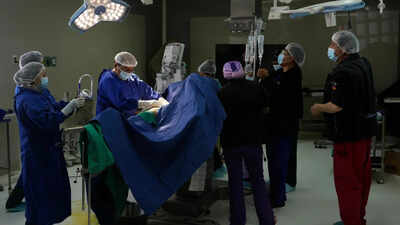
India’s transplant system has grown rapidly, from 4,990 transplants in 2013 to 20,138 in 2025. But for a patient, a transplant is far more than a surgical procedure. It is a journey through medical tests, clearances, documentation, waiting, uncertainty, organ matching and, eventually, surgery and lifelong follow-up.Transplant hospitals and coordinators are at the centre of this system, working within the wider network of the National Organ and Tissue Transplant Organisation (NOTTO), Regional Organ and Tissue Transplant Organisations (ROTTOs) and State Organ and Tissue Transplant Organisations (SOTTOs).Yet statistics and institutional structures can obscure what the process actually feels like for the person waiting for an organ. For recipients such as Hemant Kumar Thakur and Shrishti Sinha, the reality is one of uncertainty, exhaustion and fear — followed by the possibility of a second chance at life.
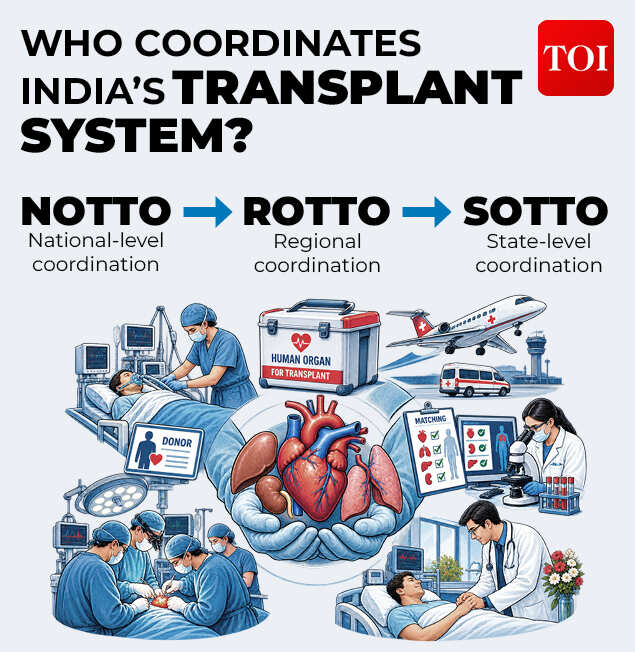
India’s organ transplant system works through a three-tier hierarchical network coordinated by NOTTO, ROTTO, and SOTTO
The journey begins before surgery
A patient with advanced organ failure is first evaluated at a registered transplant centre. The assessment can involve blood tests, imaging, organ-specific investigations and evaluation by a multidisciplinary team. If found medically suitable, the patient is registered in the relevant transplant system.Being on a waiting list, however, does not simply mean waiting in chronological order. Allocation depends on the organ and applicable rules, including factors such as medical urgency, compatibility and, for some organs, time spent on the list. NOTTO’s framework also provides for urgent and super-urgent categories. For kidney patients, for instance, time on dialysis is among the factors considered.
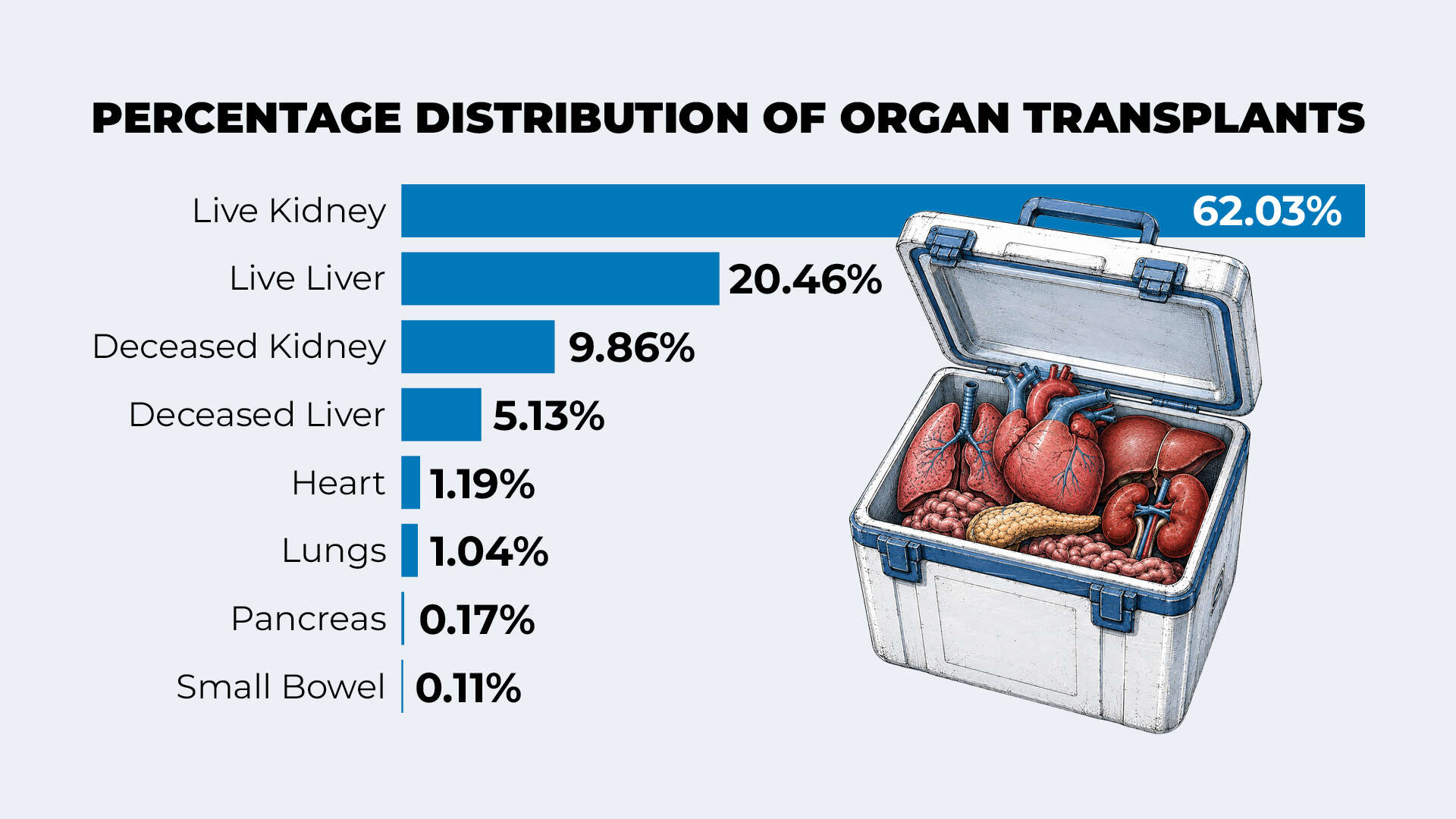
Live Kidneys lead India’s transplant numbers.
NOTTO coordinates the system nationally, while ROTTOs and SOTTOs connect regional and state-level transplant activity. The State Appropriate Authority separately oversees regulatory compliance, including the registration of transplant centres and adherence to legal and ethical requirements.For recipients, however, the elaborate network can feel much simpler: a long wait, a stream of tests and paperwork, and the constant question of what happens next.
“The process is not smooth”
Hemant Kumar Thakur, from Jamshedpur, Jharkhand, underwent a kidney transplant at Apollo Hospitals in Kolkata, with his wife, Kanchan Mala, donating a kidney. For him, the hardest part was not the operation but navigating the process beforehand.Because he lived in Jharkhand while the transplant took place in West Bengal, Hemant had to deal with inter-state approvals and paperwork.“Because the procedure involved two different states — Jharkhand and West Bengal — I had to obtain No Objection Certificates (NOCs) from both states before the transplant could proceed,” he said.
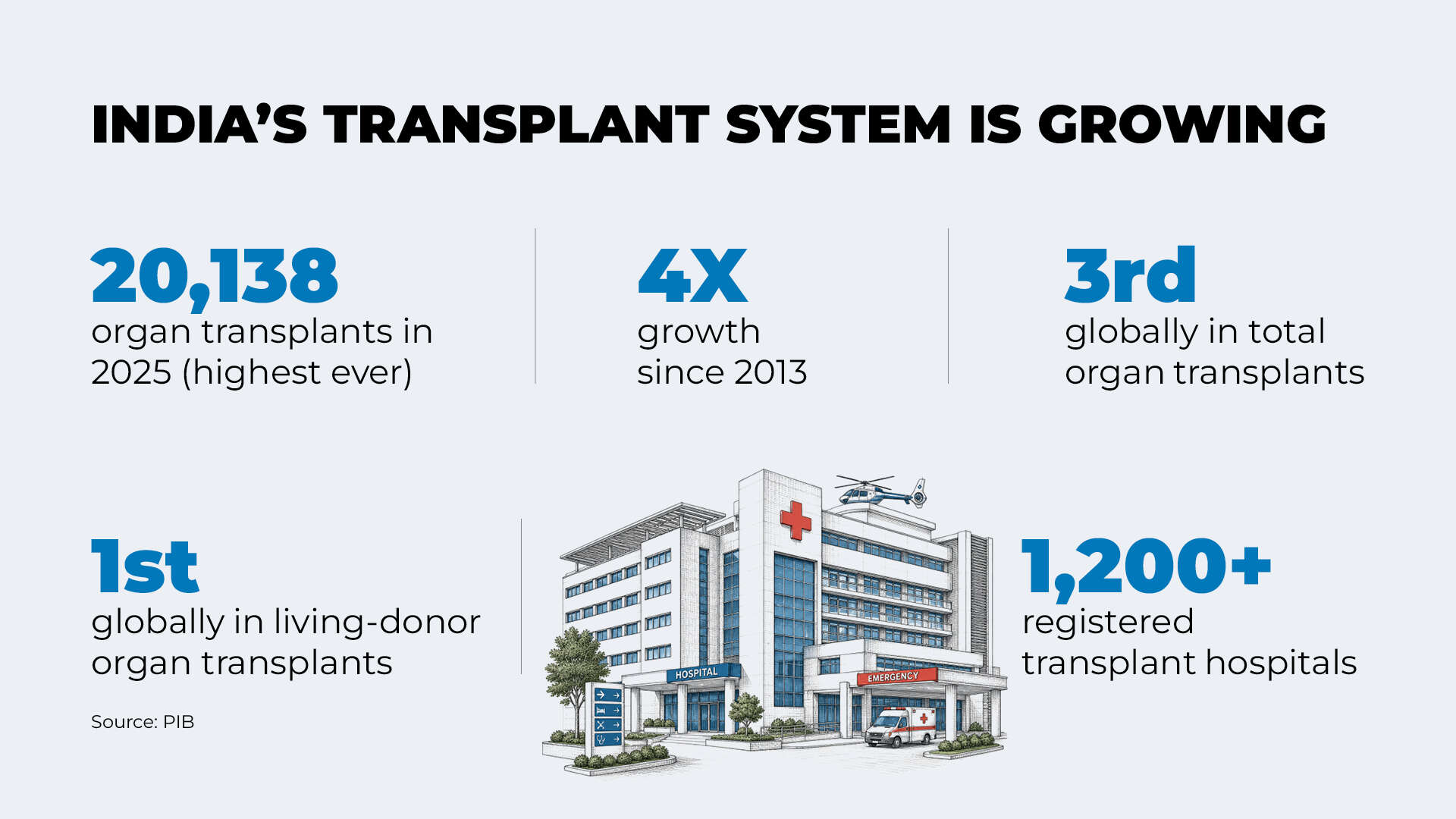
The transplant journey begins long before the operating room, with a long road of tests, paperwork and waiting.
Despite the difficulties, Hemant was fortunate to have a compatible donor within his family.“The process is not smooth; it is quite challenging. I was lucky that the match was found within my own family, with my wife,” he said.His experience also made him aware of the uncertainty faced by patients without a matching family donor. He recalled seeing patients who had found donors and completed much of the paperwork, only for the donor to later withdraw.“After going through the entire process, they were back where they had started — back to square one,” he said.
Consent can change the course
India’s transplant framework is governed by the Transplantation of Human Organs and Tissues Act, 1994 (THOTA) and related rules. Organ donation must be voluntary and free from commercial dealings, while transplantation is permitted only through authorised institutions.Dr Ankur Garg, GI Surgeon and Liver Transplant Specialist at Paras Health in Gurugram, says legitimate organisations and transplant coordinators play an important role in educating patients, facilitating listing and supporting families when brain-stem death is declared.But he warns that patients can also be targeted by unscrupulous intermediaries.“There will always be unsocial elements, touts, agents in society luring needy patients and families and giving false hopes and promises of early organ allocation, lesser waiting times and so much extra,” he said.Consent can also change during the donation process. Dr Garg explains that once brain-stem death has been declared and the family consents to donation, the process of identifying eligible recipients begins. But consent can still be withdrawn before organ retrieval.“Before wheeling into the operation theatre where organ harvesting happens, anyone can withdraw consent, and the whole process will stop,” he said.For recipients, that possibility can mean losing an organ they had been preparing to receive and returning to the uncertainty of the waiting list.
Once an organ is allocated, the recipient is prepared for surgery and then closely monitored for complications and organ function
Living donation : another route, but not a simple one
Not every patient has to depend on a deceased donor. Certain organs, particularly kidneys and part of the liver, can be donated by living donors after medical, legal and ethical evaluation.The donor’s compatibility and health are assessed, while the legal process depends partly on the relationship between donor and recipient. Near-relative donations follow the applicable framework, while other living-donor relationships may require scrutiny by an Authorisation Committee.Dr Garg says a patient cannot simply register at multiple centres and wait for whichever offers an organ first.“As per the rule, any patient is allowed to register at one place only. Under NOTTO guidelines and Indian transplant regulations, a patient cannot be registered on a deceased donor waiting list at multiple hospitals or centres simultaneously,” he said.He said the listing process requires a medical summary, blood group, relevant reports and valid Aadhaar or national identification.
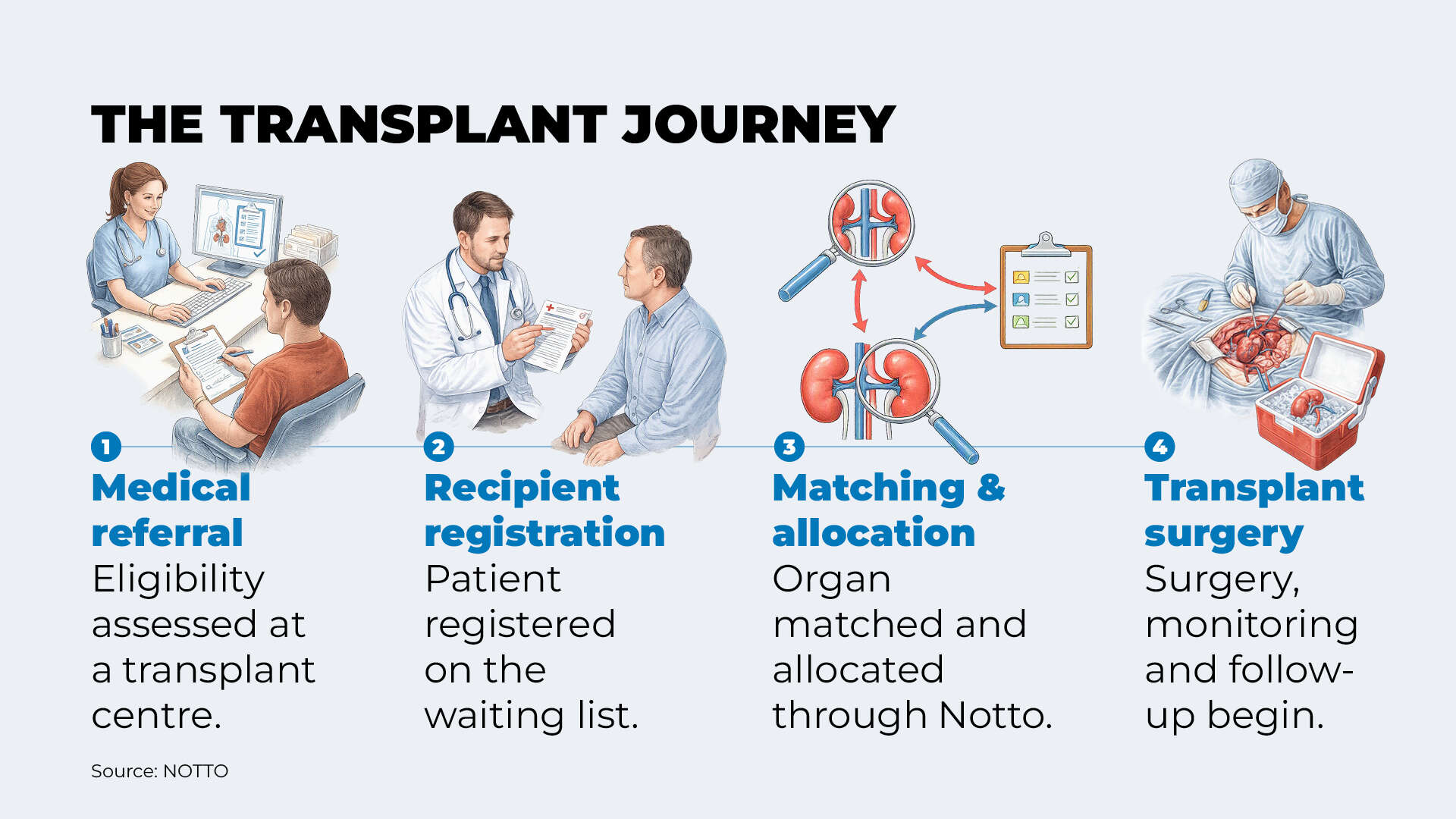
Following the surgery, transplant centres also continue monitoring recipient information and clinical status.
The surgery is only the beginning
Once an organ is allocated, the recipient is prepared for surgery and then closely monitored for complications and organ function. But leaving the hospital does not mean leaving the transplant journey behind.Recipients must take prescribed immunosuppressive medicines consistently, attend follow-up appointments and undergo regular investigations. Transplant centres also continue monitoring recipient information and clinical status.Hemant said his own transplant was comparatively smooth once the approvals and paperwork were completed, but the financial and medical commitments continued.He spent approximately Rs 15–20 lakh on the transplant and related treatment in 2020.“I do not have any additional complications. I just go for routine check-ups every six months and have to take medication for the rest of my life,” he said.He currently spends around Rs 7,000–8,000 a month on medicines, although he noted that aftercare and medication costs vary between patients.Hemant also contrasted the long-term experience of the recipient with that of his living donor, his wife.“The donor has to take medicines for about three months after the transplant and can lead a normal life,” he said.
The emotional toll of transplantation
Shrishti Sinha, an engineer who now works as a freelancer in Delhi, describes her transplant journey through a different lens: uncertainty, gratitude, fear and the possibility of rebuilding a future.“There are many moments of uncertainty. There are medical tests, clearances, waiting for updates and constantly wondering what comes next,” she says.Even hope was fragile.“Not completely. As if one moment hope was rising, the next it was gone. There were cases more severe than mine, or someone who had a higher percentage of surviving,” she recalls.Shrishti underwent treatment at R&R Hospital in Delhi and remembers her doctors as a source of encouragement.“It was R&R Hospital, Delhi, and the doctors were positive and kept trying to cheer me up,” she says.When she finally realised she would receive an organ, her response was deeply personal.“I was crying and feeling grateful that I was going to live, that I would get to spend more time with my husband and create a future,” she recalls.
Recovery brings a new set of challenges
The transplant did not instantly restore normal life. Shrishti found recovery difficult, from eating and drinking to physiotherapy.“Recovery was not straightforward. There were challenges with eating, drinking and physiotherapy. Seeing the scar for the first time was scary,” she says.There were unexpected experiences, too.“The weirdest thing was having strange cravings that I never used to have,” she recalls.Five years later, however, she says the biggest change is her ability to think beyond her illness.“The biggest change is that I can think about the future again. Before the transplant, so much of my life revolved around my health and whether my condition would deteriorate further.”
Share your thoughts in the comments
Be respectful · TOI community guidelines
She now marks the day of her operation as something more than a medical milestone.“Five years later, I have started treating my operation day as my second birthday, a chance to live,” she says.
Behind every transplant statistic is a patient who has waited, a donor who has made an extraordinary decision, and a family navigating a system in which every clearance, consent and organ offer can change the course of a life.
Beyond the numbers
India’s transplant system may be measured in hospitals, registries, waiting lists and annual numbers. But for the person inside it, transplantation is much more intimate: months of paperwork, uncertainty and waiting, followed by surgery and the lifelong responsibility of protecting the new organ.Behind every transplant statistic is a patient who has waited, a donor who has made an extraordinary decision, and a family navigating a system in which every clearance, consent and organ offer can change the course of a life.For recipients like Hemant and Shrishti, the transplant is ultimately not just about surviving. It is about being able to imagine tomorrow again.


