
NEW DELHI: Counting every person in a country of more than 1.4 billion people is no easy task. India is now preparing to undertake one of the world’s largest enumeration exercises — the Census 2027.The nationwide headcount was originally scheduled for 2021, in line with India’s decadal census cycle conducted since 1881. However, the Covid-19 pandemic and subsequent elections delayed the exercise multiple times.Although delayed, the upcoming census is expected to be one of the most comprehensive exercises ever undertaken. The government has announced that the census will include caste enumeration, and it will also be the first time the entire process will be conducted in a paper-free digital format.Israel Iran WarUS-Israel-Iran War News Live Updates: UAE embassy in Iraq attacked, Hezbollah drones target IsraelIran launches fresh strike on UAE: Two drones hit near Dubai airport; Indian among 4 injuredMiddle East war enters day 12 as US, Israel unleash ‘heaviest strikes’ on Iran as Tehran rules out ceasefireAccording to the government, about 30 lakh field functionaries will be deployed for data collection, monitoring and supervision, with a financial allocation of Rs 11,718.24 crore for the exercise.Why it mattersThe Census acts as a national mirror, reflecting shifts in identity, occupation, living conditions and family structures across the population. The data also helps the judiciary, policymakers and researchers track trends in migration, urbanisation, employment and fertility.Ministries ranging from education to rural development rely on census data to determine where schools, primary health centres and infrastructure projects are needed. Population figures also influence central grants to states and districts, as well as the allocation of subsidies and ration supplies.This time, the census will hold additional political significance because it will form the basis for Lok Sabha delimitation, a process that has been frozen since 2002. The Women’s Reservation Bill, which reserves one-third of seats in the Lok Sabha and state assemblies for women, may also come into effect after the census and subsequent delimitation exercise.How will Census 2027 be conducted?According to the government, the exercise will be conducted in two phases — the House-listing and Housing Census, followed by Population Enumeration.Phase I: The house-listing exercise will collect data on 33 parameters, including building materials, access to drinking water, sanitation facilities, household assets and sources of cooking fuel. The information will help build a detailed profile of housing conditions and access to amenities across India. The New Delhi Municipal Council (NDMC) will begin the house-listing exercise from April 15.Phase II: The second phase will focus on individual demographic data, including name, age, sex, date of birth, relationship to the head of the household, marital status, education, occupation, religion, caste or tribe, disability status and migration history.Enumerators will record details for every person – including the homeless – ensuring the database captures demographic and socio-economic information.The data will then be processed centrally and released in stages — first provisional population totals, followed by detailed tables disaggregated by multiple indicators. The process includes quality checks, re-verification and audits to ensure accuracy.What’s different this timeCensus 2027 will be India’s first fully digital census, with the use of mobile applications, online self-enumeration and near-real-time monitoring systems.The secure web-based portal will enable eligible members of a household to fill in their data in 16 languages. Once submitted, a unique Self-Enumeration ID will be generated, which enumerators can later verify during field visits.”The current endeavor would be to make available the coming Census data at the shortest possible time across the country. Efforts will also be made to disseminate Census Results with more customized visualization tools. Data sharing to all, up to the lowest Administrative Unit i.e. Village/Ward level,” The government said.The home ministry said the adoption of digital platforms would reduce paperwork, improve efficiency and enhance transparency in the census process.The four digital tools launched at the event aim to modernise census operations:\Houselisting Block Creator (HLBC) Web Application: A web-mapping platform that enables officials to create houselisting blocks using satellite imagery for standardised geographic coverage.HLO Mobile Application: A secure offline app that will allow enumerators to collect and upload houselisting data directly from the field using registered mobile devices.Self-Enumeration Portal: A web-based platform that allows households to voluntarily submit their census information online before field verification.Census Management and Monitoring System (CMMS) Portal: A centralised dashboard to plan, manage and monitor census activities across district, state and national levels in real time.Caste censusIt is also the first since 1931 that will collect caste data for all communities. Caste enumeration was a regular feature of census exercises during British rule from 1881 to 1931. However, with the first census of independent India in 1951, the government chose to discontinue the practice, except for Scheduled Castes (SCs) and Scheduled Tribes (STs).However, with the first census of independent India in 1951, the government chose to discontinue the practice, except for Scheduled Castes (SCs) and Scheduled Tribes (STs).”Questions for the second phase, including the Questions on Caste, will be notified before the commencement of the second phase of the Census Operation,” ministry of home affairs said in a statement.”Several representations regarding the enumeration of Caste have been received from various organisations of different States, including of the State of Tamil Nadu. The questions, including on Caste, for the second phase will be finalized and notified as per the established procedure,” it added.The decision marks a major shift after more than 70 years of hesitation.DelimitationCensus 2027 has also revived the debate on delimitation of parliamentary constituencies. Once the final census data is released, the government is likely to initiate the delimitation process. Parliament will need to pass a Delimitation Act to enable the formation of a Delimitation Commission.The commission will determine the population-to-constituency formula after consultations with stakeholders, including state governments.However, increasing the number of Lok Sabha seats would require a constitutional amendment, which must be passed with a two-thirds majority in Parliament.According to Article 81 of the Constitution, the total number of Lok Sabha seats cannot exceed 550.The issue has remained politically contentious, with several southern states arguing that delimitation based purely on population could reduce their representation in Parliament.Southern states have recorded better population control over the decades compared to many northern states, raising concerns about a potential north–south political imbalance.The DMK government in Tamil Nadu has previously passed a resolution opposing census-based delimitation.What experts saySpeaking to The Times of India, Nabhnipa Bhattacharjee, sociology professor at Sri Venkateswara College, University of Delhi, said the delay in conducting the census could affect policy planning.“It is a great delay. Even if the entire exercise concludes in 2027, the data may reach ministries only by the end of 2027 or early 2028, leaving limited time to design targeted welfare policies,” she said.Bhattacharjee added that delimitation, digital infrastructure, caste enumeration and the conduct of the census in Jammu and Kashmir and Ladakh after the abrogation of Article 370 would be among the key issues to watch.“The key question will be how the government approaches delimitation after the census, especially since it has already triggered a north–south debate. The introduction of digital enumeration is another challenge, given that large sections of the population still lack digital literacy,” she said.She also noted that details on how caste data will be collected, classified and used are still unclear, despite the government’s announcement. “Another issue to watch is the government’s decision to include questions on caste in the census. Despite the announcement, details on how the data will be collected, categorised and used are still not clear,” she added.End of ArticleFollow Us On Social MediaVideos‘I Was Silenced’: Rahul Gandhi Repeats ‘PM Compromised’ Jibe, BJP Fiercely Hits Back At His ClaimsTrump Announces $300 Reliance Investment To Build Oil Refinery In Texas, Thanks ‘Partners In India’Indian Shops Attacked In London By Masked Gang, Restaurants And Stores Targeted In Wembley’We Agree To Remain…’: Jaishankar Calls Up Iran FM Araghchi Amid Looming Energy Crisis Due To War’Good Actors’: White House On ‘Temporary Permission’ To India Over Russian Oil PurchasesModi Meets Jaishankar, Puri As India Secures Energy Routes Amid Iran WarUAE Ambassador Slams Tehran Strikes, Says India’s Voice ‘Carries Weight’ In West Asia‘Iran’s New Leader Won’t Live In Peace’, Says Trump; Tehran warns ‘Beware, Lest You Be Eliminated’’Om Birla Perfected Art Of Turning Off Microphones Of Oppn MPs’: Explosive Mahua Moitra In Lok SabhaPost-Operation Sindoor, India Formalises Its Military Transformation Blueprint With Vision 2047123Photostories6 hands-on jobs surprisingly safe from AI, according to Anthropic’s reportWhy some people brush their rotis with water before eating?Pothole shock: ‘Brain-dead’ UP woman starts breathing againPeriod dramasthat ruled TV screens:’Porus’, ‘Chandranandini’ and moreNoida Yamuna Pushta corridor: 31.2km 6-lane elevated road planned to ease airport-bound trafficWhich Indian city is known as the ‘London of India’Breast cancer in women under 40 is rising: Doctors explain how modern lifestyle habits and stress may increase risk and the changes that can help protect women’s healthThe Caspian Sea: A ‘lake’ so huge it outsizes Japan and touches five nationsNancy Guthrie case update: FBI reviews six theories as the kidnapping mystery intensifiesGolden Retriever: 7 reasons why this dog breed is good for children123Hot PicksStrait of Hormuz naval minesChina Yj-12 missileUCC gender biasCovid vaccine compensation policyIncome Tax CalculatorPublic holidays March 2026Bank Holidays MarchTop TrendingIran War Impact on IndiaParliament Budget SessionGold Price PredictionMumbai TemperatureSouth Asia Country Diesel and Petrol PriceUS Iran War ImpactUAE F-16Brain dead womenBombay high courtMiddle East War

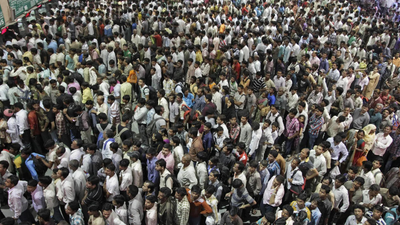
NEW DELHI: Counting every person in a country of more than 1.4 billion people is no easy task. India is now preparing to undertake one of the world’s largest enumeration exercises — the Census 2027.The nationwide headcount was originally scheduled for 2021, in line with India’s decadal census cycle conducted since 1881. However, the Covid-19 pandemic and subsequent elections delayed the exercise multiple times.Although delayed, the upcoming census is expected to be one of the most comprehensive exercises ever undertaken. The government has announced that the census will include caste enumeration, and it will also be the first time the entire process will be conducted in a paper-free digital format.According to the government, about 30 lakh field functionaries will be deployed for data collection, monitoring and supervision, with a financial allocation of Rs 11,718.24 crore for the exercise.Why it mattersThe Census acts as a national mirror, reflecting shifts in identity, occupation, living conditions and family structures across the population. The data also helps the judiciary, policymakers and researchers track trends in migration, urbanisation, employment and fertility.Ministries ranging from education to rural development rely on census data to determine where schools, primary health centres and infrastructure projects are needed. Population figures also influence central grants to states and districts, as well as the allocation of subsidies and ration supplies.This time, the census will hold additional political significance because it will form the basis for Lok Sabha delimitation, a process that has been frozen since 2002. The Women’s Reservation Bill, which reserves one-third of seats in the Lok Sabha and state assemblies for women, may also come into effect after the census and subsequent delimitation exercise.How will Census 2027 be conducted?According to the government, the exercise will be conducted in two phases — the House-listing and Housing Census, followed by Population Enumeration.Phase I: The house-listing exercise will collect data on 33 parameters, including building materials, access to drinking water, sanitation facilities, household assets and sources of cooking fuel. The information will help build a detailed profile of housing conditions and access to amenities across India. The New Delhi Municipal Council (NDMC) will begin the house-listing exercise from April 15.Phase II: The second phase will focus on individual demographic data, including name, age, sex, date of birth, relationship to the head of the household, marital status, education, occupation, religion, caste or tribe, disability status and migration history.Enumerators will record details for every person – including the homeless – ensuring the database captures demographic and socio-economic information.The data will then be processed centrally and released in stages — first provisional population totals, followed by detailed tables disaggregated by multiple indicators. The process includes quality checks, re-verification and audits to ensure accuracy.What’s different this timeCensus 2027 will be India’s first fully digital census, with the use of mobile applications, online self-enumeration and near-real-time monitoring systems.The secure web-based portal will enable eligible members of a household to fill in their data in 16 languages. Once submitted, a unique Self-Enumeration ID will be generated, which enumerators can later verify during field visits.“The current endeavor would be to make available the coming Census data at the shortest possible time across the country. Efforts will also be made to disseminate Census Results with more customized visualization tools. Data sharing to all, up to the lowest Administrative Unit i.e. Village/Ward level,” The government said.The home ministry said the adoption of digital platforms would reduce paperwork, improve efficiency and enhance transparency in the census process.The four digital tools launched at the event aim to modernise census operations:\
Houselisting Block Creator (HLBC) Web Application: A web-mapping platform that enables officials to create houselisting blocks using satellite imagery for standardised geographic coverage.HLO Mobile Application : A secure offline app that will allow enumerators to collect and upload houselisting data directly from the field using registered mobile devices.Self-Enumeration Portal : A web-based platform that allows households to voluntarily submit their census information online before field verification.- Census Management and Monitoring System (CMMS) Portal: A centralised dashboard to plan, manage and monitor census activities across district, state and national levels in real time.
Caste censusIt is also the first since 1931 that will collect caste data for all communities. Caste enumeration was a regular feature of census exercises during British rule from 1881 to 1931. However, with the first census of independent India in 1951, the government chose to discontinue the practice, except for Scheduled Castes (SCs) and Scheduled Tribes (STs).However, with the first census of independent India in 1951, the government chose to discontinue the practice, except for Scheduled Castes (SCs) and Scheduled Tribes (STs).“Questions for the second phase, including the Questions on Caste, will be notified before the commencement of the second phase of the Census Operation,” ministry of home affairs said in a statement.“Several representations regarding the enumeration of Caste have been received from various organisations of different States, including of the State of Tamil Nadu. The questions, including on Caste, for the second phase will be finalized and notified as per the established procedure,” it added.The decision marks a major shift after more than 70 years of hesitation.DelimitationCensus 2027 has also revived the debate on delimitation of parliamentary constituencies. Once the final census data is released, the government is likely to initiate the delimitation process. Parliament will need to pass a Delimitation Act to enable the formation of a Delimitation Commission.The commission will determine the population-to-constituency formula after consultations with stakeholders, including state governments.However, increasing the number of Lok Sabha seats would require a constitutional amendment, which must be passed with a two-thirds majority in Parliament.According to Article 81 of the Constitution, the total number of Lok Sabha seats cannot exceed 550.The issue has remained politically contentious, with several southern states arguing that delimitation based purely on population could reduce their representation in Parliament.Southern states have recorded better population control over the decades compared to many northern states, raising concerns about a potential north–south political imbalance.The DMK government in Tamil Nadu has previously passed a resolution opposing census-based delimitation.What experts saySpeaking to The Times of India, Nabhnipa Bhattacharjee, sociology professor at Sri Venkateswara College, University of Delhi, said the delay in conducting the census could affect policy planning.“It is a great delay. Even if the entire exercise concludes in 2027, the data may reach ministries only by the end of 2027 or early 2028, leaving limited time to design targeted welfare policies,” she said.Bhattacharjee added that delimitation, digital infrastructure, caste enumeration and the conduct of the census in Jammu and Kashmir and Ladakh after the abrogation of Article 370 would be among the key issues to watch.“The key question will be how the government approaches delimitation after the census, especially since it has already triggered a north–south debate. The introduction of digital enumeration is another challenge, given that large sections of the population still lack digital literacy,” she said.She also noted that details on how caste data will be collected, classified and used are still unclear, despite the government’s announcement. “Another issue to watch is the government’s decision to include questions on caste in the census. Despite the announcement, details on how the data will be collected, categorised and used are still not clear,” she added.


