
India to witness above avg temperature in September; rainfall likely to be below normal NEW DELHI: Monthly rainfall over the country as a whole is most likely to be below normal in Sept, the last month of the monsoon season, said IMD Monday – an indication that the four-month rainy season is likely to end with overall deficient cumulative rainfall, as was predicted earlier due to the impact of El Nino.IMD said Aug, which reported a deficit of more than 16% in monthly rainfall in the country despite good rains in certain parts, was the warmest Aug in India since 1901, recording a mean temperature of 28.010°C.Region-wise, South peninsular India recorded its second-warmest Aug since 1901. East and northeast India recorded their third-warmest, while northwest India saw its fifth-warmest, Aug in 126 years.So far, the country as a whole has reported a deficit of 14% in cumulative (June 1-Aug 31) rainfall, despite ‘normal’ rainfall in July. In June, the deficit was as high as 35%. Out of a total of 741 districts assessed for monsoon rainfall distribution, 312 (42%) received ‘below-normal’ rainfall and 38 districts (5%) reported large deficient rainfall till Aug 31.A forecast of ‘below-normal’ rainfall in Sept may lead to a deficit in overall kharif acreage. Though the sowing of most seasonal crops is almost complete, with a decline in acreage of nearly 2% compared with the corresponding period last year, low rainfall in Sept implies an increase in input cost due to farmers’ spending on irrigation of standing crops.“Spatially, many parts of the country are likely to receive below-normal rainfall, but some areas of northwest, northeast, east, east-central and south-east peninsular India are likely to receive ‘normal to above-normal’ rainfall,” said IMD chief Mrutyunjay Mohapatra.Join conversationView All Comments →Share your thoughts in the commentsInsightfulAgreeDisagreeSkepticalConcerningPromisingWorth ReadingBig DevelopmentPost CommentBe respectful · TOI community guidelinesHe said “strong El Niño conditions” are currently prevailing over the equatorial Pacific Ocean, with sea surface temperature remaining above normal across central and eastern equatorial Pacific. “These conditions are expected to strengthen further in the coming months,” said Mohapatra, hinting at its negative impact on Sept rainfall.El Niño is invariably associated with a weak monsoon and a harsh summer in India.At present, neutral Indian Ocean Dipole conditions prevail over Indian Ocean, which are likely to persist through Sept.This means that monsoon may not benefit from this climatic phenomenon as only positive IOD helps increase rainfall activities.Get the latest India News and Live updates. Download the TOI app.About the AuthorVishwa MohanVishwa Mohan is Senior Editor at The Times of India. He writes on environment, climate change, agriculture, water resources and clean energy, tracking policy issues and climate diplomacy. He has been covering Parliament since 2003 to see how politics shaped up domestic policy and India’s position at global platform. Before switching over to explore sustainable development issues, Vishwa had covered internal security and investigative agencies for more than a decade.Read MoreEnd of ArticleFollow Us On Social MediaVideosNepal Flood Crisis: 8,900 Army Personnel Deployed As Search For Missing People ContinuesDelhi Draft Voter Roll Out: 47.7 Lakh Electors Excluded, Claims Allowed Till September 30Akhilesh Yadav’s Big Attack On UP Govt; Divya Mittal Resignation & Meerut Custody RowIndus Waters Row: India Rejects Hague Court’s Jurisdiction, Says Treaty Suspension Will Continue’Dumped 40 KM Away In Delhi’: Teen Allegedly Gang-Raped In Empty Sleeper Bus, Two Accused ArrestedLVM3 Tech Transfer: Adani, Mahindra Among Firms Eyeing ISRO’s ‘Bahubali’ RocketPM Modi Meets Pezeshkian In Bishkek, Reiterates ‘Friendship With Iran’ Amid West Asia Conflict‘Babur’s Country Honoured Modi’: Owaisi Takes Dig At BJP, RSS As PM Gets Uzbekistan’s Top Award’One May Call Bharat Superpower But…’: RSS Chief Bhagwat’s ‘Vishwaguru’ Msg In Canada‘Islam Is Greater Than Other Dharams’: Karnataka Minister Sparks Row, BJP Calls Cong ‘Anti-Hindu’123Hot PicksNepal floodMumbai port fireGandak riverMumbai milk priceDelhi rapeWeather tomorrowTN milk price hikeGATE 2027 registrationIndia GDP growthTop TrendingCanyon Flash FloodStuart BroadBabaz AzamNovak DjokovicUS Iran WarTravis Kelce BusinessKai CenatCoco GauffsNaomi OsakaLebron James


NEW DELHI: Monthly rainfall over the country as a whole is most likely to be below normal in Sept, the last month of the monsoon season, said IMD Monday – an indication that the four-month rainy season is likely to end with overall deficient cumulative rainfall, as was predicted earlier due to the impact of El Nino.IMD said Aug, which reported a deficit of more than 16% in monthly rainfall in the country despite good rains in certain parts, was the warmest Aug in India since 1901, recording a mean temperature of 28.010°C.Region-wise, South peninsular India recorded its second-warmest Aug since 1901. East and northeast India recorded their third-warmest, while northwest India saw its fifth-warmest, Aug in 126 years.
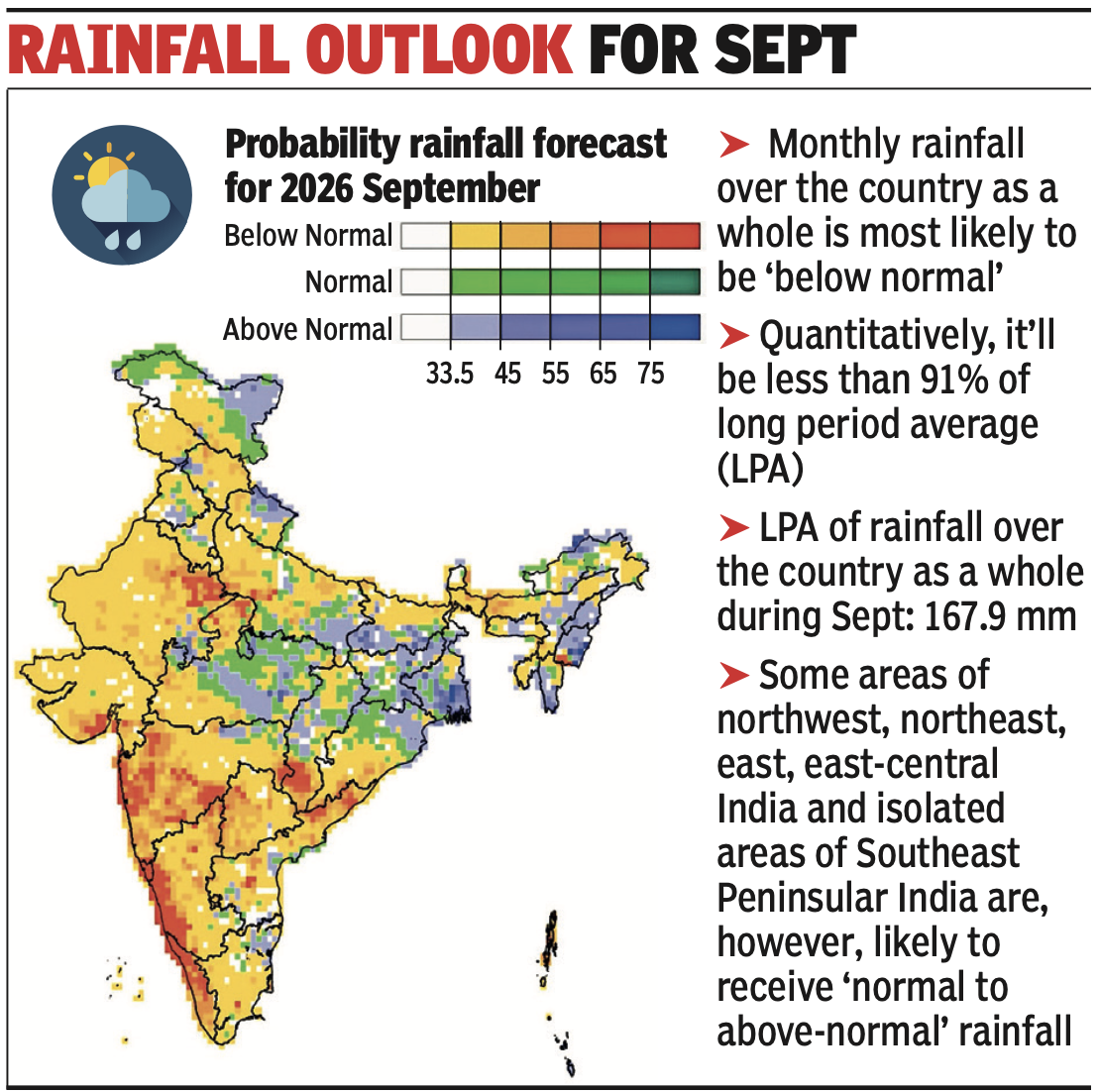
So far, the country as a whole has reported a deficit of 14% in cumulative (June 1-Aug 31) rainfall, despite ‘normal’ rainfall in July. In June, the deficit was as high as 35%. Out of a total of 741 districts assessed for monsoon rainfall distribution, 312 (42%) received ‘below-normal’ rainfall and 38 districts (5%) reported large deficient rainfall till Aug 31.A forecast of ‘below-normal’ rainfall in Sept may lead to a deficit in overall kharif acreage. Though the sowing of most seasonal crops is almost complete, with a decline in acreage of nearly 2% compared with the corresponding period last year, low rainfall in Sept implies an increase in input cost due to farmers’ spending on irrigation of standing crops.“Spatially, many parts of the country are likely to receive below-normal rainfall, but some areas of northwest, northeast, east, east-central and south-east peninsular India are likely to receive ‘normal to above-normal’ rainfall,” said IMD chief Mrutyunjay Mohapatra.
Share your thoughts in the comments
Be respectful · TOI community guidelines
He said “strong El Niño conditions” are currently prevailing over the equatorial Pacific Ocean, with sea surface temperature remaining above normal across central and eastern equatorial Pacific. “These conditions are expected to strengthen further in the coming months,” said Mohapatra, hinting at its negative impact on Sept rainfall.El Niño is invariably associated with a weak monsoon and a harsh summer in India.At present, neutral Indian Ocean Dipole conditions prevail over Indian Ocean, which are likely to persist through Sept.This means that monsoon may not benefit from this climatic phenomenon as only positive IOD helps increase rainfall activities.


