
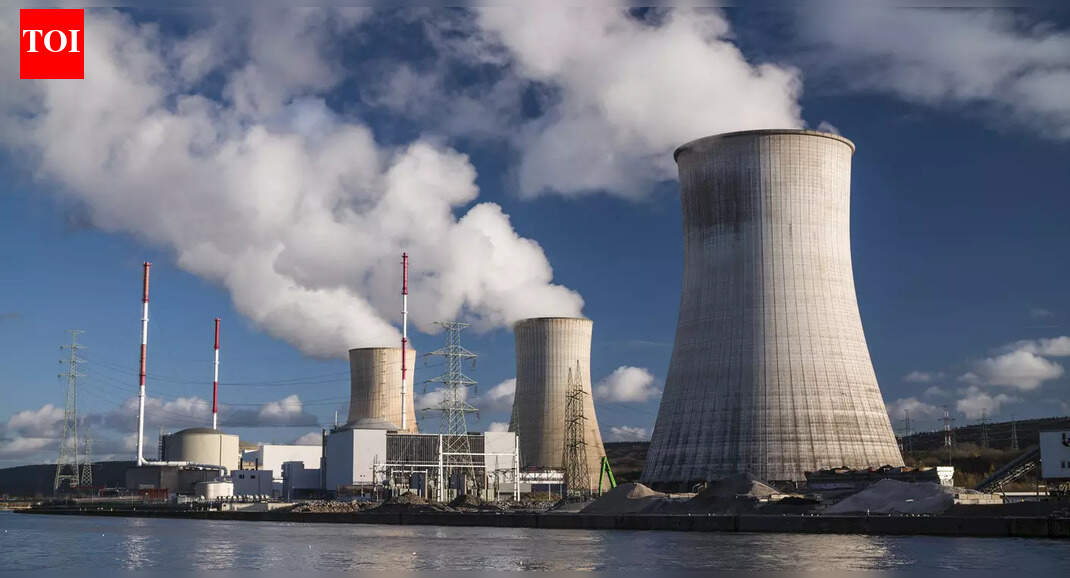
India and Russia are set to significantly boost nuclear energy collaboration following President Putin’s visit. Discussions focused on constructing a second Russian-designed nuclear power plant, with India committed to finalizing site allocation. The agreement also encompasses expanding cooperation in fuel cycle, lifecycle support for Kudankulam, and peaceful atomic energy applications. File photo NEW DELHI: In an important takeaway from Russian President Vladimir Putin’s first official visit to India since the start of the Ukraine war in 2022, India and Russia on Friday decided to expand cooperation in nuclear energy, with the two sides discussing the possibility of building a second nuclear power plant with Russian-designed reactors.“The Indian side will strive to finalise formal allotment of the second site in accordance with earlier agreements,” said a joint statement issued on Friday.Modi and Putin confirmed their intention to broaden cooperation in nuclear energy, including fuel cycle, lifecycle support for the operating Kudankulam Nuclear Power Plant (KKNPP) and non-power applications, as well as a new agenda for engagement in the field of peaceful use of atomic energy and related high technologies.India currently operates two Russian VVER (Voda Voda Energo Reactor, i.e. water-cooled, water-moderated energy reactor) of 1 GW each at Kudankulam in Tamil Nadu and plans to add four more such units there.India and Russia have been discussing a second site to set up six 1.2 GW reactors since 2016, but talks haven’t progressed due to legal constraints. The Kudankulam plant is currently the only one hosting foreign reactors as it predates the rollout of the liability law.The two sides also agreed to accelerate technical and commercial discussions on the VVER of the Russian design, research and joint development of NPPs, localisation and joint manufacturing of nuclear equipment and fuel assemblies for Russian-designed large capacity Nuclear Power Plants (NPPs), subject to terms and conditions as mutually agreeable.The talks on the second nuclear site have happened amid Modi govt’s plan to bring legislative changes in the atomic energy law in the current Parliament session to open up the sector to private nuclear operators. Till now, state-owned Nuclear Power Corporation of India Ltd remains the primary body responsible for the design, construction, operation, and maintenance of a majority of India’s nuclear power plants. The proposed changes aim to ease the sector’s current liability regime, which exposes suppliers to damage claims and legal suits — along with the operator.On the Kudankulam project, the two leaders “welcomed the progress achieved in implementation of KKNPP, including the construction of the remaining NPP units and agreed on adhering to the timeline for supplies of equipment and fuel”.The leaders noted that cooperation in the peaceful uses of nuclear energy is a significant component of the strategic partnership, given the plans of the Govt of India to increase India’s nuclear energy capacity to 100GW by 2047.End of ArticleFollow Us On Social MediaVideos”Next Year in Russia…” Deputy PM Manturov Urges Indian Companies to Expand Bilateral Trade”Ordinary Indians Pay Price” Rahul Gandhi Calls Indigo Chaos The ‘Cost Of Monopoly Model’India, Russia Renew Call for Inclusive UN Security Council Structure: MEAPutin Says Russia Didn’t Come Only for Energy, Seeks Bold Multifaceted Partnership with IndiaCentre Orders High-Level Probe As IndiGo Flight Operations Set To Normalise In 3 DaysImran Khan Tagged ‘Security Threat’ As Pakistan Army Launches Fiercest Public Attack In Years‘Not Here Only For Energy’: Putin Seeks Broader India-Russia PartnershipPM Modi Urges Putin To Build New Economic Axis As India Becomes Emerging Skilled Capital Of WorldSpiceJet Chairman Ajay Singh Calls IndiGo Crisis ‘Unfortunate’, Offers 100 Extra FlightsPakistan Supports China’s Arunachal Lie As Putin Meets Modi Amid Major India Russia Cooperation123PhotostoriesLifestyle expert shares five ‘safe’ ways to drink alcohol if at all one should8 common mistakes people make while making rotis and easy fixes9 fiber-rich dishes made with flattened rice (poha) for breakfastBigg Boss 19: Shehbaz Badesha calls Tanya Mittal fake and irritating; breaks silence on father being trolled for ‘overly friendly’ behaviour with female contestantsAdrian Chiles’ skin cancer diagnosis: How he spotted the symptoms that made all the differenceHow Bhagavad Gita can heal unknown childhood trauma and unlock blockages for success in lifeNutrition fact of the day: Greek yogurt has twice the protein of regular yogurt5 clever animals that deceive predators by playing dead10 protein- and fiber-rich broccoli and egg dishes under 20 minutes for bachelors5 Oscar Wilde love quotes that compelus to rethink the definition of romance123Hot PicksIndigo Flight DelayPutin India VisitWorld NewsGold rate todaySilver rate todayPublic Holidays NovemberBank Holidays NovemberTop TrendingAUS vs ENG LiveLos Angeles LakersMatthew Stafford WifeCandace OwensAryna SabalenkaDak PrescottTravis KelceKobe BryantJohan OviedoJohan Oviendo
NEW DELHI: In an important takeaway from Russian President Vladimir Putin’s first official visit to India since the start of the Ukraine war in 2022, India and Russia on Friday decided to expand cooperation in nuclear energy, with the two sides discussing the possibility of building a second nuclear power plant with Russian-designed reactors.“The Indian side will strive to finalise formal allotment of the second site in accordance with earlier agreements,” said a joint statement issued on Friday.Modi and Putin confirmed their intention to broaden cooperation in nuclear energy, including fuel cycle, lifecycle support for the operating Kudankulam Nuclear Power Plant (KKNPP) and non-power applications, as well as a new agenda for engagement in the field of peaceful use of atomic energy and related high technologies.India currently operates two Russian VVER (Voda Voda Energo Reactor, i.e. water-cooled, water-moderated energy reactor) of 1 GW each at Kudankulam in Tamil Nadu and plans to add four more such units there.India and Russia have been discussing a second site to set up six 1.2 GW reactors since 2016, but talks haven’t progressed due to legal constraints. The Kudankulam plant is currently the only one hosting foreign reactors as it predates the rollout of the liability law.The two sides also agreed to accelerate technical and commercial discussions on the VVER of the Russian design, research and joint development of NPPs, localisation and joint manufacturing of nuclear equipment and fuel assemblies for Russian-designed large capacity Nuclear Power Plants (NPPs), subject to terms and conditions as mutually agreeable.The talks on the second nuclear site have happened amid Modi govt’s plan to bring legislative changes in the atomic energy law in the current Parliament session to open up the sector to private nuclear operators. Till now, state-owned Nuclear Power Corporation of India Ltd remains the primary body responsible for the design, construction, operation, and maintenance of a majority of India’s nuclear power plants. The proposed changes aim to ease the sector’s current liability regime, which exposes suppliers to damage claims and legal suits — along with the operator.On the Kudankulam project, the two leaders “welcomed the progress achieved in implementation of KKNPP, including the construction of the remaining NPP units and agreed on adhering to the timeline for supplies of equipment and fuel”.The leaders noted that cooperation in the peaceful uses of nuclear energy is a significant component of the strategic partnership, given the plans of the Govt of India to increase India’s nuclear energy capacity to 100GW by 2047.


