
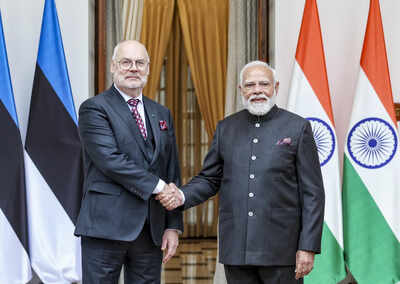
In this image received on Feb. 18, 2026, Prime Minister Narendra Modi with President of Estonia Alar Karis during a meeting, in New Delhi. (PMO via PTI Photo) Estonia is widely using AI in edu and wants to collaborate with India. In an interview with TOI’s Surojit Gupta, Estonia’s President Alar Karis talks about how they’ve built trust while rolling out citizen-centric e-services. Excerpts:What can Estonia offer to the world and India in terms of AI and tech? n We can provide to India and the rest of the world our experience and how we digitalised our society. One important thing we should share with the rest of our world is how we are building trust when we go for digitisation or using AI. You should build trust not only between technologies, but also between govts and societies as a whole. AI is still developing so fast. We don’t know what’s going on, let’s say in three months or even two weeks. But we are prepared and we try to use this new technology smartly. This is what we can tell India. India is also a digitalised country, so we learn from each other. Could you give us a sense of the digitalisation that has happened in Estonia?In Estonia, everything is online. That means you can even get married online. I mentioned tax, I mentioned prescriptions, basically everything. One startup, instead of using lawyers, is using AI. It doesn’t mean we don’t need lawyers anymore, but we can focus on things which are more important as there are queues in Estonia to get to the court. How are you ensuring privacy of data?Privacy is getting more and more important with AI technology. Data may belong to citizens, but data privacy, especially medical care, is a concern. We see in Europe, in some countries, how difficult it is to introduce ID cards as people are concerned about the data. What has been the increase in productivity as a result of digitalisation?Someone has calculated that it has raised GDP by 5%. That is a calculation that’s just done by officials. It makes your life very comfortable. In some countries, it’s very difficult to fill up the tax forms. For us, it’s pre-filled. It takes maybe a couple of minutes if you don’t have anything to add. It makes the whole thing transparent. For medical prescriptions, you don’t have to go to a doctor. He knows what your illnesses are and they give you a prescription, you see it right away and you go to a pharmacy. What are the areas of cooperation you see with India?Like India, Estonia values education. We can collaborate on this. We started AI Leap. We provided computer access to schools 30 years ago. Now, we are doing the same with AI. We teach teachers and students how to use AI smartly. We’ve collaboration with OpenAI and Google and asked them to provide a platform that suits students’ needs in Estonia. AI Leap is in every school and we are learning how to use it and how to actually change the whole system of how we teach students. What are your views on regulation of AI?Regulations are needed. We try to ensure there are worldwide regulations, at least on a certain level. But every country is different. There are limits with technology and there are rules and regulations.End of ArticleFollow Us On Social MediaVideos”Will Simplify Visas And Admin”: Macron’s Big Announcement For Indian StGalgotias University Turns A Robodog Into National Embarrassment, Thrown Out Of AI Summit”Don’t Want To Be Dependent On US Or China…” Macron On AI Innovation’Proud Moment For Humanity!’ Social Media Roasts Galgotias University, China Reacts To Robo Dog Row’India A Major Global Talent Hub’: Says Jaishankar At European Legal Gateway Office LaunchSundar Pichai Unveils ‘India-America Connect’ to Power Massive Subsea Cable ExpansionCCTV Captures Delhi Teen’s Speeding SUV Seconds Before Fatal Dwarka CrashIndia to Add $26 Trillion to Economy, Negotiating FTAs from Strength: Piyush Goyal’Can’t Wait For Trump To Go’: Hillary Clinton Hails India, Pushes Others For Climate Change MovesUS Panel Asks If Trump Needs To Cut Ties With Pakistan To Make India Happy. Here’s What Experts Said123PhotostoriesHow to make Aloo Tikki Chaat at homeNithya Menen birthday special: From ‘Thiruchitrambalam’ to ‘Ishq’ – Films to watch on OTT5 snake-related paintings and symbols that are believed to remove negativityExclusive – Elvish Yadav opens up about hosting Engaged Season 2, shares his take on love and confirms he will get married soon10 vegetarian koftas to make your meals extra deliciousFrom Daulat Ki Chaat to Bhutte Ka Kees: 8 rare Indian dishes the world needs to try5 famous embroideries India gifted to the world5 real estate hotspots in Lucknow driving the residential market in 20265 things foreign tourists secretly dislike about travelling in India6 luxury cars with interiors that feel like five-star lounges123Hot PicksCigarette price hikeGold rate todayITC shareMadhya Pradesh budget 2026–27Income Tax CalculatorPublic holidays February 2026Bank Holidays februaryTop TrendingRashee Rice LawsuitLarry WheelsRampage JacksonPatrick MahomesSidney Crosby GirlfriendLindsey VonnLogan PaulMick CroninNBA Trade NewsFortnite V39 50 Update Release Time

Estonia is widely using AI in edu and wants to collaborate with India. In an interview with TOI’s Surojit Gupta, Estonia’s President Alar Karis talks about how they’ve built trust while rolling out citizen-centric e-services. Excerpts:What can Estonia offer to the world and India in terms of AI and tech? n We can provide to India and the rest of the world our experience and how we digitalised our society. One important thing we should share with the rest of our world is how we are building trust when we go for digitisation or using AI. You should build trust not only between technologies, but also between govts and societies as a whole. AI is still developing so fast. We don’t know what’s going on, let’s say in three months or even two weeks. But we are prepared and we try to use this new technology smartly. This is what we can tell India. India is also a digitalised country, so we learn from each other. Could you give us a sense of the digitalisation that has happened in Estonia?In Estonia, everything is online. That means you can even get married online. I mentioned tax, I mentioned prescriptions, basically everything. One startup, instead of using lawyers, is using AI. It doesn’t mean we don’t need lawyers anymore, but we can focus on things which are more important as there are queues in Estonia to get to the court. How are you ensuring privacy of data?Privacy is getting more and more important with AI technology. Data may belong to citizens, but data privacy, especially medical care, is a concern. We see in Europe, in some countries, how difficult it is to introduce ID cards as people are concerned about the data. What has been the increase in productivity as a result of digitalisation?Someone has calculated that it has raised GDP by 5%. That is a calculation that’s just done by officials. It makes your life very comfortable. In some countries, it’s very difficult to fill up the tax forms. For us, it’s pre-filled. It takes maybe a couple of minutes if you don’t have anything to add. It makes the whole thing transparent. For medical prescriptions, you don’t have to go to a doctor. He knows what your illnesses are and they give you a prescription, you see it right away and you go to a pharmacy. What are the areas of cooperation you see with India?Like India, Estonia values education. We can collaborate on this. We started AI Leap. We provided computer access to schools 30 years ago. Now, we are doing the same with AI. We teach teachers and students how to use AI smartly. We’ve collaboration with OpenAI and Google and asked them to provide a platform that suits students’ needs in Estonia. AI Leap is in every school and we are learning how to use it and how to actually change the whole system of how we teach students. What are your views on regulation of AI?Regulations are needed. We try to ensure there are worldwide regulations, at least on a certain level. But every country is different. There are limits with technology and there are rules and regulations.


