
. In India’s collective consciousness, a soldier killed in the line of duty is not seen as just a casualty of war, but as a martyr, a ‘shaheed’ whose sacrifice becomes part of the nation’s identity.On Martyrs’ Day, observed on March 23, India remembers the sacrifice of Bhagat Singh, Sukhdev, and Rajguru, who were executed by the British in 1931. Their legacy continues in the sacrifices of the soldiers who serve the country today, and Martyrs’ Day is an opportunity to understand how India honours their acts of bravery.Over time, India has built a system to honour its fallen soldiers, combining official ceremonies, support for families, and public memory.Israel Iran WarUS-Israel-Iran War News Live Updates: Iran vows tit-for-tat strike after Trump’s 48hr ultimatum, threatens to hit US-Israel energy facilityIf America strikes us, we should attack Indian cities like Delhi and Mumbai: Ex-Pak envoyAfter Trump’s 48-hour ultimatum, Iran says ships can pass Hormuz Strait — except ‘enemy’ vesselsFrom the Amar Chakra at the National War Memorial to pensions and education schemes that reach families in remote areas, India tries to ensure that no soldier who dies for the nation is forgotten.The most solemn event is the arrival of a martyr’s body in a hometown. The coffin is often draped in the national flag and escorted by a guard of honour, with local politicians, police, and civil society leaders present.In many cases, the local community organises a procession and a brief ceremony, showing that the martyr belongs not just to the regiment, but also to the village, the town, and the nation.Gallantry awardsIndia’s gallantry awards are among the highest honours given to members of the armed forces and, in some cases, civilians.Recipients’ families are invited to formal ceremonies, often at Rashtrapati Bhavan, where the medal is presented, and the story of the soldier’s valour narrated.The highest wartime award is the Param Vir Chakra, awarded for “most conspicuous bravery” in the presence of the enemy. It is followed by the Maha Vir Chakra and the Vir Chakra, which recognise acts of gallantry during military operations.In peacetime, the country awards the Ashoka Chakra, Kirti Chakra, and Shaurya Chakra for acts of bravery, including counter-insurgency operations and rescue missions. .These awards are announced on Republic Day and Independence Day, ensuring national recognition for acts of courage.National War MemorialThe National War Memorial in New Delhi stands as a central place of remembrance for soldiers who died in service after independence.The memorial stands with an eternal flame called the Amar Chakra (Circle of immortality) at its centre. Before the National War Memorial, the Amar Jawan Jyoti at India Gate served as the main site for paying tribute to soldiers, especially those who died in the 1971 war.Around the Amar Chakra, concentric “walls of honour” are inscribed with the names of more than 26,000 soldiers, each slab symbolising the ancient war formation of a ‘Chakravyuh’, and every soldier’s name etched in granite to signify permanence and dignity.Every evening, a Retreat Ceremony is held at the National War Memorial, where the national flag and the flags of the Army, Navy, and Air Force are lowered before sunset as the Last Post is sounded.On Sundays and special occasions, a Change-of-Guard ceremony, accompanied by military band displays, draws schoolchildren, tourists, and veterans.Wreath-laying ceremonies by the Prime Minister and senior officials are held here on important national occasions.The memorial reflects India’s effort to create a permanent space to honour its fallen soldiers. National War Memorial, DelhiSupport to familiesBeyond memorials, India also honours its soldiers through a strong welfare and support system for their families.This is both a moral responsibility and a form of social security for families who have lost a member in service.Families of martyrs receive central ex gratia payments, along with pension schemes that provide long-term financial support.Pensions for war-bereaved families are usually set at 100% of the soldier’s last drawn basic pay, along with other components, helping widows and children maintain financial stability.Additional support includes education allowances covering tuition and hostel fees for children, cashless medical care under the Ex-Servicemen Contributory Health Scheme (ECHS), and benefits related to housing and small business support.Some state and central schemes also provide financial assistance for the marriage of daughters or remarriage of widows, along with interest subsidies on home loans to help families rebuild their lives.Employment support is another key measure, with the government reserving certain jobs for the next of kin of fallen soldiers.Martyrs’ Day: Remembering Bhagat Singh, Sukhdev, and Rajguru Bhagat Singh, Rajguru, Sukhdev On March 23, 1931, three young revolutionaries, Bhagat Singh, Sukhdev Thapar, and Shivaram Rajguru were executed, becoming enduring symbols of courage and defiance against British colonial rule. They had been sentenced to death in the Lahore Conspiracy Case. The spark for their action came after the brutal death of Lala Lajpat Rai. While leading a protest against the Simon Commission, Rai was beaten by Superintendent of Police J S Scott and later died of his injuries on 17th November 1928. Outraged, Bhagat Singh, Rajguru, Sukhdev, and Chandra Shekhar Azad plotted to avenge his death. In a case of mistaken identity, they shot another officer, Saunders, instead. Initially, the British were unaware of the culprits. It was only a handwritten poster by Bhagat Singh explaining the motive behind the killing that linked him and his comrades to Saunders’ death. Later, Bhagat Singh’s dramatic protest in the Central Legislative Assembly on 8th April 1929, where he threw a bomb against two oppressive bills, brought him to the authorities’ attention. Even facing execution, the three showed no fear. They walked to the gallows at Lahore Central Jail with pride, shouting “Inquilab zindabad.” Bhagat Singh famously sang Mera Rang De Basanti Chola- “O mother! Dye my robe the colour of spring,” turning his death into a celebration of freedom rather than despair. Despite appeals for clemency and widespread public support, the three were executed, leaving a lasting legacy. Today, Martyrs’ Day is a tribute to their bravery, self-sacrifice, and patriotism. Their courage continues to inspire generations of Indians.Martyrs’ Day, therefore, is a reminder of the cost of freedom and the responsibility of every citizen. It honours those who fought for the nation and inspires people to uphold the values of courage, commitment, and selflessness.About the AuthorAnushree SinhaAnushree is a journalist with The Times of IndiaEnd of ArticleFollow Us On Social MediaVideosIndian National Sustains Injury As Missile Debris Falls In Abu Dhabi’S Al ShawamekhIndia Replacing China? US-Based Journalist Fareed Zakaria’s Big Statement On Global Power ShiftFirst Dialogue Since Clashes: Manipur CM Meets Kuki-Zo Council To Ease Tensions‘Hit Delhi, Mumbai If US Attacks Pak’: Ex-Pak Envoy’s Bizarre Remark Sparks OutragePakistan Tops Global Terrorism Index With Highest Death Toll, Raises Global Alarm‘Was Tortured’: Wife Of Deceased PWC Official Seeks Bhullar’s Arrest Before Post-MortemSanjay Raut Fires ‘Jhola Uthaiye’ Salvo At Narendra Modi Over inflation, Rupee CrashFirst China-Bound Russian Oil Tanker Reaches India After US Sanctions WaiverNarendra Modi Reviews Energy Security As Middle East Crisis Deepens8931 Days In Office: PM Modi Becomes Longest-Serving Head Of Govt Overtaking Pawan Kumar Chamling123PhotostoriesWhy you wake up with a dry mouth or bad breath: What it reveals about hydration, sleep, and metabolism, and how to fix itOTT crime shows basedon memoirs: ‘Khakee’, ‘Scoop’ and moreZombie movies you can’t miss on OTT: ‘Train to Busan’, ‘World War Z’ and moreAneet Padda’s showstopper look just rewrote office fashion rules5 foods to combine with eggs to boost protein content and the right way to consumeHow to grow Goddess Durga’s favourite aparajita flowers in your balcony garden10 lucky house names in Sanskrit that are vastu-aligned and attract positive energySimple and strong names for babies born in AprilHelping kids grow without pushing them too hard’The Devil Wears Prada 2′ brings back these 5 iconic fashion trends123Hot PicksIran newsStock Market todayLaGuardia AirportGold rate todayIncome Tax CalculatorPublic holidays March 2026Bank Holidays MarchTop TrendingBSEB Class 12th ResultChikkamagaluru BridgeBengaluru MurderKochi Vaduthala Family IncidentBengaluru Pink MetroConor McGregor Next FightSilver Rate TodayDiesel price hike8th Pay CommissionPremium Petrol Price Hike

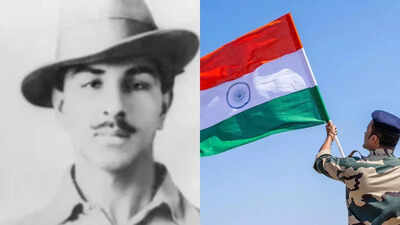
In India’s collective consciousness, a soldier killed in the line of duty is not seen as just a casualty of war, but as a martyr, a ‘shaheed’ whose sacrifice becomes part of the nation’s identity.On Martyrs’ Day, observed on March 23, India remembers the sacrifice of Bhagat Singh, Sukhdev, and Rajguru, who were executed by the British in 1931. Their legacy continues in the sacrifices of the soldiers who serve the country today, and Martyrs’ Day is an opportunity to understand how India honours their acts of bravery.Over time, India has built a system to honour its fallen soldiers, combining official ceremonies, support for families, and public memory.From the Amar Chakra at the National War Memorial to pensions and education schemes that reach families in remote areas, India tries to ensure that no soldier who dies for the nation is forgotten.The most solemn event is the arrival of a martyr’s body in a hometown. The coffin is often draped in the national flag and escorted by a guard of honour, with local politicians, police, and civil society leaders present.In many cases, the local community organises a procession and a brief ceremony, showing that the martyr belongs not just to the regiment, but also to the village, the town, and the nation.
Gallantry awards
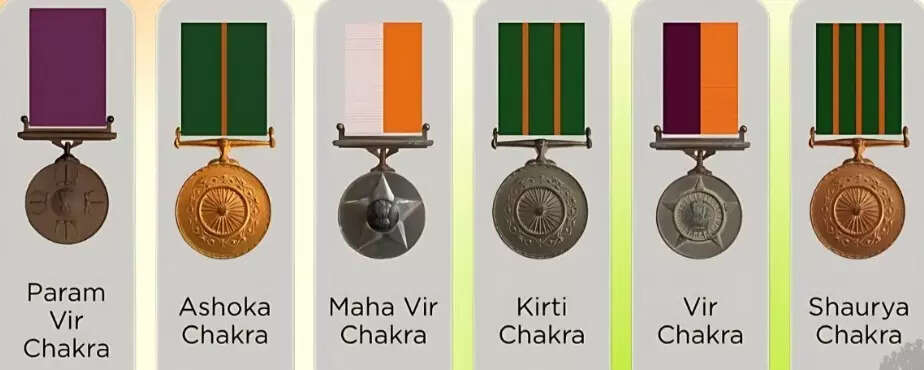
India’s gallantry awards are among the highest honours given to members of the armed forces and, in some cases, civilians.Recipients’ families are invited to formal ceremonies, often at Rashtrapati Bhavan, where the medal is presented, and the story of the soldier’s valour narrated.The highest wartime award is the Param Vir Chakra, awarded for “most conspicuous bravery” in the presence of the enemy. It is followed by the Maha Vir Chakra and the Vir Chakra, which recognise acts of gallantry during military operations.In peacetime, the country awards the Ashoka Chakra, Kirti Chakra, and Shaurya Chakra for acts of bravery, including counter-insurgency operations and rescue missions.
.
These awards are announced on Republic Day and Independence Day, ensuring national recognition for acts of courage.
National War Memorial
The National War Memorial in New Delhi stands as a central place of remembrance for soldiers who died in service after independence.The memorial stands with an eternal flame called the Amar Chakra (Circle of immortality) at its centre. Before the National War Memorial, the Amar Jawan Jyoti at India Gate served as the main site for paying tribute to soldiers, especially those who died in the 1971 war.Around the Amar Chakra, concentric “walls of honour” are inscribed with the names of more than 26,000 soldiers, each slab symbolising the ancient war formation of a ‘Chakravyuh’, and every soldier’s name etched in granite to signify permanence and dignity.Every evening, a Retreat Ceremony is held at the National War Memorial, where the national flag and the flags of the Army, Navy, and Air Force are lowered before sunset as the Last Post is sounded.On Sundays and special occasions, a Change-of-Guard ceremony, accompanied by military band displays, draws schoolchildren, tourists, and veterans.Wreath-laying ceremonies by the Prime Minister and senior officials are held here on important national occasions.The memorial reflects India’s effort to create a permanent space to honour its fallen soldiers.
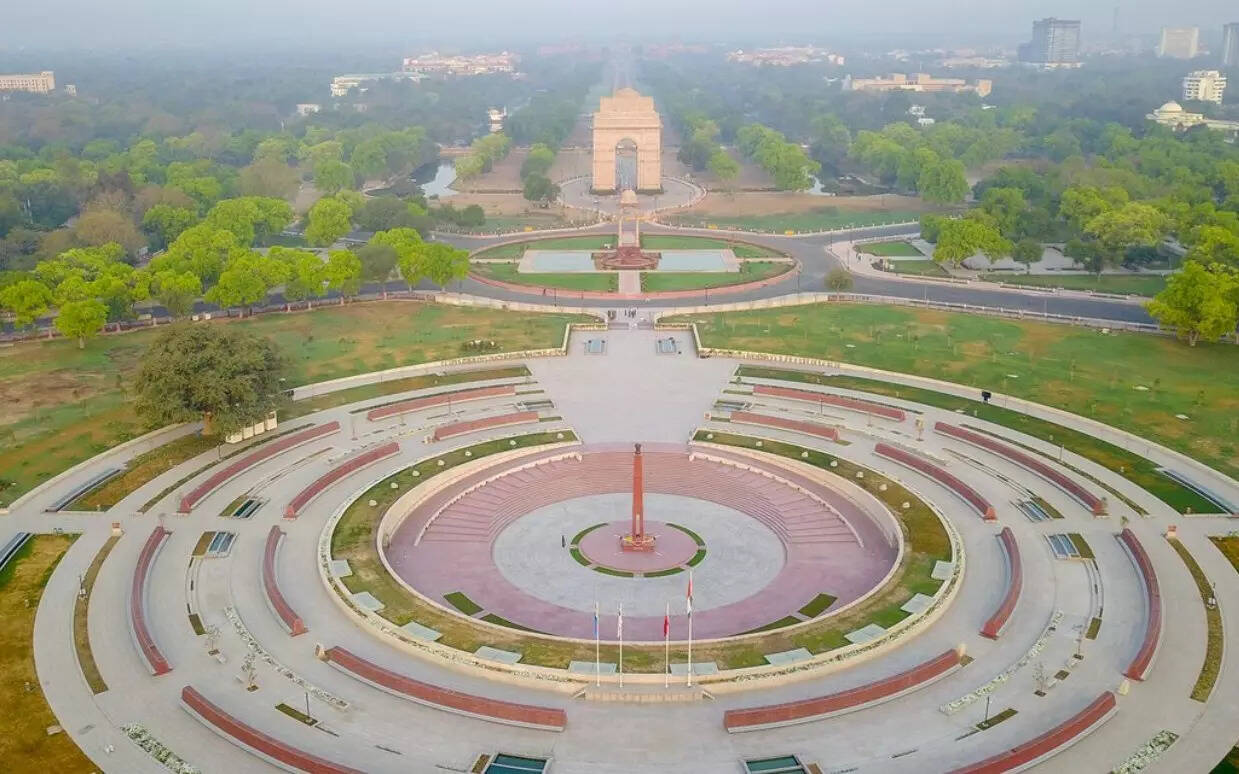
National War Memorial, Delhi
Support to families
Beyond memorials, India also honours its soldiers through a strong welfare and support system for their families.This is both a moral responsibility and a form of social security for families who have lost a member in service.Families of martyrs receive central ex gratia payments, along with pension schemes that provide long-term financial support.Pensions for war-bereaved families are usually set at 100% of the soldier’s last drawn basic pay, along with other components, helping widows and children maintain financial stability.Additional support includes education allowances covering tuition and hostel fees for children, cashless medical care under the Ex-Servicemen Contributory Health Scheme (ECHS), and benefits related to housing and small business support.Some state and central schemes also provide financial assistance for the marriage of daughters or remarriage of widows, along with interest subsidies on home loans to help families rebuild their lives.Employment support is another key measure, with the government reserving certain jobs for the next of kin of fallen soldiers.
Martyrs’ Day: Remembering Bhagat Singh, Sukhdev, and Rajguru
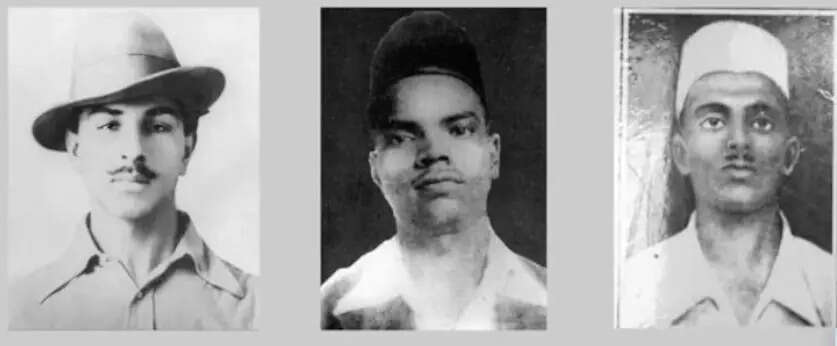
Bhagat Singh, Rajguru, Sukhdev
On March 23, 1931, three young revolutionaries, Bhagat Singh, Sukhdev Thapar, and Shivaram Rajguru were executed, becoming enduring symbols of courage and defiance against British colonial rule. They had been sentenced to death in the Lahore Conspiracy Case. The spark for their action came after the brutal death of Lala Lajpat Rai. While leading a protest against the Simon Commission, Rai was beaten by Superintendent of Police J S Scott and later died of his injuries on 17th November 1928. Outraged, Bhagat Singh, Rajguru, Sukhdev, and Chandra Shekhar Azad plotted to avenge his death. In a case of mistaken identity, they shot another officer, Saunders, instead. Initially, the British were unaware of the culprits. It was only a handwritten poster by Bhagat Singh explaining the motive behind the killing that linked him and his comrades to Saunders’ death. Later, Bhagat Singh’s dramatic protest in the Central Legislative Assembly on 8th April 1929, where he threw a bomb against two oppressive bills, brought him to the authorities’ attention. Even facing execution, the three showed no fear. They walked to the gallows at Lahore Central Jail with pride, shouting “Inquilab zindabad.” Bhagat Singh famously sang Mera Rang De Basanti Chola- “O mother! Dye my robe the colour of spring,” turning his death into a celebration of freedom rather than despair. Despite appeals for clemency and widespread public support, the three were executed, leaving a lasting legacy. Today, Martyrs’ Day is a tribute to their bravery, self-sacrifice, and patriotism. Their courage continues to inspire generations of Indians.Martyrs’ Day, therefore, is a reminder of the cost of freedom and the responsibility of every citizen. It honours those who fought for the nation and inspires people to uphold the values of courage, commitment, and selflessness.


