
IMD on Sunday predicted “subdued rainfall activity” over the plains of north-west and west-central India NEW DELHI: India’s monsoon has weakened again after a week of good showers slashed the nationwide rainfall deficit from 40% at the end of June to 14% by July 9. The current dry phase has widened the overall nationwide shortfall to 18% on Sunday, which could increase further next week.IMD on Sunday predicted “subdued rainfall activity” over plains of north-west and west-central India, and over south Peninsular India during the next six-seven days.The dry spell could undermine last week’s gain in sowing activity. All major crops still have lower sown area than at the same time last year, mainly because the monsoon core region-where farming depends heavily on seasonal rains for sowing due to limited irrigation-continues to face a large rainfall deficit.Rain predicted this week but it won’t make up monsoon deficitAs of Sunday, 15 states, including Bihar, Jharkhand, Punjab, Gujarat, Chhattisgarh, Kerala, Karnataka, Telangana and Andhra Pradesh reported a deficit of 20% and more (up to 73%) in the overall cumulative (June 1-July 12) monsoon rainfall.Region-wise, east and northeast India recorded a huge deficit of 37% due to weak rainfall activity in Bihar, Jharkhand and five northeastern states.Though the Met department predicted “heavy to very heavy” rainfall over north-east India, Bengal and Bihar over next 2-3 days, and “isolated heavy falls” over east Uttar Pradesh over next 4-5 days, this will not be enough to fill the gap resulting from a weak monsoon in a strong El Nino year.El Nino is a naturally occurring climate phenomenon of above-average sea-surface temperatures in central and eastern equatorial Pacific Ocean. It is invariably associated with a weak monsoon and a harsher summer in India. This climatic event occurs every two to seven years.Get the latest India news and live updates. Download the TOI App.About the AuthorVishwa MohanVishwa Mohan is Senior Editor at The Times of India. He writes on environment, climate change, agriculture, water resources and clean energy, tracking policy issues and climate diplomacy. He has been covering Parliament since 2003 to see how politics shaped up domestic policy and India’s position at global platform. Before switching over to explore sustainable development issues, Vishwa had covered internal security and investigative agencies for more than a decade.Read MoreEnd of ArticleFollow Us On Social MediaVideos’Black Magic, Cow Urine’: Shiv Sena (UBT) Leader’s Daughter-In-Law Makes Shocking Allegations’I Lock Up Religion When…’: Annamalai Confirms ‘We The Leaders’ Will Become Political PartyWatch: Assam CM Himanta Sarma Drives Road Roller, Destroys Seized Drugs’1 Indian Missing’: MEA Condemns Attack On Vessel Carrying Indian Crew Off Oman Coast’Do I Have To Ask Trump?’: Omar Abdullah Launches Attack At Modi Govt Over Jammu-Kashmir StatehoodBJP Rejects Omar Abdullah’s ‘Operation Lotus’ Allegation, Demands Proof Or Public ApologyHapur Woman Critical After Allegedly Drinking Acid From Sealed Water Bottle; Police Launch ProbeElection Commission Updates Form 6 With New SIR DeclarationIndian Army Plans To Induct 450 Carl Gustaf M4 Rocket LaunchersDelhi To Get Its First Solar Tree At Secretariat; Pilot Project May Expand Across The City123PhotostoriesThese 4 signs are said to have the highest IQWomen over 30, especially mothers, face these 5 common health problems: Doctor says early prevention can make all the differenceTrying for a baby? This one dental habit could make a difference”Scrambled egg mein crush…aur phir”: Raj Thackeray shares his unique Egg recipe loved by his father and Bal ThackerayForget crash diets and health hacks: Cardiologist reveals 5 simple daily habits that can transform your health, one day at a timeTop 3 eggs in the world and the right way to consume themnside Sudesh Lehri’s luxurious 4-BHK Mumbai home: A private studio, home theatre and moreWhy seemingly healthy young Indians are collapsing without warning: Doctors explain how AEDS can mean the difference between life and deathKate Middleton ditched soft neutrals for a show-stopping red look at Wimbledon 20265 late-night drinks that help support healthy blood sugar, according to dietitians123Hot PicksAgniveer result 2026DU UG Admissions 2026Vietnam boat accidentSonam Wangchuk Hunger strikeIslam makhachevKarnataka Bus newsBengaluru delivery boyKolkata Mosque prayersHamad bin Khalifa Al ThaniTop TrendingUFC 329 HighlightsNHL Player InjuryErling Haaland FatherFIFA World Cup 2026Chhattisgarh Student MurderTS EAMCET Phase 1 seat allotmentRamesh MhatreDelhi NCR rainGurgaon EncounterIran war

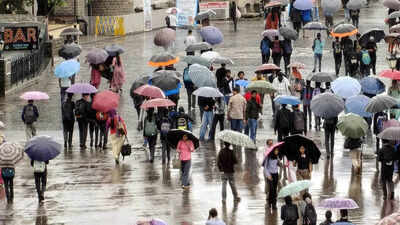
NEW DELHI: India’s monsoon has weakened again after a week of good showers slashed the nationwide rainfall deficit from 40% at the end of June to 14% by July 9. The current dry phase has widened the overall nationwide shortfall to 18% on Sunday, which could increase further next week.IMD on Sunday predicted “subdued rainfall activity” over plains of north-west and west-central India, and over south Peninsular India during the next six-seven days.The dry spell could undermine last week’s gain in sowing activity. All major crops still have lower sown area than at the same time last year, mainly because the monsoon core region-where farming depends heavily on seasonal rains for sowing due to limited irrigation-continues to face a large rainfall deficit.
Rain predicted this week but it won’t make up monsoon deficit
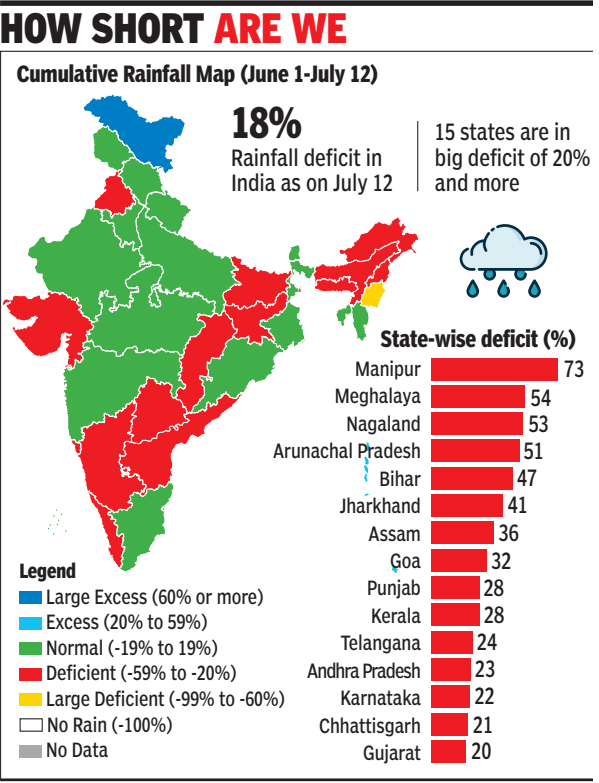
As of Sunday, 15 states, including Bihar, Jharkhand, Punjab, Gujarat, Chhattisgarh, Kerala, Karnataka, Telangana and Andhra Pradesh reported a deficit of 20% and more (up to 73%) in the overall cumulative (June 1-July 12) monsoon rainfall.Region-wise, east and northeast India recorded a huge deficit of 37% due to weak rainfall activity in Bihar, Jharkhand and five northeastern states.
Though the Met department predicted “heavy to very heavy” rainfall over north-east India, Bengal and Bihar over next 2-3 days, and “isolated heavy falls” over east Uttar Pradesh over next 4-5 days, this will not be enough to fill the gap resulting from a weak monsoon in a strong El Nino year.El Nino is a naturally occurring climate phenomenon of above-average sea-surface temperatures in central and eastern equatorial Pacific Ocean. It is invariably associated with a weak monsoon and a harsher summer in India. This climatic event occurs every two to seven years.


