
California woman refused to sell her home despite repeated lucrative offers; developers eventually built a 246-unit apartment complex around her house covering five acres | World News

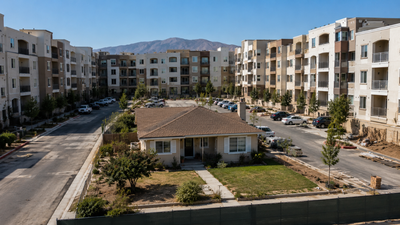
Carolyn Carter had spent 50 years living in her modest home in Burbank, California, when a major residential development began transforming the neighbourhood around her. Properties along Hollywood Way were being acquired by the Chandler Group, and more than two dozen of Carter’s neighbours agreed to sell their homes. Carter, however, refused several lucrative offers from the developer and chose to remain in the house she had known for half a century. As one property after another disappeared, her home became increasingly isolated. The developer eventually moved ahead with its plans without acquiring Carter’s property, constructing a five-acre apartment complex that left her one-storey house surrounded by 246 new neighbours on three sides.
California woman refused to sell as developers bought the homes around her
Carter’s decision came as the Chandler Group was assembling adjoining properties along Hollywood Way for a large residential project. According to the 1991 Los Angeles Times report, more than two dozen of her neighbours sold their properties to the developer, clearing most of the surrounding land. Carter was approached with several offers but remained unwilling to move. She made clear that money was not what mattered to her, telling the newspaper that she did not care about the value of her property and simply did not want to leave. Her refusal meant that the developer could acquire nearly all the surrounding properties but could not obtain the small parcel containing her home. Instead of forcing Carter out or abandoning the wider development, the builders proceeded with a design that left her property in place.
Her house became an island inside a massive development
As construction progressed, the contrast between Carter’s home and the new development became increasingly striking. The surrounding neighbourhood that had existed during her first five decades in the house was largely replaced, while the new apartment complex rose around the property. The Los Angeles Times described Carter as being virtually surrounded by the new five-acre complex, with the apartment development leaving her house untouched. Once the project was completed, Carter effectively had 246 new neighbours on three sides of her one-storey home. The unusual arrangement was not the result of an accident or an abandoned construction plan. It was the direct consequence of one property owner retaining her land while the developer assembled almost everything around it. Her home therefore remained as a small remnant of the earlier residential landscape within a much larger modern development.
Developers chose to build around Carter’s property
The decision to continue construction around Carter’s home demonstrates the practical dilemma created by a property holdout. Large developments often require several adjoining parcels to create one continuous site, but a single owner can prevent the complete acquisition of the land if they refuse to sell. In Carter’s case, the Chandler Group had already acquired the surrounding homes and was able to proceed with its apartment project despite not obtaining her property. The bulldozers left her house untouched while construction transformed the surrounding area. Rather than allowing one small parcel to stop the larger project, the developers incorporated it into their plans. The result was a development that effectively wrapped around the existing home, creating an unusual landscape in which an older private residence stood immediately beside and within a much larger apartment complex.
Carter’s decision was about staying, not getting a higher price
The most important detail in Carter’s story is that her refusal was not presented as an attempt to negotiate a better deal. The Los Angeles Times reported that she turned down several lucrative offers, but the article did not disclose the exact amounts offered by the Chandler Group. Carter instead indicated that the property’s financial value was not her concern. Her position was personal: after living in the home for 50 years, she did not want to move. She was also notably private about her age, telling the newspaper only, “I’m as old as my teeth.” Her comments reflected the central reason some property owners become holdouts: the market price of a house does not necessarily determine its personal value to the person living there. For Carter, remaining in her home was more important than accepting the offers being made for it.
The development transformed the neighbourhood around her
Carter’s home had originally been part of an ordinary residential neighbourhood where she lived among friends and neighbours. The arrival of the development changed that environment almost completely. More than two dozen neighbouring property owners sold their homes, allowing the Chandler Group to consolidate the land and replace the existing residential landscape with a much larger apartment project. Carter’s decision meant that her home survived while the properties around it disappeared. The five-acre development eventually brought hundreds of new residents into the immediate area, leaving Carter’s small house visually and physically distinct from the surrounding buildings. What had once been one home among many therefore became a lone holdout surrounded by a large-scale development.
Carolyn Carter’s home became a classic holdout story
Carter’s case became part of a broader discussion about real-estate holdouts, referring to property owners who refuse to sell while developers assemble surrounding land for larger projects. The reasons can vary, but Carter’s story was particularly straightforward because she openly said she did not want to move. Her neighbours had made a different choice, accepting the developer’s offers and leaving the area, while she remained in place. The result showed how a single property owner can influence the shape of a major development without necessarily stopping it altogether. In Carter’s case, the developer adapted to the one parcel it could not acquire, while she retained the home where she had spent five decades. Her decision ultimately left a remarkable visual and historical record of the neighbourhood that existed before the five-acre apartment complex transformed the area.


