
BENGALURU: An eco-friendly bio-based foam developed by researchers at the Indian Institute of Science (IISc), is moving from the laboratory towards commercialisation, with Absolute Cold LLP working on its use in cold-chain and temperature-controlled packaging.The foam, developed by Prof Suryasarathi Bose and Prof Subodh Kumar, along with the team comprising Sampath Parasuram, Akshay Sunil Salvi, Supriya H, Sandeep Kumar Singh and Amit Malakar, is an alternative to conventional polyurethane (PU) foam, which is widely used for insulation but is difficult to recycle after use.The IISc material was designed to combine the properties needed for insulation with a more sustainable approach to what happens to the material at the end of its life. The journey from laboratory to industry also had a link to TOI.Bose said a report on the development published by TOI on Nov 11, 2024, helped bring a potential industry partner on board. “Your [TOI] article brought in a potential licensee on board and helped take the technology to market. Absolute Cold director saw your story and reached out to us,” he said.The original IISc work involved making the foam using epoxidised fatty acids derived from non-edible oils and polyphenol-based materials derived from tea leaves. The researchers also incorporated a chemical structure that allows the material to be reprocessed, rather than simply being discarded after use.Absolute Cold, which works in the cold-chain and temperature-controlled logistics sector, subsequently became interested in the technology. The company is now working towards translating the laboratory material into a product for applications where maintaining temperature during storage and transport is critical.This could include packaging used to transport pharmaceuticals and other temperature-sensitive products. Such packaging needs to provide insulation while also being lightweight and strong enough to withstand handling and transportation. Its environmental impact after use is an increasing consideration as well.Join conversationView All Comments →Share your thoughts in the commentsInsightfulAgreeDisagreeSkepticalConcerningPromisingWorth ReadingBig DevelopmentPost CommentBe respectful · TOI community guidelinesThe move is the latest step in Bose’s broader work on more sustainable polymeric materials. His research has included efforts to find ways of reusing or upcycling plastics that are otherwise difficult to recycle, with the aim of keeping materials in use for longer rather than sending them to waste.For IISc, the foam’s progress also shows the less visible part of academic innovation: getting a material developed in a laboratory into a form that industry can manufacture and customers can use. The licensing and scale-up process can require changes to the formulation, manufacturing process and product design even after the underlying research has been demonstrated.The next test, therefore, is whether the foam can be produced at commercial scale while retaining the insulation, strength and durability demonstrated during development. Its performance in actual cold-chain applications will ultimately determine whether the IISc innovation can become a practical alternative to conventional foams.For a material conceived around the problem of what happens to foam after its useful life, that commercial journey is as important as the laboratory breakthrough itself.Also read: IISc-Bengaluru creates eco-friendly packaging foamGet the latest India News and Live updates. Download the TOI app.About the AuthorChethan KumarChethan Kumar is a Senior Assistant Editor with the Times of India. Aside from specialising in Space & Science, he has reported extensively on varied topics, with special focus on defence, policy and data stories. He has covered multiple elections, too. As a young democracy grows out of adolescence, Chethan feels, there are reels of tales emerging which need to be captured. To do this, he alternates between the mundane goings-on of the Common Man and the wonder-filled worlds of scientists and scamsters, politicians and soldiers. In a career spanning nearly 18 years, he has reported from multiple datelines — Houston, Florida, Kochi, Hyderabad, Chennai, Sriharikota (AP), NH-1 (J&K Highway), New Delhi, Ahmedabad, Raichur, Bhatkal, Mysuru, Chamarajanagar, to name a few — but is based out of Bengaluru, India’s science capital that also hosts the ISRO HQ.Read MoreEnd of ArticleFollow Us On Social MediaVideos‘Oldest Trick In RSS Playbook’: Owaisi Slams Mohan Bhagwat’s Hindu-Muslim Unity Call In New YorkWho Is Divya Mittal? IAS Officer’s Resignation After 13 Years Sparks Online DebateIndia, Uzbekistan Ink Long-Term Uranium Deal: How The Pact Boosts Delhi’s Nuclear Ambitions7 Weeks Pregnant When She Died: Punjabi Influencer Manjeet Kaur’s Death Case Turns Murkier’Do You Feel You Are A Lord?’: Bombay High Court Raps Tukaram Mundhe-Led FDA Over MCA Order‘If Any Hindu Thinks…’: Opposition, Muslim Boards Respond To RSS Chief Bhagwat’s New York RemarksBJP Reprimands Three Delhi MPs Over Visit To Sajjan Kumar’s Home After His DeathKolkata Police Files Case Against Mamata Banerjee Over Rally, TMC Hits Back At BJP Govt | WatchRahul Gandhi Slams BJP-RSS Over Kharge ‘Shuddhikaran’, Demands Action Under SC/ST ActPakistani Drones Spotted Along LoC: Indian Army Intensifies Surveillance In J&K | Watch123Photostories10 baby boy names starting with the letter AYour gut bacteria need food too: 10 everyday foods that can help nourish the gut microbiome and improve gut healthExclusive – Khatron Ke Khiladi 15: Karan Wahi on doing the stunt-based show for the third time, bond with Avinash-Rithvik and performing stunts handpicked based on their fearsOptical illusion personality test: What you see first reveals how you approach difficult situations in lifeKajal to kumkum: Traditional Indian beauty products that became cultural symbolsParkinson’s isn’t always obvious: The changes in your walk, handwriting, face and voice that may be warning signsAnumol’s Dreamy Wedding Looks You Can’t MissKidney stones can build up silently: These common foods may increase your risk, especially if eaten too oftenFrom Versace to Alex Perry: Suhana Khan’s Cartier moment was all about big-fashion energy10 must-try vegetarian dishes to try in Dubai123Hot PicksNepal floodUGC NET June 2026 resultCNG Price HikeMumbai milk priceRRB NTPC UG CBT 2 examAnkit Baliyan murderSridhar VembuDelhi murderInflation dataTop TrendingManjeet KaurKim KardashianMaya Higa FianceTravis KelceBrittany MahomesTravis Kelce BusinessKai CenatCoco GauffsNaomi OsakaLebron James
![BENGALURU: An eco-friendly bio-based foam developed by researchers at the Indian Institute of Science (IISc), is moving from the laboratory towards commercialisation, with Absolute Cold LLP working on its use in cold-chain and temperature-controlled packaging.The foam, developed by Prof Suryasarathi Bose and Prof Subodh Kumar, along with the team comprising Sampath Parasuram, Akshay Sunil Salvi, Supriya H, Sandeep Kumar Singh and Amit Malakar, is an alternative to conventional polyurethane (PU) foam, which is widely used for insulation but is difficult to recycle after use.The IISc material was designed to combine the properties needed for insulation with a more sustainable approach to what happens to the material at the end of its life. The journey from laboratory to industry also had a link to TOI.Bose said a report on the development published by TOI on Nov 11, 2024, helped bring a potential industry partner on board. “Your [TOI] article brought in a potential licensee on board and helped take the technology to market. Absolute Cold director saw your story and reached out to us,” he said.The original IISc work involved making the foam using epoxidised fatty acids derived from non-edible oils and polyphenol-based materials derived from tea leaves. The researchers also incorporated a chemical structure that allows the material to be reprocessed, rather than simply being discarded after use.Absolute Cold, which works in the cold-chain and temperature-controlled logistics sector, subsequently became interested in the technology. The company is now working towards translating the laboratory material into a product for applications where maintaining temperature during storage and transport is critical.This could include packaging used to transport pharmaceuticals and other temperature-sensitive products. Such packaging needs to provide insulation while also being lightweight and strong enough to withstand handling and transportation. Its environmental impact after use is an increasing consideration as well.Join conversationView All Comments →Share your thoughts in the commentsInsightfulAgreeDisagreeSkepticalConcerningPromisingWorth ReadingBig DevelopmentPost CommentBe respectful · TOI community guidelinesThe move is the latest step in Bose’s broader work on more sustainable polymeric materials. His research has included efforts to find ways of reusing or upcycling plastics that are otherwise difficult to recycle, with the aim of keeping materials in use for longer rather than sending them to waste.For IISc, the foam’s progress also shows the less visible part of academic innovation: getting a material developed in a laboratory into a form that industry can manufacture and customers can use. The licensing and scale-up process can require changes to the formulation, manufacturing process and product design even after the underlying research has been demonstrated.The next test, therefore, is whether the foam can be produced at commercial scale while retaining the insulation, strength and durability demonstrated during development. Its performance in actual cold-chain applications will ultimately determine whether the IISc innovation can become a practical alternative to conventional foams.For a material conceived around the problem of what happens to foam after its useful life, that commercial journey is as important as the laboratory breakthrough itself.Also read: IISc-Bengaluru creates eco-friendly packaging foamGet the latest India News and Live updates. Download the TOI app.About the AuthorChethan KumarChethan Kumar is a Senior Assistant Editor with the Times of India. Aside from specialising in Space & Science, he has reported extensively on varied topics, with special focus on defence, policy and data stories. He has covered multiple elections, too. As a young democracy grows out of adolescence, Chethan feels, there are reels of tales emerging which need to be captured. To do this, he alternates between the mundane goings-on of the Common Man and the wonder-filled worlds of scientists and scamsters, politicians and soldiers. In a career spanning nearly 18 years, he has reported from multiple datelines — Houston, Florida, Kochi, Hyderabad, Chennai, Sriharikota (AP), NH-1 (J&K Highway), New Delhi, Ahmedabad, Raichur, Bhatkal, Mysuru, Chamarajanagar, to name a few — but is based out of Bengaluru, India’s science capital that also hosts the ISRO HQ.Read MoreEnd of ArticleFollow Us On Social MediaVideos‘Oldest Trick In RSS Playbook’: Owaisi Slams Mohan Bhagwat’s Hindu-Muslim Unity Call In New YorkWho Is Divya Mittal? IAS Officer’s Resignation After 13 Years Sparks Online DebateIndia, Uzbekistan Ink Long-Term Uranium Deal: How The Pact Boosts Delhi’s Nuclear Ambitions7 Weeks Pregnant When She Died: Punjabi Influencer Manjeet Kaur’s Death Case Turns Murkier’Do You Feel You Are A Lord?’: Bombay High Court Raps Tukaram Mundhe-Led FDA Over MCA Order‘If Any Hindu Thinks…’: Opposition, Muslim Boards Respond To RSS Chief Bhagwat’s New York RemarksBJP Reprimands Three Delhi MPs Over Visit To Sajjan Kumar’s Home After His DeathKolkata Police Files Case Against Mamata Banerjee Over Rally, TMC Hits Back At BJP Govt | WatchRahul Gandhi Slams BJP-RSS Over Kharge ‘Shuddhikaran’, Demands Action Under SC/ST ActPakistani Drones Spotted Along LoC: Indian Army Intensifies Surveillance In J&K | Watch123Photostories10 baby boy names starting with the letter AYour gut bacteria need food too: 10 everyday foods that can help nourish the gut microbiome and improve gut healthExclusive – Khatron Ke Khiladi 15: Karan Wahi on doing the stunt-based show for the third time, bond with Avinash-Rithvik and performing stunts handpicked based on their fearsOptical illusion personality test: What you see first reveals how you approach difficult situations in lifeKajal to kumkum: Traditional Indian beauty products that became cultural symbolsParkinson’s isn’t always obvious: The changes in your walk, handwriting, face and voice that may be warning signsAnumol’s Dreamy Wedding Looks You Can’t MissKidney stones can build up silently: These common foods may increase your risk, especially if eaten too oftenFrom Versace to Alex Perry: Suhana Khan’s Cartier moment was all about big-fashion energy10 must-try vegetarian dishes to try in Dubai123Hot PicksNepal floodUGC NET June 2026 resultCNG Price HikeMumbai milk priceRRB NTPC UG CBT 2 examAnkit Baliyan murderSridhar VembuDelhi murderInflation dataTop TrendingManjeet KaurKim KardashianMaya Higa FianceTravis KelceBrittany MahomesTravis Kelce BusinessKai CenatCoco GauffsNaomi OsakaLebron James](https://vknewstoday.in/wp-content/uploads/1788109832_photo.jpg "BENGALURU: An eco-friendly bio-based foam developed by researchers at the Indian Institute of Science (IISc), is moving from the laboratory towards commercialisation, with Absolute Cold LLP working on its use in cold-chain and temperature-controlled packaging.The foam, developed by Prof Suryasarathi Bose and Prof Subodh Kumar, along with the team comprising Sampath Parasuram, Akshay Sunil Salvi, Supriya H, Sandeep Kumar Singh and Amit Malakar, is an alternative to conventional polyurethane (PU) foam, which is widely used for insulation but is difficult to recycle after use.The IISc material was designed to combine the properties needed for insulation with a more sustainable approach to what happens to the material at the end of its life. The journey from laboratory to industry also had a link to TOI.Bose said a report on the development published by TOI on Nov 11, 2024, helped bring a potential industry partner on board. “Your [TOI] article brought in a potential licensee on board and helped take the technology to market. Absolute Cold director saw your story and reached out to us,” he said.The original IISc work involved making the foam using epoxidised fatty acids derived from non-edible oils and polyphenol-based materials derived from tea leaves. The researchers also incorporated a chemical structure that allows the material to be reprocessed, rather than simply being discarded after use.Absolute Cold, which works in the cold-chain and temperature-controlled logistics sector, subsequently became interested in the technology. The company is now working towards translating the laboratory material into a product for applications where maintaining temperature during storage and transport is critical.This could include packaging used to transport pharmaceuticals and other temperature-sensitive products. Such packaging needs to provide insulation while also being lightweight and strong enough to withstand handling and transportation. Its environmental impact after use is an increasing consideration as well.Join conversationView All Comments →Share your thoughts in the commentsInsightfulAgreeDisagreeSkepticalConcerningPromisingWorth ReadingBig DevelopmentPost CommentBe respectful · TOI community guidelinesThe move is the latest step in Bose’s broader work on more sustainable polymeric materials. His research has included efforts to find ways of reusing or upcycling plastics that are otherwise difficult to recycle, with the aim of keeping materials in use for longer rather than sending them to waste.For IISc, the foam’s progress also shows the less visible part of academic innovation: getting a material developed in a laboratory into a form that industry can manufacture and customers can use. The licensing and scale-up process can require changes to the formulation, manufacturing process and product design even after the underlying research has been demonstrated.The next test, therefore, is whether the foam can be produced at commercial scale while retaining the insulation, strength and durability demonstrated during development. Its performance in actual cold-chain applications will ultimately determine whether the IISc innovation can become a practical alternative to conventional foams.For a material conceived around the problem of what happens to foam after its useful life, that commercial journey is as important as the laboratory breakthrough itself.Also read: IISc-Bengaluru creates eco-friendly packaging foamGet the latest India News and Live updates. Download the TOI app.About the AuthorChethan KumarChethan Kumar is a Senior Assistant Editor with the Times of India. Aside from specialising in Space & Science, he has reported extensively on varied topics, with special focus on defence, policy and data stories. He has covered multiple elections, too. As a young democracy grows out of adolescence, Chethan feels, there are reels of tales emerging which need to be captured. To do this, he alternates between the mundane goings-on of the Common Man and the wonder-filled worlds of scientists and scamsters, politicians and soldiers. In a career spanning nearly 18 years, he has reported from multiple datelines — Houston, Florida, Kochi, Hyderabad, Chennai, Sriharikota (AP), NH-1 (J&K Highway), New Delhi, Ahmedabad, Raichur, Bhatkal, Mysuru, Chamarajanagar, to name a few — but is based out of Bengaluru, India’s science capital that also hosts the ISRO HQ.Read MoreEnd of ArticleFollow Us On Social MediaVideos‘Oldest Trick In RSS Playbook’: Owaisi Slams Mohan Bhagwat’s Hindu-Muslim Unity Call In New YorkWho Is Divya Mittal? IAS Officer’s Resignation After 13 Years Sparks Online DebateIndia, Uzbekistan Ink Long-Term Uranium Deal: How The Pact Boosts Delhi’s Nuclear Ambitions7 Weeks Pregnant When She Died: Punjabi Influencer Manjeet Kaur’s Death Case Turns Murkier’Do You Feel You Are A Lord?’: Bombay High Court Raps Tukaram Mundhe-Led FDA Over MCA Order‘If Any Hindu Thinks…’: Opposition, Muslim Boards Respond To RSS Chief Bhagwat’s New York RemarksBJP Reprimands Three Delhi MPs Over Visit To Sajjan Kumar’s Home After His DeathKolkata Police Files Case Against Mamata Banerjee Over Rally, TMC Hits Back At BJP Govt | WatchRahul Gandhi Slams BJP-RSS Over Kharge ‘Shuddhikaran’, Demands Action Under SC/ST ActPakistani Drones Spotted Along LoC: Indian Army Intensifies Surveillance In J&K | Watch123Photostories10 baby boy names starting with the letter AYour gut bacteria need food too: 10 everyday foods that can help nourish the gut microbiome and improve gut healthExclusive – Khatron Ke Khiladi 15: Karan Wahi on doing the stunt-based show for the third time, bond with Avinash-Rithvik and performing stunts handpicked based on their fearsOptical illusion personality test: What you see first reveals how you approach difficult situations in lifeKajal to kumkum: Traditional Indian beauty products that became cultural symbolsParkinson’s isn’t always obvious: The changes in your walk, handwriting, face and voice that may be warning signsAnumol’s Dreamy Wedding Looks You Can’t MissKidney stones can build up silently: These common foods may increase your risk, especially if eaten too oftenFrom Versace to Alex Perry: Suhana Khan’s Cartier moment was all about big-fashion energy10 must-try vegetarian dishes to try in Dubai123Hot PicksNepal floodUGC NET June 2026 resultCNG Price HikeMumbai milk priceRRB NTPC UG CBT 2 examAnkit Baliyan murderSridhar VembuDelhi murderInflation dataTop TrendingManjeet KaurKim KardashianMaya Higa FianceTravis KelceBrittany MahomesTravis Kelce BusinessKai CenatCoco GauffsNaomi OsakaLebron James")
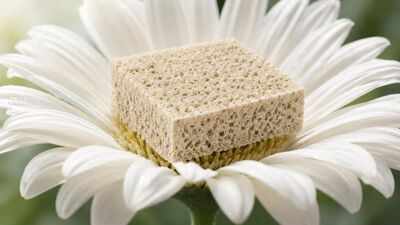
BENGALURU: An eco-friendly bio-based foam developed by researchers at the Indian Institute of Science (IISc), is moving from the laboratory towards commercialisation, with Absolute Cold LLP working on its use in cold-chain and temperature-controlled packaging.The foam, developed by Prof Suryasarathi Bose and Prof Subodh Kumar, along with the team comprising Sampath Parasuram, Akshay Sunil Salvi, Supriya H, Sandeep Kumar Singh and Amit Malakar, is an alternative to conventional polyurethane (PU) foam, which is widely used for insulation but is difficult to recycle after use.The IISc material was designed to combine the properties needed for insulation with a more sustainable approach to what happens to the material at the end of its life. The journey from laboratory to industry also had a link to TOI.Bose said a report on the development published by TOI on Nov 11, 2024, helped bring a potential industry partner on board. “Your [TOI] article brought in a potential licensee on board and helped take the technology to market. Absolute Cold director saw your story and reached out to us,” he said.The original IISc work involved making the foam using epoxidised fatty acids derived from non-edible oils and polyphenol-based materials derived from tea leaves. The researchers also incorporated a chemical structure that allows the material to be reprocessed, rather than simply being discarded after use.Absolute Cold, which works in the cold-chain and temperature-controlled logistics sector, subsequently became interested in the technology. The company is now working towards translating the laboratory material into a product for applications where maintaining temperature during storage and transport is critical.
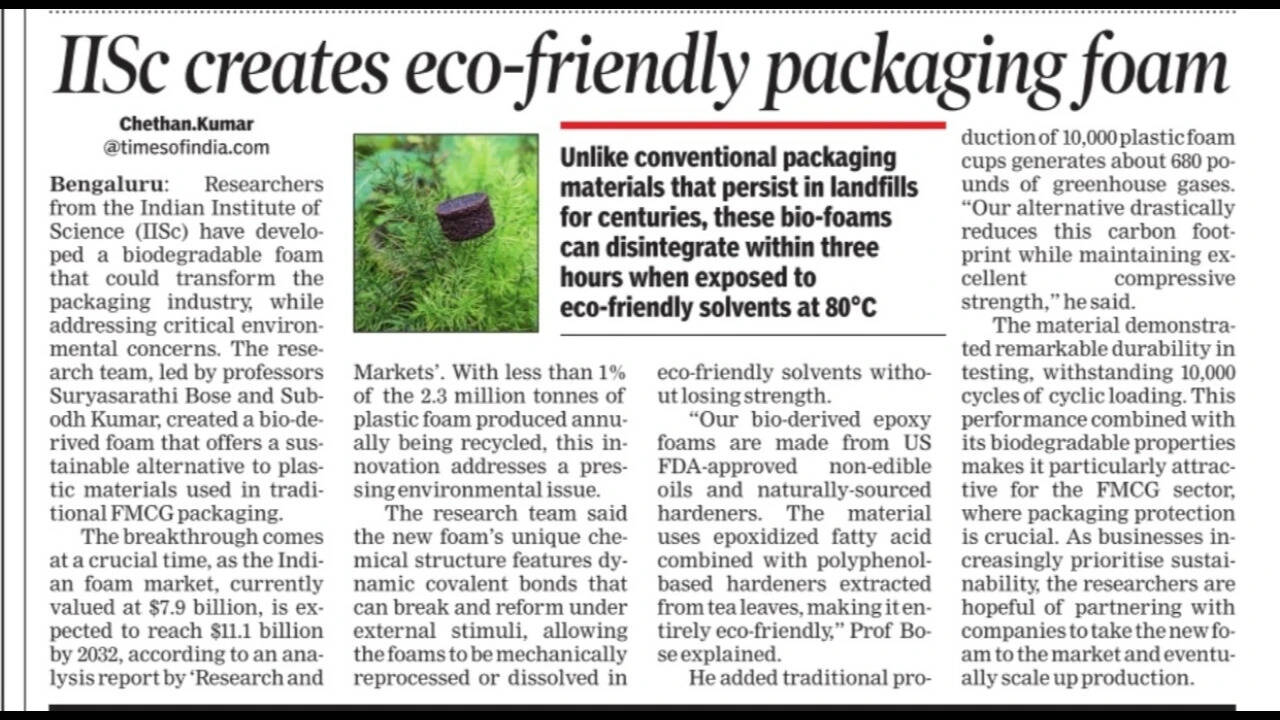
This could include packaging used to transport pharmaceuticals and other temperature-sensitive products. Such packaging needs to provide insulation while also being lightweight and strong enough to withstand handling and transportation. Its environmental impact after use is an increasing consideration as well.
Share your thoughts in the comments
Be respectful · TOI community guidelines
The move is the latest step in Bose’s broader work on more sustainable polymeric materials. His research has included efforts to find ways of reusing or upcycling plastics that are otherwise difficult to recycle, with the aim of keeping materials in use for longer rather than sending them to waste.For IISc, the foam’s progress also shows the less visible part of academic innovation: getting a material developed in a laboratory into a form that industry can manufacture and customers can use. The licensing and scale-up process can require changes to the formulation, manufacturing process and product design even after the underlying research has been demonstrated.The next test, therefore, is whether the foam can be produced at commercial scale while retaining the insulation, strength and durability demonstrated during development. Its performance in actual cold-chain applications will ultimately determine whether the IISc innovation can become a practical alternative to conventional foams.For a material conceived around the problem of what happens to foam after its useful life, that commercial journey is as important as the laboratory breakthrough itself.Also read: IISc-Bengaluru creates eco-friendly packaging foam


