
SC judge says Article 124(3) provision for appointing distinguished jurists as apex court judges remains unused for 76 years. NEW DELHI: Justice Ujjal Bhuyan, a Supreme Court judge, Sunday said though Article 124(3) permitted appointment of ‘distinguished jurists’ as judges of the apex court, it was regrettable that this provision had remained one of our Constitution’s unused mandates.“No jurist has been appointed so far to SC though Constitution has completed more than 76 years,” he said, adding that either Centre earlier or the collegium thereafter was not convinced about the depth in Indian academia or had not seriously explored Article 124(3) so far.Addressing the convocation of LLM students at National Law University, Delhi, Justice Bhuyan said, “No legal academic has yet been appointed as a judge of SC, despite there being brilliant minds who could have made a substantial contribution had they become part of the bench.”Addressing the ‘lack of practical experience’ argument against elevation of jurists as judges, he said, “SC is not only the highest adjudicatory body but it is the moral, legal and constitutional conscience-keeper of the nation. It is above technicalities.”Join conversationView All Comments →Share your thoughts in the commentsInsightfulAgreeDisagreeSkepticalConcerningPromisingWorth ReadingBig DevelopmentPost CommentBe respectful · TOI community guidelinesThe objective behind appointing ‘distinguished jurists’ as SC judges is to diversify as they “can be a great value addition to the bench”, he said, adding, “By his or her scholarship, he or she can make a visible contribution to the decision-making process at the top level. Participation of renowned legal academia and scholars would have a defining impact on the judicial functioning of Supreme Court.”He said academics were routinely appointed as judges to constitutional courts in US, UK, Canada and Kenya. In America, they could practise as long as it did not interfere with academic sessions, but this practice was opposed here by rule 49 of Bar Council of India, he said.In US, Felix Frankfurter became the first jurist to be an SC judge, picked by Theodore Roosevelt in 1939. Thereafter, several from legal academia have been appointed as US supreme court judges, many of whom had teaching experience prior to this role.Get the latest India News and Live updates. Download the TOI app.End of ArticleFollow Us On Social MediaVideos‘Oldest Trick In RSS Playbook’: Owaisi Slams Mohan Bhagwat’s Hindu-Muslim Unity Call In New YorkWho Is Divya Mittal? IAS Officer’s Resignation After 13 Years Sparks Online DebateIndia, Uzbekistan Ink Long-Term Uranium Deal: How The Pact Boosts Delhi’s Nuclear Ambitions7 Weeks Pregnant When She Died: Punjabi Influencer Manjeet Kaur’s Death Case Turns Murkier’Do You Feel You Are A Lord?’: Bombay High Court Raps Tukaram Mundhe-Led FDA Over MCA Order‘If Any Hindu Thinks…’: Opposition, Muslim Boards Respond To RSS Chief Bhagwat’s New York RemarksBJP Reprimands Three Delhi MPs Over Visit To Sajjan Kumar’s Home After His DeathKolkata Police Files Case Against Mamata Banerjee Over Rally, TMC Hits Back At BJP Govt | WatchRahul Gandhi Slams BJP-RSS Over Kharge ‘Shuddhikaran’, Demands Action Under SC/ST ActPakistani Drones Spotted Along LoC: Indian Army Intensifies Surveillance In J&K | Watch123PhotostoriesStunning Moroccan royal tiaras that make European crowns look almost ordinaryBigg Boss Malayalam Agnipareeksha: Meet the 12 commoners battling for a spot in the house10 baby boy names starting with the letter AYour gut bacteria need food too: 10 everyday foods that can help nourish the gut microbiome and improve gut healthExclusive – Khatron Ke Khiladi 15: Karan Wahi on doing the stunt-based show for the third time, bond with Avinash-Rithvik and performing stunts handpicked based on their fearsOptical illusion personality test: What you see first reveals how you approach difficult situations in lifeKajal to kumkum: Traditional Indian beauty products that became cultural symbolsParkinson’s isn’t always obvious: The changes in your walk, handwriting, face and voice that may be warning signsAnumol’s Dreamy Wedding Looks You Can’t MissKidney stones can build up silently: These common foods may increase your risk, especially if eaten too often123Hot PicksNepal floodUGC NET June 2026 resultCNG Price HikeMumbai milk priceRRB NTPC UG CBT 2 examAnkit Baliyan murderSridhar VembuDelhi murderInflation dataTop TrendingManjeet KaurKim KardashianMaya Higa FianceTravis KelceBrittany MahomesTravis Kelce BusinessKai CenatCoco GauffsNaomi OsakaLebron James

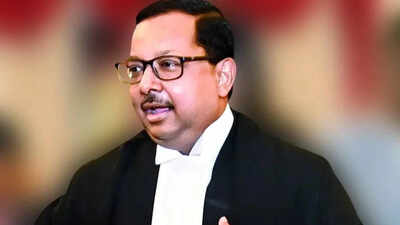
NEW DELHI: Justice Ujjal Bhuyan, a Supreme Court judge, Sunday said though Article 124(3) permitted appointment of ‘distinguished jurists’ as judges of the apex court, it was regrettable that this provision had remained one of our Constitution’s unused mandates.“No jurist has been appointed so far to SC though Constitution has completed more than 76 years,” he said, adding that either Centre earlier or the collegium thereafter was not convinced about the depth in Indian academia or had not seriously explored Article 124(3) so far.Addressing the convocation of LLM students at National Law University, Delhi, Justice Bhuyan said, “No legal academic has yet been appointed as a judge of SC, despite there being brilliant minds who could have made a substantial contribution had they become part of the bench.”Addressing the ‘lack of practical experience’ argument against elevation of jurists as judges, he said, “SC is not only the highest adjudicatory body but it is the moral, legal and constitutional conscience-keeper of the nation. It is above technicalities.”
Share your thoughts in the comments
Be respectful · TOI community guidelines
The objective behind appointing ‘distinguished jurists’ as SC judges is to diversify as they “can be a great value addition to the bench”, he said, adding, “By his or her scholarship, he or she can make a visible contribution to the decision-making process at the top level. Participation of renowned legal academia and scholars would have a defining impact on the judicial functioning of Supreme Court.”He said academics were routinely appointed as judges to constitutional courts in US, UK, Canada and Kenya. In America, they could practise as long as it did not interfere with academic sessions, but this practice was opposed here by rule 49 of Bar Council of India, he said.In US, Felix Frankfurter became the first jurist to be an SC judge, picked by Theodore Roosevelt in 1939. Thereafter, several from legal academia have been appointed as US supreme court judges, many of whom had teaching experience prior to this role.


