
Australia lost 99% of this rainforest, one retired banker spent 30 years helping bring it back: Meet Tony Parkes

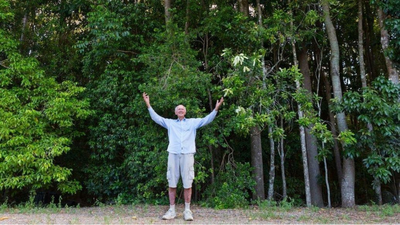
When Tony Parkes retired from investment banking at the age of 56, few would have predicted that his next chapter would revolve around seedlings, rainforest ecology and one of Australia’s most ambitious conservation efforts. On the far north coast of New South Wales, where the once-vast Big Scrub rainforest had been reduced to scattered fragments, Parkes found a mission that would shape the rest of his life. Over the next three decades, he helped bring together scientists, landowners, volunteers and conservation groups in a campaign to restore an ecosystem that had lost more than 99% of its original extent. Parkes died on June 13, 2026, at the age of 96, leaving behind a rainforest recovery movement that continues to grow long after its founder’s passing.
The retired banker behind one of Australia’s biggest restoration efforts
Tony Parkes was not a conservationist by training. Born in Hobart, Tasmania, he built a successful career spanning science, business management and investment banking before retiring from corporate life.His path changed after he and his wife, Rowena, settled in the Northern Rivers region of New South Wales. There, Parkes learned about the Big Scrub, a subtropical rainforest that once covered around 75,000 hectares and was considered Australia’s largest lowland rainforest ecosystem.The scale of its destruction was staggering. Decades of agricultural clearing had reduced the forest to roughly 1% of its original size. Surviving patches were isolated and vulnerable, scattered across farms, roadsides and reserves.What began as an interest in local history soon evolved into a personal mission. Parkes and his wife started restoring rainforest on their own property, planting native species and learning how damaged ecosystems could recover.
The rainforest that almost vanished
Before European settlement, the Big Scrub stretched across rich volcanic soils in northern New South Wales. Towering figs, palms and dense vines supported an extraordinary diversity of birds, mammals, insects and plants.Its fertile soils also became its greatest vulnerability.As settlers expanded farming operations, vast sections of rainforest were cleared for dairy production, grazing and agriculture. By the late twentieth century, the Big Scrub had become one of Australia’s most endangered ecosystems.The consequences extended far beyond the loss of trees. Habitat fragmentation disrupted wildlife populations, reduced biodiversity and weakened natural ecological processes that had developed over thousands of years.Conservationists feared that without intervention, many remaining rainforest fragments would continue to deteriorate.
Building a restoration movement
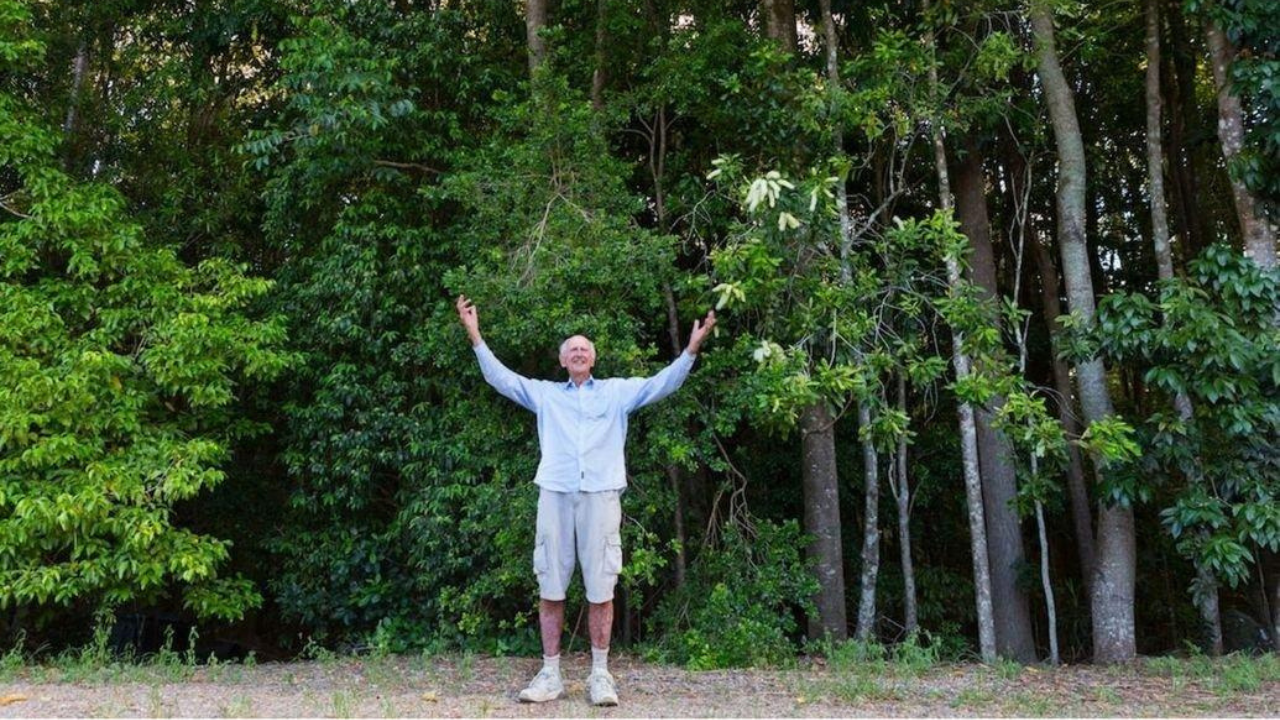
In 1993, Parkes helped establish the Big Scrub Landcare Group, which later evolved into the Big Scrub Rainforest Conservancy.Rather than focusing solely on tree-planting events, the organisation developed a broader strategy for restoration. Landholders were encouraged to protect remnant rainforest, reconnect fragmented habitats and establish new areas of native vegetation.Parkes proved particularly effective at bringing different groups together. Scientists, bush regenerators, volunteers, nursery operators, donors and government agencies all became part of a shared effort.His background in business and management helped transform local concern into a structured, long-term programme capable of attracting funding and sustaining momentum.He also played a role in establishing conservation organisations including Rainforest Rescue and EnviTE, extending the impact of restoration work across a wider area.Over the following decades, restoration efforts expanded dramatically.Millions of native trees were planted throughout the Northern Rivers region, helping reconnect isolated patches of rainforest and create new habitat corridors for wildlife.Parkes and Rowena turned their own property into a living example of what restoration could achieve. Tens of thousands of trees were planted, gradually transforming cleared land into a developing rainforest ecosystem.As vegetation matured, wildlife began returning.Among the species that particularly fascinated Parkes was the Wompoo Fruit Dove, a colourful rainforest bird whose feeding habits help disperse seeds across large distances. Its presence indicated that important ecological processes were beginning to function once again.For many conservationists, the return of native species became one of the clearest signs that restoration efforts were succeeding.
Looking beyond planting trees
Parkes understood that rebuilding a rainforest involved far more than putting seedlings in the ground.As restoration science advanced, he encouraged researchers and conservation groups to examine questions about genetic diversity, climate resilience and long-term ecosystem health.The Big Scrub Rainforest Conservancy became involved in projects exploring seed sourcing, rainforest genetics and the role of mycorrhizal fungi, microscopic organisms that help sustain healthy forests.These initiatives aimed to ensure that restored rainforest could withstand future pressures, including disease outbreaks and a changing climate.By combining practical restoration with scientific research, the project became a model for ecological recovery efforts elsewhere in Australia.
Recognition for a lifetime of conservation
Parkes’ contribution earned widespread recognition over the years.He received Landcare honours, a Banksia Award and appointment as a Member of the Order of Australia for services to conservation and environmental restoration.Yet colleagues often noted that he remained focused on outcomes rather than accolades.The greatest evidence of success could be seen in the landscape itself. Areas once dominated by cleared farmland were gradually returning to forest. Landholders who had once viewed rainforest as an obstacle increasingly saw it as an asset worth protecting.What had begun as a local restoration project had evolved into one of Australia’s most significant community-led conservation success stories.
A legacy measured in forests
Following Parkes’ death in June 2026, tributes poured in from scientists, environmental organisations and community leaders who credited him with helping reshape the future of the Big Scrub.The forests he helped restore remain far smaller than the original ecosystem that once covered northern New South Wales. Yet the trajectory has changed. Areas that were shrinking are now expanding. Habitat that was fragmented is becoming connected.Perhaps the most remarkable aspect of Parkes’ story is that his conservation career began after retirement.Many people spend their later years slowing down. Parkes embarked on a 30-year effort that helped revive one of Australia’s most endangered ecosystems.Today, millions of growing trees stand as evidence of that decision. Long after the meetings, fundraising campaigns and planting projects have faded from memory, the forests themselves continue the work he started.


