
At the ourth Digital News Publishers Association (DNPA) Conclave 2026, industry leaders and policy experts came together to discuss the current regulatory environment in the country and the kind of impact it is having over the media industry and publishers. Speaking on the question of whether the conditions serve as a hurdle or as a mechanism for publishers to survive, Rajnish Gupta, Partner and Leader, Economic Policy, EY India, said “it depends on from the lens you’re looking at it.” He emphasized, it needs to be understood that the outcome of every policy is going to be different from everyone, saying “we’re in an evolving space, it’s not set. For example if you’re a platform you might not like the guidelines that have come about these intermediaries. Whereas you look from the shoes of digital media, in an age of AI, deepfakes, the credibility, research and authenticity of work is in question.” Highlighting his journey through different media platforms Shivnath Thukral, VP Public Policy & Government Affairs, PhonePe (former Public Policy VP at Meta), said after working through different mediums “I can hardly complain that policy hasn’t been an enabler.” He went on to say, “there must be a reason why all the platforms like Facebook, Google, and all have the largest market base in India. There must be a reason why RBI is working towards policy enabling with the Government of India support. India has the largest digital payment ecosystem,” adding, “regulation follows innovation. The regulation in the digital ecosystem including digital media has created a lot of space for innovation.”Asserting the importance of regulation for a good economy Supreme Court lawyer, Vivek Narayan Sharma, said “there is no question of no regulation and operating, for good economy and a stable economy regulations have to be in place. If they are not in place everything will go haywire, everyone will do what they want and there will be no control.”Sharma also spoke about an important question that how much control should be there and to what extent. He said, “control should be exercised with the barometer of the fundamental rights enshrined in the Constitution. So regulation with an end so that people can operate their businesses, so these are very very important regulations.”Adding another perspective, Founder & Chairman, International Commission on Cyber Security Law, Pavan Duggal, said “don’t wait for regulations.” He added, “ that current regulations are neither adequate, nor sufficient, nor can be termed as over -regulations.”Duggal talking about the newly introduced rules by the Centre to counter the AI content said, “these are not going to be enough, so if you think it’s the end of rules on the subject it’s surely not…But we need to make sure are we actually complying with the already existing rules.”End of ArticleFollow Us On Social MediaVideos’We Do See A Role, But..’: India Backs Trump’s Gaza Plan As Modi, Israel PM Discuss US-Iran Conflict‘India Essential To Middle East Future’: Israeli Prez Herzog Tells PM Modi, Lauds Economic Growth’UPI Will Be Used In Israel’: PM Modi After Key Meet With Netanyahu, Pushes India-Israel FTAI&B Minister Ashwini Vaishnaw Sounds Big Alert On Cybercrime, Pushes Fair Revenue For CreatorsJamaat Chief Exposes Political Faultline In Bangladesh, Backs Yunus After President’s Big Charge’Owe India A Great Lot Of Debt’: Israel PM Benjamin Netanyahu Hails PM Modi During Joint StatementFrom Rajasthan to Assam: India is Building Highway Airstrips for Modern Warfare’Heads Must Roll’: Centre Says Sorry Over NCERT Chapter, Supreme Court Demands AccountabilityUmmah Politics Erupts As Pakistan Targets Israel’s Hexagon Alliance Plan Naming India A Key AllyIndian Army Showcases Combat Power Near India-Pak Border123PhotostoriesDelhi’s 61-km road along with Najafgarh drain corridor to ease traffic and boost connectivityWorld’s 8 most stressful cities to live in and their biggest pressure pointsNot just the clothes! Rashmika Mandanna and Vijay Deverakonda’s heritage wedding jewellery has the internet talking1500 kg fake paneer and mawa seized in Ghaziabad: 8 smart alternatives for popular dishes for the Holi celebrationWhat sets luxury cars apart? 5 features you won’t find in economy modelsFrom admitting affairs with Russian women to regretting divorce with Melinda French Gates: 5 times Bill Gates regretted his decisions — And what they teach us about power and psychologyWalking at 12-3-30 for weight loss: Can this low-impact routine help you lose fat effectively?From ‘Ramayana’ and ‘Dhurandhar’ to ‘Toxic’ and ‘King’: Looking at 2026’s MOST EXPENSIVE films in BollywoodHow to make Amritsari Aloo Wadi Ki Sabzi for dinnerDipika Kakar breaks down after meeting her mother in-law in the hospital; gets discharged after her cyst removal surgery123Hot PicksNew Indian Railways reformsSaudi poultry import banGold rate todayBihar wedding shootIncome Tax CalculatorPublic holidays February 2026Bank Holidays februaryTop TrendingNFL Trade NewsJason KelceBrittany MahomesHow to get Iron Man Skin in FortniteBank Holidays in MarchStephen Curry WifeSaudi Arabia Poultry BansKamal Maula Mosque DisputeBhojshala Madhya PradeshSalman Agha Wife

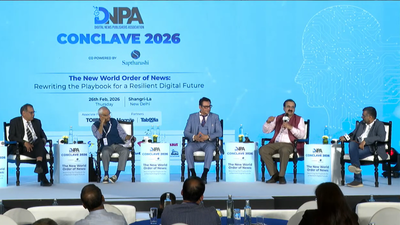
At the ourth Digital News Publishers Association (DNPA) Conclave 2026, industry leaders and policy experts came together to discuss the current regulatory environment in the country and the kind of impact it is having over the media industry and publishers. Speaking on the question of whether the conditions serve as a hurdle or as a mechanism for publishers to survive, Rajnish Gupta, Partner and Leader, Economic Policy, EY India, said “it depends on from the lens you’re looking at it.” He emphasized, it needs to be understood that the outcome of every policy is going to be different from everyone, saying “we’re in an evolving space, it’s not set. For example if you’re a platform you might not like the guidelines that have come about these intermediaries. Whereas you look from the shoes of digital media, in an age of AI, deepfakes, the credibility, research and authenticity of work is in question.” Highlighting his journey through different media platforms Shivnath Thukral, VP Public Policy & Government Affairs, PhonePe (former Public Policy VP at Meta), said after working through different mediums “I can hardly complain that policy hasn’t been an enabler.” He went on to say, “there must be a reason why all the platforms like Facebook, Google, and all have the largest market base in India. There must be a reason why RBI is working towards policy enabling with the Government of India support. India has the largest digital payment ecosystem,” adding, “regulation follows innovation. The regulation in the digital ecosystem including digital media has created a lot of space for innovation.”Asserting the importance of regulation for a good economy Supreme Court lawyer, Vivek Narayan Sharma, said “there is no question of no regulation and operating, for good economy and a stable economy regulations have to be in place. If they are not in place everything will go haywire, everyone will do what they want and there will be no control.”Sharma also spoke about an important question that how much control should be there and to what extent. He said, “control should be exercised with the barometer of the fundamental rights enshrined in the Constitution. So regulation with an end so that people can operate their businesses, so these are very very important regulations.”Adding another perspective, Founder & Chairman, International Commission on Cyber Security Law, Pavan Duggal, said “don’t wait for regulations.” He added, “ that current regulations are neither adequate, nor sufficient, nor can be termed as over -regulations.”Duggal talking about the newly introduced rules by the Centre to counter the AI content said, “these are not going to be enough, so if you think it’s the end of rules on the subject it’s surely not…But we need to make sure are we actually complying with the already existing rules.”


