
With the entry of the six MPs, Eknath Shinde’s Shiv Sena now has 13 MPs in the Lok Sabha, making the party a key player within the BJP-led NDA. NEW DELHI: Tigers or traitors! Yes, you guessed it right. We are talking about the six Uddhav Sena MPs who crossed the political divide in Maharashtra to be on the right side of power.Well, they were “Tigers” for Eknath Shinde, who boastfully claimed credit for successfully poaching six MPs from the rival Sena faction while they were labelled “traitors” by Uddhav Thackeray camp which was dealt a second blow by the defectors in a span of 4 years.They are the latest set of legislators who have ditched their original parties to veer towards power in this “season of defections.” The six “Tigers” follow in the footsteps of their Trinamool and AAP “comrade-in-arms” – who managed to change ships by outmanoeuvring the provisions of the anti-defection law.With six defected MPs on his side, a proud Shinde marked the culmination of “Operation Tiger”. No, this was not about the preservation of the four-legged felines, it was about engineering defections of MPs from Uddhav Sena to Shinde Sena which was achieved with perfection.Rebels are ‘Dhurandhars’Maharashtra deputy chief minister Eknath Shinde proudly announced that he was behind engineering these defections. And why not? After all, the defections make his Shiv Sena, the second largest party in Maharashtra in terms of MPs. Not only that – at the national level – Shinde’s Shiv Sena now becomes the fourth-largest constituent within the NDA coalition, trailing only behind BJP (240 MPs), NCPI (20 MPs via the TMC split) and TDP (16).”Operation Tiger is now complete and successful. My operations are fool proof,” Shinde said while referring to the six defected MPs as Dhurandhar (stalwarts/experts) who are connected to ground.Interestingly, the number that changed sides could easily have been seven had another deal with a prospective rebel for a Union Cabinet berth gone through.This is what Shiv Sena leader Ramdas kadam had to say: “Back in 2022, there were 40 MLAs, including 10 ministers, and Eknath Shinde pledged that I will bring all of them back. He succeeded in getting 60 MLAs and even today six MPs have joined us to support development in their respective constituencies. I welcome them. A seventh MP has also signed in the paper but he demanded a cabinet post to which Eknath Shinde declined. He went back after that… I will not name him but he sits next to Uddhav Thackeray.”Season of defectionsThe defections of Uddhav Sena MPs is the third “power” shift this season. It all started with seven AAP MPs in Rajya Sabha announcing merger with the BJP. Ironically the rebellion was led by Raghav Chadha, who was once the most trusted aide of Arvind Kejriwal. Kejriwal watched helplessly as seven of his MPs jumped on the other side of the political divide, dealing him a crushing blow ahead of the Punjab assembly elections next year.That was followed by the great exodus in Trinamool Congress, a party that unravelled like a pack of cards after Mamata Banerjee lost the 2026 assembly elections at the hand of the BJP. Today, the government in West Bengal is being run by the BJP and the opposition is also working under the guidance of the BJP. The entire Trinamool rebellion – first at Kolkata and then in the national capital – played out under the watch of the BJP leaders. For now, Mamata is battling the rebels as they try to now gain control of the Trinamool Congress.Will there be more defections this season?Well, we do not know. But there are two obvious targets – Akhilesh Yadav’s Samajwadi Party with 37 Lok Sabha members and Sharad Pawar’s NCP with 8.Uttar Pradesh minister and Suheldev Bharatiya Samaj Party (SBSP) chief Om Prakash Rajbhar has already claimed that the split within the Samajwadi Party is inevitable and will be led by “son of UP’s land of rebels”, apparently referring to SP MP Sanatan Pandey.”The split is bound to happen,” Rajbhar asserted. Launching a harsh critique at Samajwadi Party chief Akhilesh Yadav, he said: “The way the entire ‘Saifai’ family jumped into abusing me and offering explanations over one of my reactions, it would be better for Akhilesh ‘Babu’ to stop focusing on Twitter politics, AI-driven and press-conference politics, and instead launch a ‘Save the MPs’ campaign”.Sanatan Pandey responded to Rajbhar’s social media posts calling them “laughable” and unexpected.”I am finding all these statements laughable. I never expected that someone would make such comments about me. I am unable to understand how to respond to this. Until now, the Samajwadi Party fulfilled my wish of becoming an MLA and MP, but now OP Rajbhar has made me popular internationally,” Pandey said.But as we have seen all such claims are denied till they eventually happen.Another national leader heading a regional party who needs to be on guard is Sharad Pawar. His NCP(SP) has 8 members in Lok Sabha. Under the new “defection formula” 6 of them would be enough to avoid the anti-defection law.Why anti-defection law has failed And that brings us to the Anti-defection Act. It was introduced in 1985, through the 52nd Amendment Act of 1985 and inserted in the Tenth Schedule of the Constitution. The aim was to bring political stability by curbing “horse-trading” and opportunistic party-hopping.It provides for disqualification if an elected member voluntarily relinquishes their original political party’s membership or votes or abstains from voting in the House contrary to the “whip” (direction) issued by the party, without obtaining prior permission.Independent members joining any political party after their election face disqualification as also the nominated members who join any political party if more than six months have elapsed since they were nominated to the House.While it was reasonably effective for a long period of time, parties have now found a way around it. Disqualification under the anti-defection law does not apply if a party merges with another with at least two-thirds of the legislators in the legislature party agreeing to the merger. And this is how the last three defections have succeeded.ConclusionGone are the days when poaching of tigers, sorry legislators, was a hush-hush operation with which parties would not associate openly. The new normal in politics is to openly and brazenly entice legislators to shift loyalties if it suits the numbers’ game. We have seen plenty of this on display in the last two months. And going forward we may see a lot more – especially in the run up to the Monsoon session of Parliament where numbers are needed to prove a “delimitation” point. Already, claims have been made about Samjawadi Party being the next in the firing line and also Sharad Pawar faction of the NCP. It matters little if the opposition cries foul and compares this to a “livestock market” – after all they have been power-less in holding their flock together.Get the latest India news and live updates. Download the TOI App.End of ArticleFollow Us On Social MediaVideosUpto 80% Jump in Green Card Fee? Proposition Made; What Would Be Indians’ Stake?’Pakistan’s Desperate Attempt To Deflect’: India Snubs Khawaja Asif’s ‘War Over Indus’ RemarkAliganj Fire: Jyoti’s Brother Alleges Corruption, Seeks Murder Charges Against OfficialsMaharashtra RTI Rules 2026 Under Scrutiny: Anna Hazare Demands Changes; Signals Possible Strike’We Expect…’: India Reacts To Alleged Desecration Of Lord Ram Photo In BangladeshLucknow Fire: 15 Dead, No NOC, One Exit — India’s Decade-Long Fire Safety Failure ExplainedPune’s Ketan Agarwal’s Death Was No Accident: Police | Fiancée & Alleged Lover Arrested For MurderMinority Affairs MoS George Kurian Resigns; BJP Veteran’s Exit Sparks Kerala Political Buzz | WatchFrom Airports To Your Aadhaar: What The Govt’s Facial Recognition Surveillance Platform Will AccessBattle For ‘Real TMC’ Intensifies As TMC Shuffles Leadership Amid Rebel Challenge | Watch123PhotostoriesWhat’s attracting tourists to Kodaikanal? 7 reasons this hill station continues to charm travellersSmiling depression: Doctor explains how some people use happiness as a mask10 classic Anglo-Saxon baby names that survived centuries of changeBigg Boss Malayalam 8: Celebrities netizens wish to see on the showLong-lived families reveal a rare genetic clue to healthy ageing; scientists say it may help explain why some people stay disease-free for years longer7 schools where India’s richest send their kidsFrom Delhi Gymkhana Club to Calcutta Club: 6 iconic clubs of India that have shaped the country’s culinary cultureBritish-inspired window designs: 7 elegant styles that can add timeless charm to Indian homesThis is the ‘Northernmost Capital on Earth’ and it offers midnight sun, geothermal streets and surreal viewsFrom pride parades to custody battles: 9 fathers who chose their children over society’s judgment123Hot PicksIPL tradeGold rate todayCUET UG Result 2026Telangana school bandhCBSE 12th revaluationMaldivian wisdomSpanish proverbMalay proverbPortuguese proverbTop TrendingGeorge KurianUS-Iran WarKunal ShahFIFA World Cup 2026Stock market crashCUET UG Result 2026Ketan AgarwalGold rate todayDelhi weatherMumbai rain

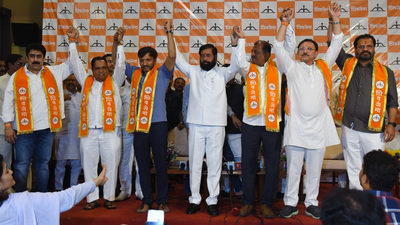
NEW DELHI: Tigers or traitors! Yes, you guessed it right. We are talking about the six Uddhav Sena MPs who crossed the political divide in Maharashtra to be on the right side of power.Well, they were “Tigers” for Eknath Shinde, who boastfully claimed credit for successfully poaching six MPs from the rival Sena faction while they were labelled “traitors” by Uddhav Thackeray camp which was dealt a second blow by the defectors in a span of 4 years.They are the latest set of legislators who have ditched their original parties to veer towards power in this “season of defections.” The six “Tigers” follow in the footsteps of their Trinamool and AAP “comrade-in-arms” – who managed to change ships by outmanoeuvring the provisions of the anti-defection law.With six defected MPs on his side, a proud Shinde marked the culmination of “Operation Tiger”. No, this was not about the preservation of the four-legged felines, it was about engineering defections of MPs from Uddhav Sena to Shinde Sena which was achieved with perfection.
Rebels are ‘Dhurandhars’
Maharashtra deputy chief minister Eknath Shinde proudly announced that he was behind engineering these defections. And why not? After all, the defections make his Shiv Sena, the second largest party in Maharashtra in terms of MPs. Not only that – at the national level – Shinde’s Shiv Sena now becomes the fourth-largest constituent within the NDA coalition, trailing only behind BJP (240 MPs), NCPI (20 MPs via the TMC split) and TDP (16).“Operation Tiger is now complete and successful. My operations are fool proof,” Shinde said while referring to the six defected MPs as Dhurandhar (stalwarts/experts) who are connected to ground.Interestingly, the number that changed sides could easily have been seven had another deal with a prospective rebel for a Union Cabinet berth gone through.This is what Shiv Sena leader Ramdas kadam had to say: “Back in 2022, there were 40 MLAs, including 10 ministers, and Eknath Shinde pledged that I will bring all of them back. He succeeded in getting 60 MLAs and even today six MPs have joined us to support development in their respective constituencies. I welcome them. A seventh MP has also signed in the paper but he demanded a cabinet post to which Eknath Shinde declined. He went back after that… I will not name him but he sits next to Uddhav Thackeray.”
Season of defections
The defections of Uddhav Sena MPs is the third “power” shift this season. It all started with seven AAP MPs in Rajya Sabha announcing merger with the BJP. Ironically the rebellion was led by Raghav Chadha, who was once the most trusted aide of Arvind Kejriwal. Kejriwal watched helplessly as seven of his MPs jumped on the other side of the political divide, dealing him a crushing blow ahead of the Punjab assembly elections next year.That was followed by the great exodus in Trinamool Congress, a party that unravelled like a pack of cards after Mamata Banerjee lost the 2026 assembly elections at the hand of the BJP. Today, the government in West Bengal is being run by the BJP and the opposition is also working under the guidance of the BJP. The entire Trinamool rebellion – first at Kolkata and then in the national capital – played out under the watch of the BJP leaders. For now, Mamata is battling the rebels as they try to now gain control of the Trinamool Congress.
Will there be more defections this season?
Well, we do not know. But there are two obvious targets – Akhilesh Yadav’s Samajwadi Party with 37 Lok Sabha members and Sharad Pawar’s NCP with 8.Uttar Pradesh minister and Suheldev Bharatiya Samaj Party (SBSP) chief Om Prakash Rajbhar has already claimed that the split within the Samajwadi Party is inevitable and will be led by “son of UP’s land of rebels”, apparently referring to SP MP Sanatan Pandey.“The split is bound to happen,” Rajbhar asserted. Launching a harsh critique at Samajwadi Party chief Akhilesh Yadav, he said: “The way the entire ‘Saifai’ family jumped into abusing me and offering explanations over one of my reactions, it would be better for Akhilesh ‘Babu’ to stop focusing on Twitter politics, AI-driven and press-conference politics, and instead launch a ‘Save the MPs’ campaign”.Sanatan Pandey responded to Rajbhar’s social media posts calling them “laughable” and unexpected.“I am finding all these statements laughable. I never expected that someone would make such comments about me. I am unable to understand how to respond to this. Until now, the Samajwadi Party fulfilled my wish of becoming an MLA and MP, but now OP Rajbhar has made me popular internationally,” Pandey said.But as we have seen all such claims are denied till they eventually happen.Another national leader heading a regional party who needs to be on guard is Sharad Pawar. His NCP(SP) has 8 members in Lok Sabha. Under the new “defection formula” 6 of them would be enough to avoid the anti-defection law.
Why anti-defection law has failed
And that brings us to the Anti-defection Act. It was introduced in 1985, through the 52nd Amendment Act of 1985 and inserted in the Tenth Schedule of the Constitution. The aim was to bring political stability by curbing “horse-trading” and opportunistic party-hopping.It provides for disqualification if an elected member voluntarily relinquishes their original political party’s membership or votes or abstains from voting in the House contrary to the “whip” (direction) issued by the party, without obtaining prior permission.Independent members joining any political party after their election face disqualification as also the nominated members who join any political party if more than six months have elapsed since they were nominated to the House.While it was reasonably effective for a long period of time, parties have now found a way around it. Disqualification under the anti-defection law does not apply if a party merges with another with at least two-thirds of the legislators in the legislature party agreeing to the merger. And this is how the last three defections have succeeded.
Conclusion
Gone are the days when poaching of tigers, sorry legislators, was a hush-hush operation with which parties would not associate openly. The new normal in politics is to openly and brazenly entice legislators to shift loyalties if it suits the numbers’ game. We have seen plenty of this on display in the last two months. And going forward we may see a lot more – especially in the run up to the Monsoon session of Parliament where numbers are needed to prove a “delimitation” point. Already, claims have been made about Samjawadi Party being the next in the firing line and also Sharad Pawar faction of the NCP. It matters little if the opposition cries foul and compares this to a “livestock market” – after all they have been power-less in holding their flock together.


