
Why the US is delivering F-35s without radars: Inside the AN/APG-85 radar

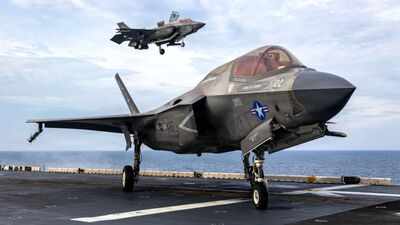
The United States military, has officially confirmed that it is accepting F-35 Lightning II fighter jets without their primary radar, AN/APG-85. The first production lot of the radar is schedule to be delivered in 2028The decision follows delays in the development of the AN/APG-85 Active electronically scanned array (AESA) radar, a key component of the F-35’s ambitious block 4 modernisation programme. Earlier this year images of radar less F-35 emerged on the internet.The disclosure was made by Marine Corps Lt. Gen. Gregory Masiello, Head of the F-35 Joint Program Office (JPO), during a hearing before the U.S. Senate Armed Services Committee earlier this week.Masiello confirmed that the US Marine Corps had accepted six F-35B Lightning II aircraft without their radars. The revelation came during an exchange with Senator Mark Kelly, a Democrat from Arizona and a retired U.S. Navy aviator.Lockheed Martin has continued manufacture the latest production lots of the fighter. The delay in the radar forced the pentagon to adopt an unusual approach.Instead of halting the production of F-35, it has decided to accept a limited number of aircraft without the radar. These aircraft are fitted with ballast (Dead weight) in the nose to maintain the correct weight and centre of gravity and will be retrofitted with the AN/APG-85 once the radar is ready.The decision is also driven by changes made to the latest F-35s, which have been redesigned to accommodate the new radar.The new lot of F-35 features structural modifications in the forward fuselage and radar mounting arrangement tailored for the new sensor, making it impractical to install the older AN/APG-81 radar as a temporary replacement.About AN/APG-85:The Northrop Grumman AN/APG-85 is an Active electronically scanned array (AESA) radar, which will replace the current AN/APG-81 beginning with lot 17 production aircraft.Northrop Grumman describes it as a next-generation multifunction radar that will enhance the fighter’s situational awareness, survivability and lethality against current and future threats.The radar is the part of the larger block 4 modernization programme, which planned to extensive upgrade the F-35 fighters.The programme will include improvements in sensors computing power, electronic warfare suite, software, weapons integration and networking capabilities.As a multifunction radar, the APG-85 is expected to perform a wide range of missions. It will provide long-range air-to-air search and target tracking against aircraft, cruise missiles and unmanned aerial systems. It will be also supporting the high-resolution Synthetic aperture radar (SAR) imaging for air-to-ground missions.It is also designed to integrate seamlessly with the aircraft’s electronic warfare suite, communications systems and sensor fusion architecture, providing the pilot with a comprehensive tactical picture.Compared with the current AN/APG-81, the APG-85 is expected to offer significantly greater processing power, improved electronic attack and electronic protection capabilities, enhanced resistance to jamming, faster target processing and more accurate.The AN/APG-85 is one of the most power-demanding systems in the F-35’s Block 4 upgrade. Its higher electrical and cooling requirements have driven the integration of Technology refresh 3 (TR-3) and the engine core upgrade, which provide the additional computing power, electrical generation and thermal management needed to support the new radar and other advanced mission systems.While the delivery of radar-less F-35s is an unusual step, it reflects the pentagon’s decision to keep production moving rather than delay the programme until the AN/APG-85 is ready.This also underscores the growing complexity of developing and integrating next-generation sensors, software and propulsion systems into modern stealth fighters


