
Why people put aluminium foil balls in their washing machine and whether you should |

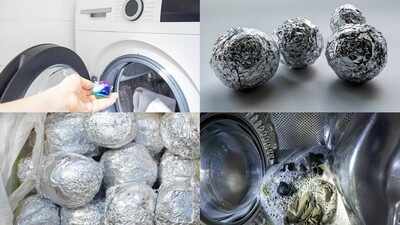
Scroll through enough laundry hack content online, and you’ll eventually come across someone tossing a crumpled ball of aluminium foil straight into their washing machine, claiming it’s the secret to softer, static-free clothes without a single dryer sheet in sight. It’s an offshoot of a genuinely older, more established trick involving the dryer, but the washing machine version has picked up its own following lately, even though the reasoning behind it is considerably shakier. Before you start balling up foil and tossing it in with your next load, it’s worth understanding exactly what this hack claims to do, why it makes far more sense in one appliance than the other, and what could actually go wrong.
The theory people are working from
The logic behind this hack borrows directly from basic physics. Aluminium is an excellent electrical conductor, and the idea is that a compacted foil ball can absorb and discharge the static electricity that builds up as clothes rub against each other during a cycle, while also physically wedging itself between garments to reduce the friction causing that static in the first place. Some proponents also claim the foil creates enough friction of its own to help break down leftover detergent residue clinging to fabric, though this particular claim rests on far shakier ground than the static explanation.
Why this makes much more sense for a dryer than a washer
Here’s the detail most people miss entirely: static cling is overwhelmingly a dry-heat problem, not a wet-wash one. Electrons build up on fabric surfaces specifically when there’s too little moisture around to help dissipate that charge, which is exactly the environment inside a hot, tumbling dryer, not a washing machine full of wet clothes and water. Since moisture itself naturally prevents static buildup, the entire premise of fighting static specifically during the wash cycle is a bit of a mismatch from the start, even before you consider whether the foil itself does anything useful.
The real risks specific to your washing machine
Beyond questionable effectiveness, there are genuine downsides worth knowing about. Any sharp or torn edge on a compacted foil ball can snag delicate fabric during the wash cycle, pulling threads or wearing down material on clothes you’d rather not ruin. There’s also a real risk of the foil scratching the interior of your washing machine drum over repeated use, and since foil balls aren’t an intended or manufacturer-approved use of the appliance, this could even be classified as misuse, potentially affecting your warranty if something does go wrong down the line.
So, should you actually try it?
If your goal is fighting static cling, your effort is far better spent on the dryer version of this hack, where the science holds up more convincingly and the risk profile is considerably lower: no wet fabric, no detergent residue, no snagging concerns on damp material. For the washing machine specifically, the honest answer is that the evidence simply doesn’t back up the claims strongly enough to justify the risk to your clothes or your machine. It’s a hack that sounds clever but doesn’t quite hold together once you look closely at where static cling actually comes from.
Disclaimer:
This article is intended for general informational purposes only. Using aluminium foil in ways not specified by your washing machine’s manufacturer may be considered misuse and could affect your warranty. Always check your appliance’s manual and manufacturer guidelines before trying any DIY laundry hack.


