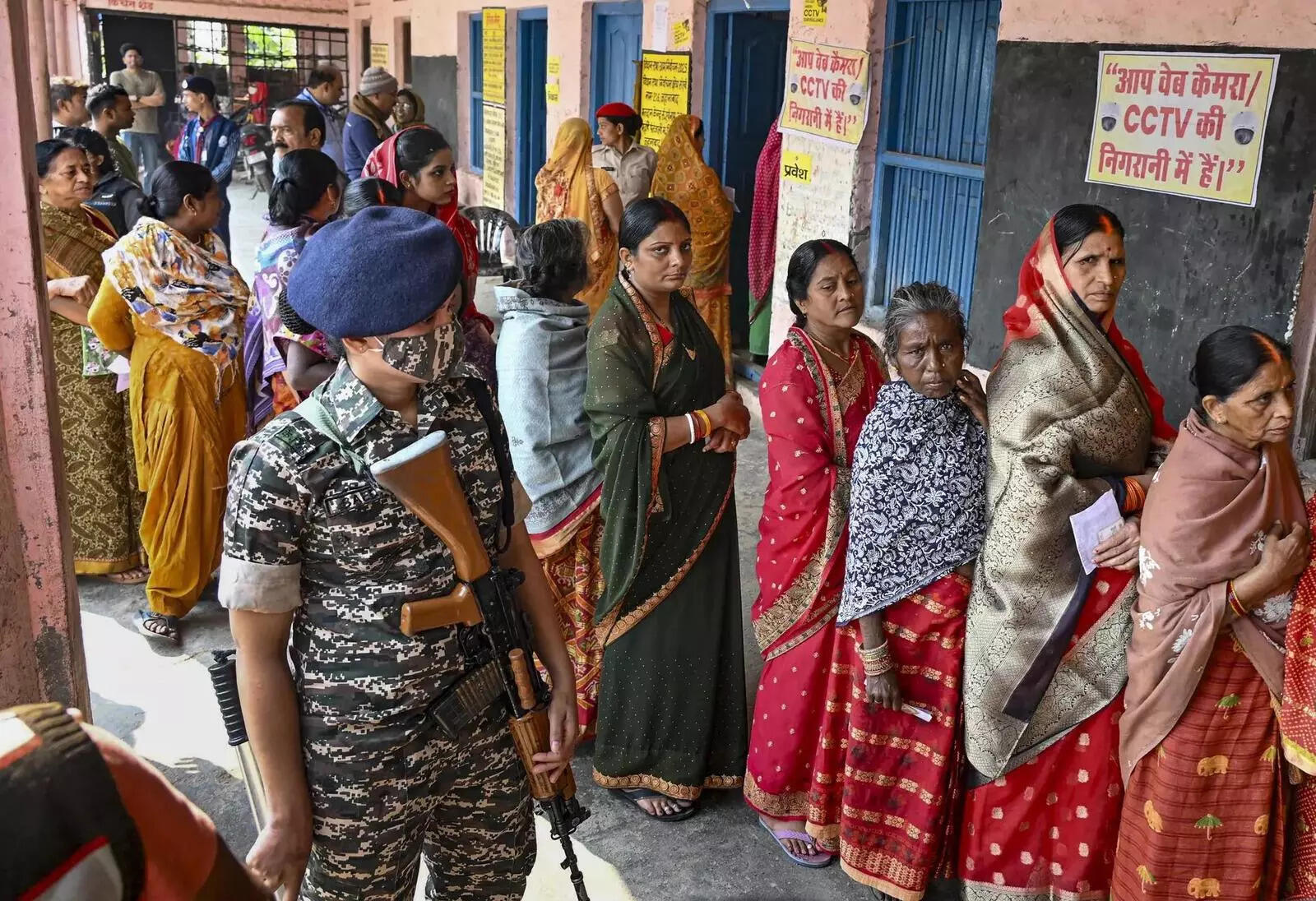
IndiaWhat TOI reporters saw in Bihar Vamsikrishna11 months ago01 mins mins Source link Post navigation Previous: Nov 12, 2025, 18:38 ISTNext: YourRage ex girlfriend goes live in shocking rant threatening to expose secrets that could ruin him Leave a Reply Cancel replyYour email address will not be published. Required fields are marked *Comment * Name * Email * Website Save my name, email, and website in this browser for the next time I comment.
EC says SIR decisions taken unanimously by full commission NEW DELHI: Election Commission asserted Saturday that the decisions regarding special intensive revision (SIR) of electoral rolls were taken unanimously by chief election commissioner Gyanesh Kumar and election commissioners S S Sandhu and Vivek Joshi.The statement came following the first meeting of the “full” Commission after a report in The Indian Express suggested the CEC disregarded the views of the two ECs on SIR-related calls, which sparked a political row, with the opposition targeting the govt and the CEC.”The order for SIR issued on 24.6.2025 for all States/UTs, starting with Bihar, followed by West Bengal and 30 other States/UTs was issued with the unanimous approval of the Commission,” the EC said.It also denied the claim that Sandhu and Joshi wrote to the Cabinet secretary to flag concerns over policy matters or IT processes.SIR has been implemented in 20 states and UTs and is under way in 12 others. The poll panel also refuted the claim that Sandhu and Joshi wrote separate letters to the cabinet secretary to flag their concerns about policy matters or processes adopted by EC’s IT division over which they no longer had control.The letter was “related to the work of an officer on deputation to EC. The work re-distribution orders issued by the officer concerned were not actually implemented after the orders of the two commissioners and the oversight over the IT division by the DEC was never actually withdrawn,” EC said.The report said Sandhu and Joshi had called the move “a clear violation” of the law that governs EC and sought action against senior DEC Maneesh Garg, and linked the commissioners’ objections to field officers allegedly being locked out of ECINET making it a “centralised” software directly controlled by EC.The allegations linking the commissioners’ objections to SIR and alleged lack of access to field officers to ECINET were seized upon by opposition to point their guns at the CEC. LoP Rahul Gandhi demanded he be imprisoned while opposition appeared set to seek his removal afresh.Join conversationView All Comments →Share your thoughts in the commentsInsightfulAgreeDisagreeSkepticalConcerningPromisingWorth ReadingBig DevelopmentPost CommentBe respectful · TOI community guidelinesSaturday’s full commission meeting and the statement issued later sought to fix this; it cleared the air point by point, besides conveying the message that the three members had resolved their internal issues.EC decided to concede on a slew of matters raised by the commissioners through internal notes, deciding that the agenda for all meetings shall henceforth be circulated in advance and the minutes issued. Also, annual performance appraisal reports of all officers would be completed by Dec 31 every year. The statement said all directions issued by the commissioners to the officers of the commission will be complied with and foreign trips for officers approved by the full commission.On opposition’s claim of disenfranchisement of 13 crore voters in SIR, EC said the final figure of electors will be known only after final publication of the roll in the remaining 12 states of Phase 3.Get the latest India News and Live updates. Download the TOI app.About the AuthorBharti JainBharti Jain is senior editor with The Times of India, New Delhi. She has been writing on security matters since 1996. Having covered the Union home ministry, security agencies, Election Commission and the ‘prime’ political beat, the Congress, for The Economic Times all these years, she moved to TOI in August 2012. Her repertoire of news stories delves into the whole gamut of issues related to terrorism and internal strife, besides probing strategic affairs in India’s neighbourhood.Read MoreEnd of ArticleFollow Us On Social MediaVideosAlbanese Hails Modi’s Energy Push: ‘India Gave More People Access Than Anywhere In History’Delhi Skeleton Mystery: Skeleton-Like Structure Found During BJP Cleanliness Drive | Watch‘Padma Bhushan Is Small, Make Him PM’: Pawan Khera Mocks BJP’s Praise For Gyanesh KumarSkyStriker, HIMARS, Apache: India, US Showcase Firepower At Yudh Abhyas 2026 | WatchTibet Govt-in-Exile Reprimands Activist Sonam Wangchuk, Calls Comparison ‘Misplaced and Inaccurate’India’s Savage ‘Osama’ Reply To Pak PM’s UN Bluster; ‘Repeating Lies Won’t Make It True’‘A Terrorist Country Asking Me That Question’: Jaishankar’s Sharp Reply To Pak Journalist At UN’SIR’ Under Fire? IIT-Bombay, Election Commission Face Accountability Questions | PrasangMassive Protest Erupts At Delhi’s Jantar Mantar Against Gyanesh Kumar Over EC-SIR RowUAPA ‘Missing’: What Allowed VanDyke, 6 Ukrainians To Leave India? The Legal Gap Explained123Hot PicksAsian Games India ScheduleBank strikeNEET PG ResultGold Rate TodayOctober 2026 School HolidaysOdisha school textbooksPunjab school holidayMadurantakam bypollDr MonishCBSE Date SheetTop TrendingNorma DumontRahul GandhiPowerball JackpotDelhi Hit and RunUP EncounterDonald TrumpPM ModiNaomi OsakaJoe ThomasSupreme Court Vamsikrishna22 minutes ago 0
EAM S Jaishankar Describing Pakistan as a serial practitioner of terrorism in his UNGA address, foreign minister S Jaishankar said that there must be no dilution of the zero-tolerance approach to the menace. Without naming Pakistan PM Shehbaz Sharif, who had raked up the Kashmir issue in his General Assembly speech on Friday, Jaishankar said he had misrepresented facts and invoked arguments to normalise terrorism and claim immunity from its consequences.”That will not stand,” said the minister, adding that the scourge of terrorism had been a persistent threat to peace.Jaishankar called state-sponsored terrorism with a cross-border purpose a direct challenge to the global order, adding that India’s right to defend itself from terrorism will be exercised.In his remarks, Sharif had yet again given credit to US President Donald Trump for ending the India-Pakistan conflict last year with his “timely intervention”.”Govts indulging in such practices must be held accountable. There must be no dilution in our zero-tolerance approach towards terrorism. Its financial aspects, in particular, should be exposed and should be countered,” said Jaishankar.”Friendship and goodwill cannot co-exist with terrorism. And understandings premised on that will naturally be called into question. It is for the perpetrator of terrorism to mend its ways,” he added.He also flagged the need to end conflicts in West Asia and Ukraine, saying the inability to maintain peace is not just undermining security but threatening progress and retarding development. “In a globalised world, the effects of war are felt worldwide. Countries far from conflicts are being penalised for no fault of theirs. Those most impacted often have the least say.””The targeting of commercial shipping and seafarers transiting international waterways is simply unacceptable,” he said. Speaking on the West Asia crisis, the minister backed the two-state solution for durable and lasting peace.Join conversationView All Comments →Share your thoughts in the commentsInsightfulAgreeDisagreeSkepticalConcerningPromisingWorth ReadingBig DevelopmentPost CommentBe respectful · TOI community guidelinesJaishankar spoke about the Global South predicament in today’s world and also the misuse of AI. He said a mindset of extreme competition had set in, undermining institutions and establishing choke points.”Global South’s right to industrialise is also undermined by non-market practices and market denial. The march of technology that was meant to instill hope has now become a source of anxiety. Misuse of AI is sharpening bias and diluting mutual respect. These directions bode ill for the aims and objectives of the UN.”Get the latest India News and Live updates. Download the TOI app.End of ArticleFollow Us On Social MediaVideosAlbanese Hails Modi’s Energy Push: ‘India Gave More People Access Than Anywhere In History’Delhi Skeleton Mystery: Skeleton-Like Structure Found During BJP Cleanliness Drive | Watch‘Padma Bhushan Is Small, Make Him PM’: Pawan Khera Mocks BJP’s Praise For Gyanesh KumarSkyStriker, HIMARS, Apache: India, US Showcase Firepower At Yudh Abhyas 2026 | WatchTibet Govt-in-Exile Reprimands Activist Sonam Wangchuk, Calls Comparison ‘Misplaced and Inaccurate’India’s Savage ‘Osama’ Reply To Pak PM’s UN Bluster; ‘Repeating Lies Won’t Make It True’‘A Terrorist Country Asking Me That Question’: Jaishankar’s Sharp Reply To Pak Journalist At UN’SIR’ Under Fire? IIT-Bombay, Election Commission Face Accountability Questions | PrasangMassive Protest Erupts At Delhi’s Jantar Mantar Against Gyanesh Kumar Over EC-SIR RowUAPA ‘Missing’: What Allowed VanDyke, 6 Ukrainians To Leave India? The Legal Gap Explained123Hot PicksAsian Games India ScheduleBank strikeNEET PG ResultGold Rate TodayOctober 2026 School HolidaysOdisha school textbooksPunjab school holidayMadurantakam bypollDr MonishCBSE Date SheetTop TrendingNorma DumontRahul GandhiPowerball JackpotDelhi Hit and RunUP EncounterDonald TrumpPM ModiNaomi OsakaJoe ThomasSupreme Court Vamsikrishna3 hours ago 0
EPFO wage ceiling hike NEW DELHI: With EPFO increasing the mandatory wage ceiling from Rs 15,000 a month to Rs 25,000, employees will now contribute Rs 3,000 (at 12% contribution of Rs 25,000 wage) towards their PF savings from Rs 1,800 earlier, govt said in a set of FAQs released. This will be along with a contribution of Rs 917 by employers (at 3.67%), up from Rs 550, taking the mandatory monthly PF contributions to Rs 3,917.In addition, Rs 2,083 – an 8.3% contribution from employers’ share – will now go towards the pension kitty from earlier Rs 1,250. On Sept 17, govt increased EPFO wage ceiling to bring one crore additional workers into the social security net as minimum wages in at least seven states and UTs – Delhi, Maharashtra, Karnataka, Haryana, Gujarat, Rajasthan and Uttarakhand – have crossed the Rs 15,000 threshold.In the case of an employee with a monthly wage of Rs 20,000, the mandatory PF contribution will be Rs 3,134 – the employee share Rs 2,400 and the employer share Rs 734, with an additional Rs 1,666 going towards EPS from employer’s share. But if an employee earns, say, Rs 35,000 a month, the mandatory PF contribution will be Rs 6,000 (Rs 3,000 from employee and employers each), with no amount going towards pension as EPS is available only to those whose wages do not exceed the EPFO wage ceiling. The retirement savings agency said the new regime kicked in from Sept 17 and asked employers to review contractor compliance, wherever contract labour is engaged, and update its payroll systems.Allaying employee fears of attempts to pass on the contribution by deducting more from salaries, it said an employer’s statutory contribution cannot simply be treated as an employee deduction merely by describing it as part of CTC.Join conversationView All Comments →Share your thoughts in the commentsInsightfulAgreeDisagreeSkepticalConcerningPromisingWorth ReadingBig DevelopmentPost CommentBe respectful · TOI community guidelinesWhile the move will likely increase compliance costs for small and medium enterprises, the potential costs due to the rise in the wage ceiling can be partly offset by the incentive of up to Rs 3,000 per month for every additional employment created under PM Viksit Bharat Rojgar Yojana.Get the latest India News and Live updates. Download the TOI app.End of ArticleFollow Us On Social MediaVideosAlbanese Hails Modi’s Energy Push: ‘India Gave More People Access Than Anywhere In History’Delhi Skeleton Mystery: Skeleton-Like Structure Found During BJP Cleanliness Drive | Watch‘Padma Bhushan Is Small, Make Him PM’: Pawan Khera Mocks BJP’s Praise For Gyanesh KumarSkyStriker, HIMARS, Apache: India, US Showcase Firepower At Yudh Abhyas 2026 | WatchTibet Govt-in-Exile Reprimands Activist Sonam Wangchuk, Calls Comparison ‘Misplaced and Inaccurate’India’s Savage ‘Osama’ Reply To Pak PM’s UN Bluster; ‘Repeating Lies Won’t Make It True’‘A Terrorist Country Asking Me That Question’: Jaishankar’s Sharp Reply To Pak Journalist At UN’SIR’ Under Fire? IIT-Bombay, Election Commission Face Accountability Questions | PrasangMassive Protest Erupts At Delhi’s Jantar Mantar Against Gyanesh Kumar Over EC-SIR RowUAPA ‘Missing’: What Allowed VanDyke, 6 Ukrainians To Leave India? The Legal Gap Explained123Hot PicksAsian Games India ScheduleBank strikeNEET PG ResultGold Rate TodayOctober 2026 School HolidaysOdisha school textbooksPunjab school holidayMadurantakam bypollDr MonishCBSE Date SheetTop TrendingNorma DumontRahul GandhiPowerball JackpotDelhi Hit and RunUP EncounterDonald TrumpPM ModiNaomi OsakaJoe ThomasSupreme Court Vamsikrishna3 hours ago 0
Opposition INDIA bloc parties will meet on September 30 to discuss alleged poll-roll manipulation under the SIR process and a possible joint campaign seeking CEC Gyanesh Kumar’s resignation. NEW DELHI: Opposition INDIA bloc will meet on Sept 30 to discuss the alleged manipulation of poll rolls under SIR and a possible joint struggle to press for the resignation of CEC Gyanesh Kumar.The meeting has been scheduled against the backdrop of nationwide outrage triggered by revelations that ECs SS Sandhu and Vivek Joshi had questioned many of the decisions regarding SIR.The opposition, led by Rahul Gandhi, has said the revelations tie in with their allegations of ‘vote chori’ in favour of BJP over the last two years. It has demanded the scrapping of the SIR process.TMC MP Derek O’Brien said the demand for Gyanesh Kumar’s resignation is “non-negotiable”, while other issues will also be discussed at the meeting. “We will work unitedly and purposefully.”The meeting is expected to be attended by the leading lights of the anti-BJP front, including Mallikarjun Kharge, Rahul Gandhi, Mamata Banerjee, Akhilesh Yadav, Uddhav Thackeray and MA Baby.The meeting has been scheduled after CPM’s MA Baby wrote to parties (including AAP, DMK and CJP) seeking an immediate meeting.Trinamool’s Mamata Banerjee also reached out to INDIA bloc members. She called the CEC “Vanish Kumar”, demanded his ouster and said the Bengal mandate was stolen.The joint brainstorming will follow a Congress Working Committee meet on Sept 29.The parties are also planning to submit a fresh “removal notice” against Kumar in both Houses of Parliament.Join conversationView All Comments →Share your thoughts in the commentsInsightfulAgreeDisagreeSkepticalConcerningPromisingWorth ReadingBig DevelopmentPost CommentBe respectful · TOI community guidelinesCPI-ML’s Dipankar Bhattacharya said that there is a strong belief within INDIA bloc that some parties (Aam Aadmi Party and DMK) which are not part of the alliance umbrella should also be roped in to boost the campaign. It also released a fact-finding report regarding SIR in constituencies that the party lost narrowly in recent Bihar assembly polls and claimed it found 17-25% of voters had been wrongly deleted.The meeting assumes special significance as Cockroach Janata Party and other youth outfits have already announced a stir over the issue.CJP has reiterated that it will launch a nationwide agitation from Mumbai on Oct 2 after its ultimatum seeking the resignation of Kumar ended Saturday. Azad Maidan is most likely to be the venue of its protest.Get the latest India News and Live updates. Download the TOI app.End of ArticleFollow Us On Social MediaVideosAlbanese Hails Modi’s Energy Push: ‘India Gave More People Access Than Anywhere In History’Delhi Skeleton Mystery: Skeleton-Like Structure Found During BJP Cleanliness Drive | Watch‘Padma Bhushan Is Small, Make Him PM’: Pawan Khera Mocks BJP’s Praise For Gyanesh KumarSkyStriker, HIMARS, Apache: India, US Showcase Firepower At Yudh Abhyas 2026 | WatchTibet Govt-in-Exile Reprimands Activist Sonam Wangchuk, Calls Comparison ‘Misplaced and Inaccurate’India’s Savage ‘Osama’ Reply To Pak PM’s UN Bluster; ‘Repeating Lies Won’t Make It True’‘A Terrorist Country Asking Me That Question’: Jaishankar’s Sharp Reply To Pak Journalist At UN’SIR’ Under Fire? IIT-Bombay, Election Commission Face Accountability Questions | PrasangMassive Protest Erupts At Delhi’s Jantar Mantar Against Gyanesh Kumar Over EC-SIR RowUAPA ‘Missing’: What Allowed VanDyke, 6 Ukrainians To Leave India? The Legal Gap Explained123Hot PicksAsian Games India ScheduleBank strikeNEET PG ResultGold Rate TodayOctober 2026 School HolidaysOdisha school textbooksPunjab school holidayMadurantakam bypollDr MonishCBSE Date SheetTop TrendingNorma DumontRahul GandhiPowerball JackpotDelhi Hit and RunUP EncounterDonald TrumpPM ModiNaomi OsakaJoe ThomasSupreme Court Vamsikrishna3 hours ago 0