
Valluvan (58), who cultivates in Pollachi district, said he was spending Rs 500 per tree annually while earning just Rs 300. NEW DELHI: A Tamil Nadu farmer who once lost Rs 200 on every coconut tree he grew, has transformed his 11 hectare holding into a Rs 2.5-3 lakh per acre enterprise through multi-crop, tree-based farming – earning him recognition as a UN FAO Soil Farmer Hero. Valluvan (58), who cultivates in Pollachi district, said he was spending Rs 500 per tree annually while earning just Rs 300, leaving him in a cycle of losses before he overhauled his approach in 2009. “I was losing money on every coconut tree I owned. I knew I had to find a solution,” he told reporters in New Delhi. The turnaround came after he encountered Isha Foundation’s The Save Soil – Cauvery Calling programme, promoted by spiritual leader Sadhguru Jaggi Vasudev, which advised a shift to multi-crop, multi-tier tree-based agriculture. From three crop varieties, Valluvan now cultivates over 14 types on the same land – coconut, nutmeg, pepper, seven banana varieties, turmeric, elephant yam, curry leaves and 30 tree varieties. Income rose steadily from Rs 30,000 to Rs 2.5-3 lakh per acre annually, while soil organic carbon content climbed from 0.5 per cent in year one to 1.56 per cent by year seven. The farm also withstood two severe droughts, including a 2017 crisis when groundwater levels dropped beyond 1,000 feet and no rain fell for two consecutive years – a period when many neighbouring farmers felled their coconut trees. Through mulching and rainwater harvesting pits, the farm retained sufficient moisture without additional irrigation. It now uses one-tenth of the water previously required, and Valluvan expects to eliminate irrigation needs entirely within a few years. “Even sensitive crops like nutmeg and pepper, which farmers say need lots of water, survived without extra irrigation,” he said. The farm’s multi-crop model also functions as an economic hedge, said Anand Ethirajalu, Project Director at Save Soil – Cauvery Calling. “If coconut prices fall, his nutmeg saves him. If nutmeg also falls, his banana saves him. He has a series of crops,” Ethirajalu said, comparing the strategy to a cricket team with equally competent substitutes. Since its 2019 scaling, Cauvery Calling has planted 13.4 crore trees on private farmland across Tamil Nadu and Karnataka – roughly 10 per cent of the 242 crore trees targeted to restore year-round flows in the Cauvery river basin. Ethirajalu, however, flagged scaling, funding and policy barriers as key obstacles to wider adoption, calling for drip-irrigation support for timber crops, removal of restrictive state-level timber-sale regulations, and insurance and subsidy schemes for tree-based agriculture. “Tree-based agriculture is the only solution for global warming and the climate crisis threatening the entire world,” Valluvan said.End of ArticleFollow Us On Social MediaVideos335 Detainees Held As Bengal Activates Holding Centres Under Detect Delete Deport PolicyCyprus Plans BrahMos Missile Purchase From India, Raising Security Concerns In TurkeySupreme Court Allows Vinesh Phogat To Participate In Asian Games TrialsDelhi HC Issues Notice To Centre, X Over Blocking Of Cockroach Janta Party AccountFormer CCI Chairman Dhanendra Kumar Dies After Suspected AC Blast Triggers Fire At Delhi HomeIndian Railways Orders Probe Into Dangerous Panna–Khajuraho Alignment After Massive Tree FellingSC Invokes Article 142, Issues Nationwide Rules To Prevent Delays In Court Judgments | WatchGujarat’s Gir Forest On Alert As Suspected Virus Kills Seven Asiatic Lions | WatchOperation Sheruwali Intensifies In Rajouri As Army Tightens Cordon Around Suspected MilitantsGujarat Student Stabbed To Death In Canada, Family Appeals For Body To Be Brought Home123PhotostoriesHow to recreate Alexa Demie aka Maddy Perez’s bold beauty looks from ‘Euphoria S3’How to make Ranveer Singh’s favourite Sindhi Kadhi for summer dinnerHow Virat Kohli and Anushka Sharma remain the ultimate green flags in loveFrom Mohammed Siraj to Sania Mirza: 6 Indian athletes who own high-end properties in Hyderabad’s prime locationsSuccess quote of the day by Mark Twain: “Never argue with stupid people…”5 crucial questions every couple must ask before marriage, according to Ankur Warikoo6 hydrating desi zucchini dishes for summer lunchCinnamon to turmeric: How spices in your kitchen improve your gut, brain and metabolic health“A human being cannot be raised.” Why Sadhguru refers to the age-old practice as a real crime against humanityWhat do elephants and hyraxes have in common? Science reveals a stunning truth123Hot PicksDhanendra KumarNew Labour CodeCOMEDK UGET resultCBSE 12th re-evaluationPunjab election resultStrait of HormuzGold price predictionTop TrendingBenjamin NetanyahuD GukeshVaibhav sooryavanshi IPL auctionPunjab Local Body Election ResultCockroach Janta PartySupreme CourtNEET UG 2026 fee refundBSEB Bihar Sakashmta Pariksha Admit CardNTANEET Paper Leak

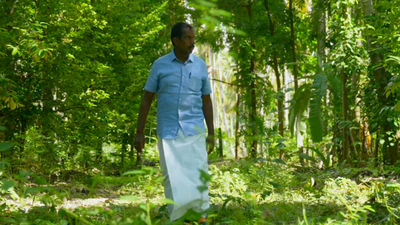
NEW DELHI: A Tamil Nadu farmer who once lost Rs 200 on every coconut tree he grew, has transformed his 11 hectare holding into a Rs 2.5-3 lakh per acre enterprise through multi-crop, tree-based farming – earning him recognition as a UN FAO Soil Farmer Hero. Valluvan (58), who cultivates in Pollachi district, said he was spending Rs 500 per tree annually while earning just Rs 300, leaving him in a cycle of losses before he overhauled his approach in 2009. “I was losing money on every coconut tree I owned. I knew I had to find a solution,” he told reporters in New Delhi. The turnaround came after he encountered Isha Foundation’s The Save Soil – Cauvery Calling programme, promoted by spiritual leader Sadhguru Jaggi Vasudev, which advised a shift to multi-crop, multi-tier tree-based agriculture.
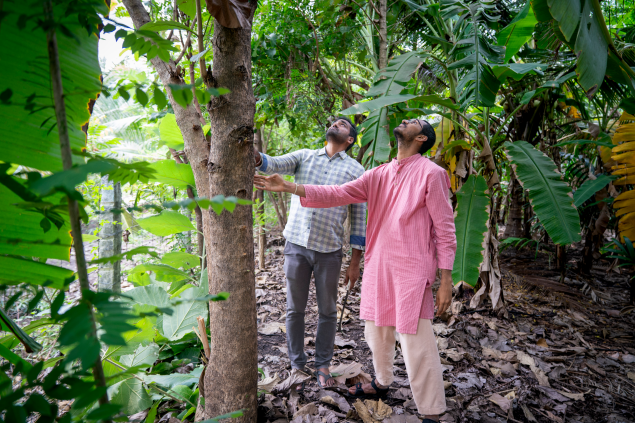
From three crop varieties, Valluvan now cultivates over 14 types on the same land – coconut, nutmeg, pepper, seven banana varieties, turmeric, elephant yam, curry leaves and 30 tree varieties. Income rose steadily from Rs 30,000 to Rs 2.5-3 lakh per acre annually, while soil organic carbon content climbed from 0.5 per cent in year one to 1.56 per cent by year seven. The farm also withstood two severe droughts, including a 2017 crisis when groundwater levels dropped beyond 1,000 feet and no rain fell for two consecutive years – a period when many neighbouring farmers felled their coconut trees. Through mulching and rainwater harvesting pits, the farm retained sufficient moisture without additional irrigation. It now uses one-tenth of the water previously required, and Valluvan expects to eliminate irrigation needs entirely within a few years.
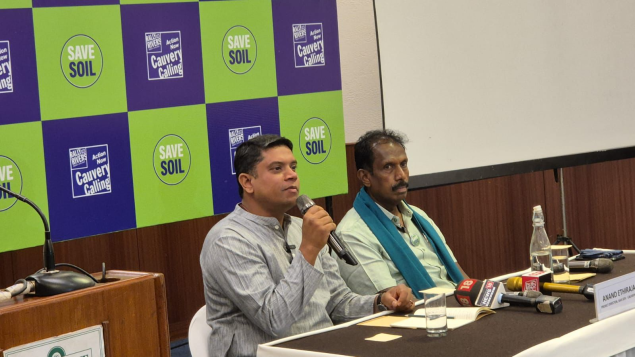
“Even sensitive crops like nutmeg and pepper, which farmers say need lots of water, survived without extra irrigation,” he said. The farm’s multi-crop model also functions as an economic hedge, said Anand Ethirajalu, Project Director at Save Soil – Cauvery Calling. “If coconut prices fall, his nutmeg saves him. If nutmeg also falls, his banana saves him. He has a series of crops,” Ethirajalu said, comparing the strategy to a cricket team with equally competent substitutes. Since its 2019 scaling, Cauvery Calling has planted 13.4 crore trees on private farmland across Tamil Nadu and Karnataka – roughly 10 per cent of the 242 crore trees targeted to restore year-round flows in the Cauvery river basin. Ethirajalu, however, flagged scaling, funding and policy barriers as key obstacles to wider adoption, calling for drip-irrigation support for timber crops, removal of restrictive state-level timber-sale regulations, and insurance and subsidy schemes for tree-based agriculture. “Tree-based agriculture is the only solution for global warming and the climate crisis threatening the entire world,” Valluvan said.


