
US-Iran ink MoU, real test begins now: A defiant Israel can still derail peace efforts

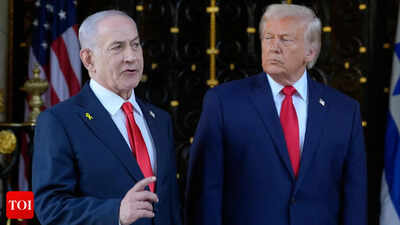
The long‑anticipated memorandum of understanding (MoU) signed electronically by US President Donald Trump and Iran’s Masoud Pezeshkian this week aims to halt a costly war and reopen vital sea lanes, but analysts warn the pact rests on fragile ground — and a defiant Israel could still unravel it.Brokered in part by Pakistani mediator Shehbaz Sharif, the ‘Islamabad MOU’ pledges immediate steps: Iran would reopen the Strait of Hormuz and the US would lift its naval blockade.
What’s in the deal
Washington’s outline says sanctions — including UN and unilateral measures — would be lifted on an agreed schedule, Iranian oil exports would resume at least temporarily, frozen assets would be unfrozen, and US forces around Iran would withdraw within 30 days.Iran, in turn, agreed to ensure toll‑free commercial passage through the strait for 60 days while reaffirming it will not produce or acquire nuclear weapons — without committing to ship nuclear material abroad.On the face of it, the deal appears to favour Tehran.“The United States has made more concessions, largely because Washington is more desperate to disentangle itself from the war,” Niu Xinchun of Ningxia University told SCMP.
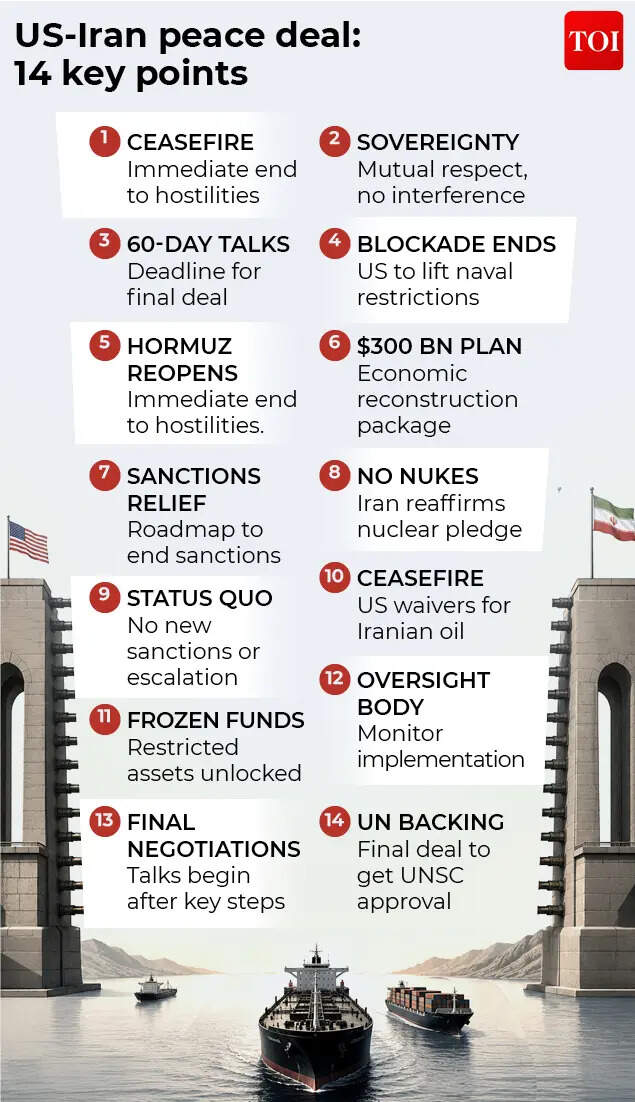
The 14-point US-Iran peace deal
The text’s promise to terminate “all types of sanctions” looks broader than the 2015 JCPOA rollback and raises questions about long‑term leverage over Iran’s nuclear activities and regional behaviour.The reopening of the Strait of Hormuz — shuttered since March — has immediate global economic implications.Saudi supertankers and vessels from the UAE, China and Qatar were reported passing through the waterway this week, signaling a tentative restoration of flows that have been driving inflation and disrupting energy and fertilizer shipments worldwide.Yet the MoU’s 60‑day negotiation window is the crucible.Key issues — durable nuclear oversight, mechanisms for enforcement, and a comprehensive ceasefire — remain unresolved. Analysts have called the agreement a “rough temporary framework” rife with uncertainty.
The Israel factor
Most critically, Israel has not signed on.Hours after the MoU’s announcement, an Israeli drone strike in southern Lebanon killed one person, and Israeli minister Itamar Ben‑Gvir stated Israel was not bound by the pact.That stance matters: the MoU demands an “immediate and permanent termination of military operations on all fronts, including in Lebanon,” but Israel’s continued actions against Hezbollah and operations in Lebanese territory could provoke renewed Iranian responses and derail talks.Trump has urged Israel to temper its campaign, but without Israeli buy‑in the deal risks becoming a fragile pause rather than a genuine peace.
Fragile deal
Israel can derail the US‑Iran MoU in several direct and indirect ways.Operationally, continued Israeli strikes against Iran‑backed groups in Lebanon, Syria and Iraq risk triggering Iranian retaliation against Israeli targets or shipping, restarting the tit‑for‑tat cycle the MoU seeks to freeze.Politically, Israel can undermine implementation by refusing to coordinate with Washington and by pressuring the US to maintain unilateral sanctions or military postures despite the MOU.Finally, ambiguity over control of the Strait of Hormuz and the MOU’s limited timeframes leave space for tactical incidents; a single high‑profile attack on commercial shipping traced to Iran or its proxies could collapse negotiations and return parties to open conflict.As negotiators prepare to meet in Switzerland, the real test begins: can Washington and Tehran lock down a durable settlement while managing — or pressuring — an uncompromising Israeli government that remains the agreement’s wild card?


