
UK officials issued a legal warning after protected seahorses were disturbed; divers should observe for under five minutes and never touch or pursue them

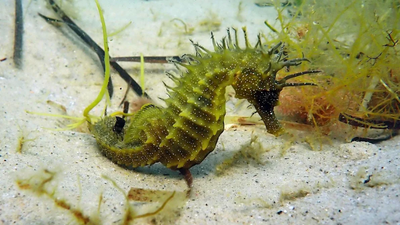
UK marine authorities have issued a strong legal warning to divers, swimmers and film crews after a rise in incidents disturbing Britain’s protected seahorses.The Marine Management Organisation (MMO) warned that anyone who deliberately searches for, photographs or films native seahorses without a specialist wildlife licence could face enforcement action under conservation laws.Both seahorse species found in British waters, the spiny or long-snouted seahorse (Hippocampus guttulatus) and the short-snouted seahorse (Hippocampus hippocampus) are protected under Section 9 of the Wildlife and Countryside Act 1981. They are also protected under the Control of Trade in Endangered Species Regulations 2018.Official guidance says anyone who comes across a seahorse in the wild should watch it for no longer than five minutes, keep a safe distance, and never touch, handle or follow it if it swims away.
Summer activities raise risk of disturbance
Warmer weather and increased coastal tourism have led to more accidental and deliberate encounters with seahorses.The MMO said some people have accidentally caught seahorses in crab nets, while others have deliberately visited known breeding sites to film or photograph them underwater.“We can understand the high levels of interest and fascination people have with our native seahorse species,” said Jess Churchill-Bissett, Head of Marine Conservation (Wildlife) at the MMO. “However they are incredibly vulnerable and fragile marine animals that are easily disturbed by human activities. We know that incidents come from a genuine lack of awareness, which is why we want people to understand they are protected under the law and intentionally disturbing seahorses without a wildlife licence could result in enforcement action. This applies to all divers, snorkellers, and TV and film production companies who should be aware of their legal obligations if intentionally seeking out seahorses.”An MMO spokesperson added that while accidental encounters do happen, anyone entering the water specifically to photograph or film seahorses must obtain a licence beforehand because intentionally searching for them is likely to cause illegal disturbance.Applications for licences involving high-intensity flash photography are considered individually. An independent scientific review found that bright camera flashes, especially when combined with people getting too close, can cause significant stress to the animals.
How to recognise a stressed seahorse
To help prevent accidental harm, official guidance explains the signs that show a seahorse is becoming stressed.A stressed seahorse may turn away, become darker along the ridges on its body, or lower its head into a curled posture.In more serious cases, it may rise above the seabed, tightly curl its tail, or make sudden attempts to escape.If any of these behaviours are seen, people should slowly move away until they are at least five metres from the animal without making sudden movements.Divers are also advised to secure loose equipment, such as pressure gauges and octopus hoses, so they do not drag across sensitive seabed habitats.
Education campaign targets key habitats
The MMO is focusing its awareness campaign on three important seahorse habitats in southern England: Poole Harbour and Studland Bay in Dorset, and Torbay in Devon.At Studland Bay, the MMO introduced a voluntary no-anchor zone in 2021 with local communities to protect valuable seagrass beds that provide important nursery habitat for both seahorse species.Along Poole Quay, wardens are also giving practical advice to anglers and families using crab nets.“Seahorses are a delicate, sensitive animal and extreme care should be taken if you see or accidentally catch one,” said Neil Garrick-Maidment, Executive Director and Founder of The Seahorse Trust. “If found in a crab net, act quickly, keep them out of the water for as little time as possible, take a brief photo, then gently return them to the water away from seagulls. If you spot one while snorkelling or diving, be calm and keep your distance, no flash photography. Crucially, report all sightings so we can add them to the National Seahorse Database. Knowledge of these precious animals is key to their protection.”Garrick-Maidment said recent attention on eco-moorings and protected areas has increased public awareness but has also encouraged more recreational divers to search for seahorses.
What to do if you find a seahorse
People who find a stranded seahorse on the beach or accidentally catch one in a crab net are urged to act quickly.Any live seahorse found on land should be returned to the sea immediately.If it is in a net or bucket, it should be placed carefully in a bucket of cold seawater, photographed quickly without using flash, and released back into the sea away from gulls as soon as possible.Officials say public sightings are important for monitoring seahorse populations around the UK.Anyone who spots a seahorse is encouraged to report the location, date, time and any photographs taken without disturbing the animal to Natural England’s seahorse team or submit the information to The Seahorse Trust’s National Seahorse Database.


