
Turkey’s S-400 gamble: How a Gulf sale could redraw West Asia’s air defence map |

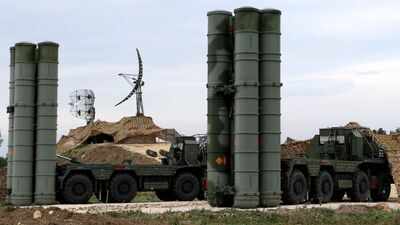
For nearly seven years, Turkey’s Russian-made S-400 Triumph air defence system has been one of the most contentious defence purchases in Nato. Bought in 2017 and delivered in 2019, the system cost Ankara its place in the US-led F-35 programme, triggered sanctions under the Countering America’s Adversaries Through Sanctions Act (CAATSA), and strained ties with Washington and several Nato allies.Now, reports suggest the S-400 saga may be entering a new phase.According to a report by Forbes, Turkey is negotiating the transfer of its largely unused S-400 batteries to a Gulf country, with the United Arab Emirates (UAE) emerging as the leading contender. Turkish media reports cited by Forbes and Euractiv also suggest Qatar remains another possible destination, though no official confirmation has been issued.The prospect of such a deal goes far beyond a routine arms sale. If approved by Moscow and accepted by a Gulf state, it could reshape the air defence architecture of West Asia, revive Turkey’s hopes of rejoining the F-35 programme, and introduce another Russian strategic air defence system into one of the world’s most militarised regions.The timing is significant. The proposal comes just weeks after the latest Iran-US confrontation, during which Iran launched large-scale missile and drone attacks across the Gulf while the United States struck Iranian military infrastructure. The conflict exposed gaps in regional missile defence and reinforced the importance of integrated air defence networks.If Turkey’s S-400s ultimately end up in the Gulf, both Iran and one or more Arab Gulf states could operate the same Russian-designed strategic air defence system, creating an unusual military equation in a region traditionally dominated by American-made Patriot and THAAD missile shields.Why Turkey wants to sell the S-400Turkey’s purchase of the S-400 marked one of the biggest ruptures in its defence relationship with the United States.Ankara had argued it needed a long-range air defence capability after years of unsuccessful negotiations with Washington over the Patriot system. The US repeatedly warned that deploying Russian air defence systems alongside Nato equipment, especially the F-35, posed unacceptable security risks.Washington contended that operating the F-35 near the S-400 could allow Russia to gather intelligence on the stealth fighter’s radar signature and electronic characteristics. In response, the US removed Turkey from the multinational F-35 programme in 2019, halted aircraft deliveries, and imposed CAATSA sanctions in 2020.Ironically, despite paying billions of dollars for the S-400 batteries, Turkey has never fully activated them. The systems have largely remained in storage as Ankara tried to balance its security relationship with Russia against its long-term dependence on Nato.Recent political developments have changed the equation.During the Nato summit, US President Donald Trump indicated that Washington was willing to reconsider Turkey’s return to the F-35 programme and signalled support for lifting CAATSA sanctions if the S-400 issue could be resolved.According to AFP, Trump said he would “consider” bringing Turkey back into the programme and added, “We’re gonna be taking the sanctions off.”Selling the S-400 would give Ankara a potential exit from one of its biggest strategic dilemmas. Instead of scrapping the system or keeping it in storage indefinitely, Turkey could recover part of its investment while removing the main obstacle to rebuilding defence ties with Washington.Reports cited by Forbes suggest the Trump administration is also open to selling Turkey the American MIM-104 Patriot air defence system once the S-400 issue is resolved. That would replace Russian hardware with Nato-compatible equipment and restore closer military interoperability with Western allies.For Ankara, the benefits extend beyond the Patriot. Turkey originally intended to acquire around 100 F-35A stealth fighters before its removal from the programme. While it is now pursuing its indigenous TF Kaan fifth-generation fighter and has ordered Eurofighter Typhoons from the UK, regaining access to the F-35 would significantly strengthen the Turkish Air Force during the transition period.Selling the S-400 could therefore achieve multiple objectives at once: easing sanctions, reopening the door to the F-35 programme, improving relations with Washington, and allowing Turkey to modernise its air defence network with Western systems.That said, any transfer of the S-400 to another country cannot proceed without Russia’s approval, giving Moscow considerable leverage over the outcome.
S 400
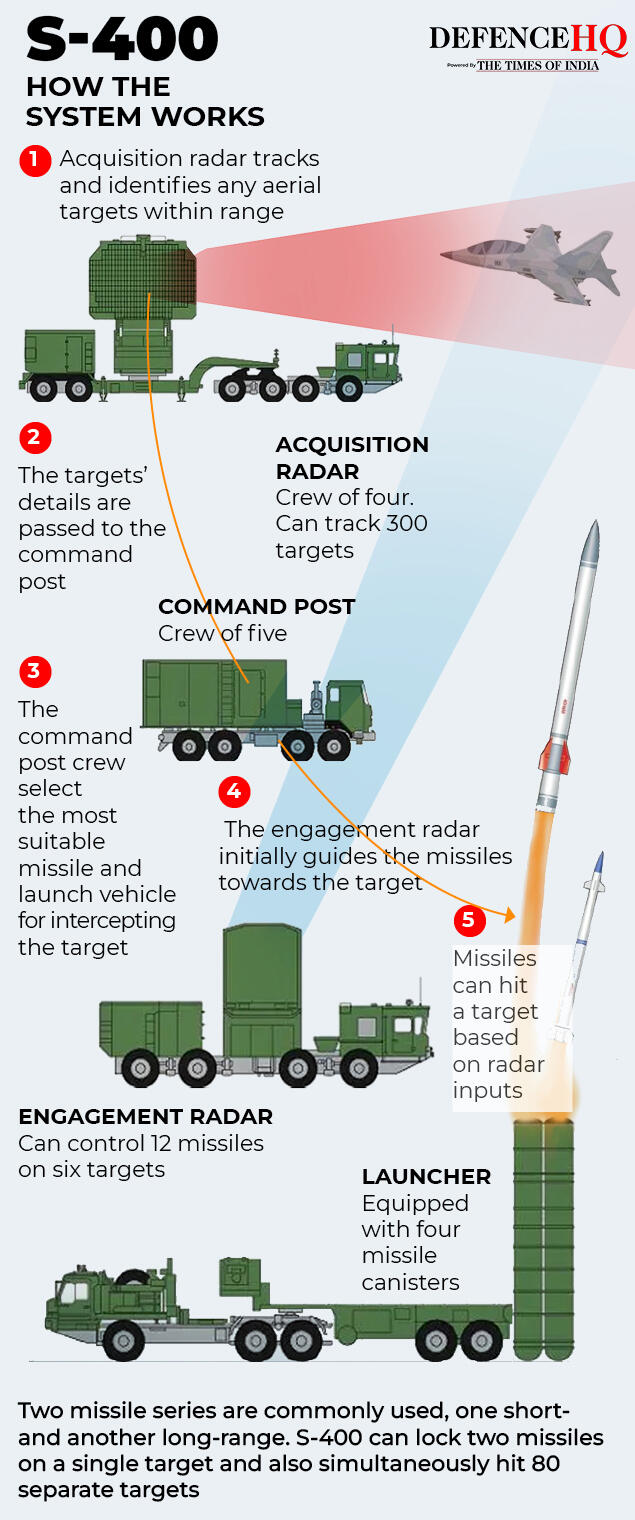
UAE emerging as likely buyerAlthough Turkish officials have not publicly identified the prospective buyer, reports suggest the UAE has emerged as the frontrunner. According to Forbes, citing Turkish outlet Oksijen, the transfer of Turkey’s S-400 batteries to the UAE is “on the agenda,” with Dubai seen as the most likely deployment location.The timing of such a move is closely linked to the changing security environment in West Asia.The recent Iran-US conflict exposed the vulnerability of Gulf states to sustained missile and drone attacks. Iran launched waves of ballistic missiles and drones targeting military installations across the Gulf, while the US and its regional partners responded with extensive air defence operations. Although the UAE has one of the region’s most sophisticated integrated air defence networks, the conflict highlighted the growing challenge posed by mass drone attacks, cruise missiles, and more capable ballistic missiles.Unlike shorter-range point-defence systems, the S-400 is designed as a strategic, long-range air defence system capable of engaging aircraft, cruise missiles, and ballistic missiles at considerable distances. Deployed around major population centres or critical infrastructure, it could add another layer to the UAE’s existing air defence architecture.The UAE already operates a mix of Western and Russian equipment. It fields American-built Patriot PAC-3 systems and Terminal High Altitude Area Defense (THAAD) batteries, while previously acquiring Russian Pantsir-S1 air defence systems designed mainly for point defence against drones and low-flying threats.Military analysts quoted by Forbes note that the S-400 would complement rather than replace these systems by providing longer-range coverage against high-value aerial threats.The UAE also has practical reasons to strengthen its missile shield.Although relations between Abu Dhabi and Tehran have improved diplomatically in recent years, the Emirates remain within range of Iran’s expanding arsenal of ballistic missiles and drones. During the latest regional conflict, Emirati territory was among those affected by Iranian missile activity, reinforcing concerns that future confrontations could spill into the Gulf.Adding another strategic air defence layer could therefore be seen as a hedge against an increasingly uncertain regional security environment.Russia holds the keyEven if Turkey and a Gulf state agree on a sale, the transfer cannot proceed without Russia’s approval.Under the terms of Turkey’s original acquisition, Ankara does not have the right to re-export the S-400 to a third country without Moscow’s consent. That gives the Kremlin significant leverage over any negotiations involving the system.That was underscored last week when Kremlin spokesperson Dmitry Peskov confirmed that discussions between Russia and Turkey were underway.“We have had contacts with the Turkish side on this matter, and we will continue our contacts with the Turkish side on this issue,” Peskov said, according to AFP.Earlier, Peskov had described the issue as “extremely sensitive,” reflecting both the military and geopolitical implications of the proposed transfer.According to Euractiv, a Russian diplomatic source also confirmed that the possibility of transferring the S-400 to a Gulf country was “being analysed,” though security concerns still needed to be resolved.Russia’s willingness to even discuss such a move has surprised many observers.Traditionally, Moscow has used major arms exports to build long-term strategic partnerships while keeping tight control over sensitive military technologies. Allowing Turkey to dispose of one of Russia’s flagship air defence systems so that Ankara can restore defence ties with the US would appear, at first glance, to run counter to Moscow’s broader geopolitical interests.A regional intelligence official quoted by Euractiv questioned the logic behind such an arrangement. “It appears Russia is willing to facilitate an arrangement that benefits both the Americans and the Turks. That seems at odds with the strategy it has pursued in the region so far.”Analysts believe Moscow could seek concessions before approving any transfer. According to Euractiv, Russia may want Turkey to continue resisting broader alignment with Western sanctions, maintain its balanced position between Nato and Moscow, and preserve existing economic cooperation despite the war in Ukraine.Turkey has so far avoided joining the full range of European sanctions against Russia and has continued to act as an important commercial and diplomatic bridge between Moscow and the West.For the Kremlin, preserving that relationship may ultimately be more valuable than insisting that Turkey indefinitely retain an air defence system that has remained largely inactive since delivery.Why US and Nato are waryFor Washington, the S-400 controversy has never been about Turkey’s right to buy weapons. It has centred on the security risks of operating one of Russia’s most advanced air defence systems alongside Nato’s most sensitive military technologies.The US has consistently argued that deploying the Russian-made S-400 in the same country as the F-35 Lightning II could allow Moscow to collect intelligence on the stealth fighter’s radar signature, electronic emissions, and operational characteristics.Although Turkey maintained that it would operate the two systems independently, Washington rejected that argument and removed Ankara from the F-35 programme in 2019 before imposing CAATSA sanctions.At first glance, transferring the S-400 out of Turkey appears to solve that problem.But defence officials argue that moving the system to a Gulf country may simply relocate the concern rather than eliminate it.According to Euractiv, a regional intelligence official questioned whether transferring the batteries to countries such as the UAE or Qatar would truly address American concerns. “Qatar, the UAE and Saudi Arabia all host US military bases and operate American weapons systems. Wouldn’t that still create a risk of sensitive information being exposed to Moscow?”Several of these countries also operate advanced American military equipment, including Patriot air defence systems, THAAD interceptors, F-16 fighter aircraft, airborne early warning aircraft and sophisticated command-and-control networks.Should a Russian-built S-400 become integrated into any of these countries’ wider air defence architecture, American defence planners would likely seek assurances that no sensitive operational data could be exposed.Unlike standalone missile batteries, modern integrated air defence systems increasingly rely on shared radar pictures, networked sensors, and data links to improve target detection and engagement. There is no indication Gulf states intend to network Russian systems directly with American platforms, but the possibility itself raises difficult technical and intelligence questions.A new air defence equation in West AsiaFor decades the US built an integrated Gulf missile‑defence architecture, encouraging partners to share radar coverage, early warning and interceptors to counter Iran’s growing missile threat. Introducing Russia’s S‑400 into that system would complicate matters.Separate command networks, support chains and software could fracture the cooperation Washington has spent years cultivating.Gulf states have long depended on US and European systems: Patriot batteries guard key sites across Saudi Arabia, Kuwait, Bahrain and the UAE, while THAAD provides an additional layer against ballistic missiles.The S‑400 would bring one of Russia’s most capable long‑range air‑defence systems into that mix — and possibly place geopolitically opposed actors on the same technological footing.Iran fields the S‑300 and has reportedly moved to strengthen its long‑range defences. If Tehran acquires S‑400 variants while a Gulf state receives systems from Turkey, both sides of the Gulf could eventually operate Russia’s most advanced surface‑to‑air missiles.That would be a meaningful shift in the regional balance. Diversification has clear operational benefits. Countries are increasingly reluctant to depend on a single supplier for critical defence capabilities, especially after recent conflicts showed how quickly missile inventories can be depleted during sustained attacks. Combining multiple systems also complicates an adversary’s planning by creating overlapping engagement envelopes against different types of threats.But diversification also creates challenges.Operating air defence systems sourced from different countries requires separate logistics networks, maintenance support, operator training, and software updates. Integrating different radar architectures into a unified air defence picture can also be technically demanding, particularly when the systems come from competing defence industries.For Gulf militaries, balancing Russian strategic air defence systems alongside American missile shields could become as much a political challenge as a technical one.Whether that balance can be achieved without affecting long-standing defence relationships with Washington remains one of the biggest unanswered questions surrounding Turkey’s proposed S-400 sale.


