
Turkey’s ancient city of Ani reveals hidden Seljuk tombs that survived for centuries underground | World News

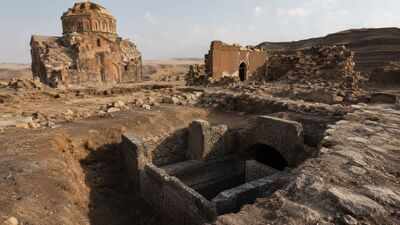
For centuries, Ani has stood on a windswept plateau near Turkey’s border with Armenia, its ruined churches, fortifications and abandoned streets bearing witness to a city that once sat at the crossroads of trade, faith and political power. While the site is often associated with its medieval Armenian heritage, fresh archaeological work is shedding light on another chapter of its long history. Recent excavations have brought attention to a Seljuk-era burial ground, where traces of monumental tomb architecture and distinctive funerary practices are helping researchers piece together how communities lived, commemorated their dead and adapted cultural traditions in medieval Anatolia. The discoveries are offering a more detailed picture of the people who occupied Ani after it passed through changing political and cultural hands.
Seljuk-era cemetery at Ani offers insights into medieval burial customs
Current excavation work at Ani involves a large multidisciplinary team of archaeologists, architects, art historians and conservation specialists. According to Turkey state-run Anadolu Agency, one of the areas attracting particular attention is a cemetery dating to the Seljuk period.The burial ground was first identified during earlier excavation seasons, when scattered surface remains suggested that graves might be present beneath the soil. Continued investigation confirmed those suspicions and exposed a complex funerary landscape rather than a handful of isolated burials.Archaeologists say the cemetery offers an opportunity to examine everyday social and religious practices, an aspect of history that is often harder to reconstruct than political events or monumental architecture. Burial customs can reveal how communities understood identity, status and belief, while also highlighting connections with regions far beyond their immediate surroundings.
Ancient kümbet tombs uncovered at Ani archaeological site
Among the structures uncovered are examples of a type of monumental tomb known as a kümbet, a form closely associated with Seljuk architecture. These tombs became widespread across parts of Central Asia and Anatolia during the medieval period and are recognised for their striking shapes and elevated designs.According to excavation director Dr Muhammet Arslan, earlier work at the cemetery exposed an octagonal tomb structure built on a square base, alongside other burial forms that reflect traditions carried westward from Central Asia. Researchers view these remains as evidence of cultural influences that travelled with migrating communities and ruling dynasties during the Seljuk era.The discoveries suggest that Ani was not isolated from broader developments taking place across the medieval Islamic world. Architectural styles, construction methods and funerary customs appear to have been part of a larger network of ideas connecting Anatolia with regions further east.
Brick-built kumbet at Ani could be among Anatolia’s earliest Seljuk tombs
Excavators have now identified traces of another kümbet distinguished by its brick-built construction. Although further analysis is still required, archaeologists believe the remains could represent one of the earliest known examples of this architectural type in Anatolia.According to statements cited by Anadolu Agency, the structure may even predate other surviving examples traditionally associated with the region. If future research supports that interpretation, the find could reshape discussions about when and how certain Seljuk architectural forms first appeared in Anatolia.Such discoveries are often incremental. Layers of soil, fragmentary walls and scattered building materials rarely provide immediate answers. Yet even partial remains can help establish construction dates, identify regional influences and reveal how architectural traditions evolved.
Ani’s rich history continues to unfold through discoveries
Ani’s importance extends well beyond any single period. The settlement flourished as a major urban centre during the medieval era and became known for its churches, cathedrals, defensive walls and civic buildings. Over time, control of the city shifted between different powers, leaving behind a landscape marked by diverse cultural and religious influences.The latest discoveries add another dimension to that story. Rather than focusing solely on grand monuments, the excavation of the Seljuk cemetery offers insight into the people who lived in and around the city centuries ago. Their burial practices, architectural choices and material culture provide a more intimate record of life during a period when Ani remained an important settlement within a changing political world.As work continues across several excavation zones, archaeologists hope the site will yield further evidence about the communities that once occupied the city. According to information released by the Ani excavation team, the cemetery remains one of the most significant areas under investigation, with each new find helping to fill gaps in the history of medieval Anatolia.


