
The Centre defended the move, arguing that Telegram’s architecture makes it uniquely vulnerable to misuse. (PTI photo) NEW DELHI: The Delhi high court on Thursday questioned the Centre’s decision to temporarily block access to Telegram ahead of the June 21 NEET-UG 2026 re-examination, asking how the rights of nearly 150 million users could be curtailed because of concerns that some may misuse the platform during the exam.A vacation bench of Justice Tejas Karia reserved its verdict on Telegram’s plea challenging the government’s order, which restricts access to the messaging app until June 22 to prevent the alleged circulation of leaked question papers and other exam-related malpractice. “How can we stop the rights of 150 million people just because one set of citizens are appearing in examinations?” the court asked during the hearing, according to news agency PTI.The Centre defended the move, arguing that Telegram’s architecture makes it uniquely vulnerable to misuse. Appearing for the government, Solicitor General Tushar Mehta said the platform allows a single account to create up to 40 bots, enabling the rapid and large-scale dissemination of information.”Bots can further multiply. Telegram offers infrastructure that can disseminate information in bulk with minimal human oversight,” Mehta told the court, adding that such features are not available on platforms like WhatsApp or Facebook.He also argued that Telegram’s cloud-based design makes it difficult for law enforcement agencies to trace users involved in illegal activities. Referring to an official report, the law officer said the platform has frequently been used for terrorist activities and other unlawful purposes, posing additional challenges for investigators.The bench, however, questioned whether a blanket restriction on the platform met the test of proportionality.”The question is, can you block somebody else’s rights to protect someone else’s rights?” Justice Karia observed, referring to the Supreme Court’s ruling in the Anuradha Bhasin case on restrictions affecting fundamental rights.The court also asked whether blocking an entire platform was an effective response, noting that once leaked material goes viral, the damage may already have been done.”We are all alive to the situation. There are so many students who were affected. But can you ban the whole app? There is a power. To what extent can it be exercised?” the judge asked.Attorney General R Venkataramani defended the government’s order, saying it was a reasoned and proportionate response to an extraordinary situation. Describing Telegram’s design as a major concern, he remarked that the platform’s architecture was “a Frankenstein”.The Centre maintained that the temporary restriction was aimed solely at ensuring the smooth conduct of the June 21 NEET-UG re-examination, following last month’s cancellation of the May 3 test amid allegations of a paper leak. The controversy is currently being investigated by the CBI.The Ministry of Electronics and Information Technology (MeitY), acting on the National Testing Agency’s recommendation, invoked Section 69A of the Information Technology Act to block access to Telegram until June 22.After hearing extensive arguments from both sides, the High Court reserved its verdict and asked the parties to submit written submissions by Thursday evening.Get the latest India news and live updates. Download the TOI App.About the AuthorTOI News DeskThe TOI News Desk comprises a dedicated and tireless team of journalists who operate around the clock to deliver the most current and comprehensive news and updates to the readers of The Times of India worldwide. With an unwavering commitment to excellence in journalism, our team is at the forefront of gathering, verifying, and presenting breaking news, in-depth analysis, and insightful reports on a wide range of topics. The TOI News Desk is your trusted source for staying informed and connected to the ever-evolving global landscape, ensuring that our readers are equipped with the latest developments that matter most.”Read MoreEnd of ArticleFollow Us On Social MediaVideosBJP Leader Burnt Alive, 2 Others Killed Over Sand Mining Clash In ChhattisgarhCalcutta High Court Refuses Interim Relief to TMC, Ritabrata Banerjee Stays Leader of OppositionSix Shiv Sena (UBT) MPs Stay Away From Delhi Meet, Uddhav Camp on Edge As Defection Buzz IntensifiesVaiko-Vijay Meetings Trigger Buzz Over MDMK’s Future In Tamil Nadu’s Changing PoliticsModi-Starmer Confirm July 15 Launch Of Trade Pact Projected To Boost Bilateral CommerceJharkhand Rajya Sabha Polls Turn Into Numbers Battle As BJP Eyes Surprise Upset Against INDIA BlocDelhi-NCR Unveils Vision For Four New Cities As Population Set To Surge’Mother Of All Trade Deals’: India, EU Target FTA Signing Before End Of 2026’Jahan Thackeray Wahan Shiv Sena’: Sanjay Raut Rejects Split RumoursDefence Output More Than Doubles In Five Years As India Pushes Self-Reliance123PhotostoriesMamta Mohandas to Hamsa Nandini: South Indian actors who battled and survived cancerWhat are Mathani and Hasua? 8 traditional kitchen tools missing from modern city kitchensTop parenting coach shares how to teach sons to choose the right friends at every age5 essential blood tests you should take before joining the gym, doctor revealsLegendary cricketer Jhulan Goswami’s home in Chakdaha, West Bengal is defined by simplicity, cricket memorabilia and family bond114-year-old barfi: This famous desi barfi was first made by a wrestler for personal nutrition5 highly venomous sea snakes found in Indian waters and where they are found‘Main Vaapas Aaunga’: All about the 5BHK mansion in Imtiaz Ali’s directorialMalasana to water therapy: 5 simple morning habits that can heal your body and mind from the inside outFather’s Day 2026: Skip the mug this year – 10+ gift ideas dads will actually remember123Hot PicksAaron Rodger ExCA TopperLionel MessiVaibhav SooryavanshiKannur University FYUGP TrialNFL Trade RumorsThomas TuchelWBJEE admit cardMP board second resultTop TrendingCristiano RonaldoIshan KishanShubham GillFIFA World Cup 2026What is Legacy BadgeDownload Optifine for Minecraft 26.2Aman SangerCBSE 10th Second Board Result 2026Eknath ShindeDevajit Saikia

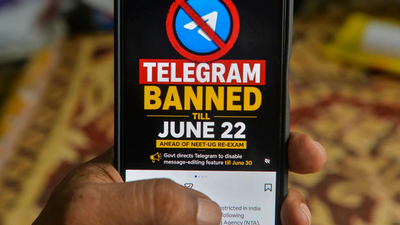
NEW DELHI: The Delhi high court on Thursday questioned the Centre’s decision to temporarily block access to Telegram ahead of the June 21 NEET-UG 2026 re-examination, asking how the rights of nearly 150 million users could be curtailed because of concerns that some may misuse the platform during the exam.A vacation bench of Justice Tejas Karia reserved its verdict on Telegram’s plea challenging the government’s order, which restricts access to the messaging app until June 22 to prevent the alleged circulation of leaked question papers and other exam-related malpractice. “How can we stop the rights of 150 million people just because one set of citizens are appearing in examinations?” the court asked during the hearing, according to news agency PTI.The Centre defended the move, arguing that Telegram’s architecture makes it uniquely vulnerable to misuse. Appearing for the government, Solicitor General Tushar Mehta said the platform allows a single account to create up to 40 bots, enabling the rapid and large-scale dissemination of information.“Bots can further multiply. Telegram offers infrastructure that can disseminate information in bulk with minimal human oversight,” Mehta told the court, adding that such features are not available on platforms like WhatsApp or Facebook.He also argued that Telegram’s cloud-based design makes it difficult for law enforcement agencies to trace users involved in illegal activities. Referring to an official report, the law officer said the platform has frequently been used for terrorist activities and other unlawful purposes, posing additional challenges for investigators.The bench, however, questioned whether a blanket restriction on the platform met the test of proportionality.“The question is, can you block somebody else’s rights to protect someone else’s rights?” Justice Karia observed, referring to the Supreme Court’s ruling in the Anuradha Bhasin case on restrictions affecting fundamental rights.The court also asked whether blocking an entire platform was an effective response, noting that once leaked material goes viral, the damage may already have been done.“We are all alive to the situation. There are so many students who were affected. But can you ban the whole app? There is a power. To what extent can it be exercised?” the judge asked.Attorney General R Venkataramani defended the government’s order, saying it was a reasoned and proportionate response to an extraordinary situation. Describing Telegram’s design as a major concern, he remarked that the platform’s architecture was “a Frankenstein”.The Centre maintained that the temporary restriction was aimed solely at ensuring the smooth conduct of the June 21 NEET-UG re-examination, following last month’s cancellation of the May 3 test amid allegations of a paper leak. The controversy is currently being investigated by the CBI.The Ministry of Electronics and Information Technology (MeitY), acting on the National Testing Agency’s recommendation, invoked Section 69A of the Information Technology Act to block access to Telegram until June 22.After hearing extensive arguments from both sides, the High Court reserved its verdict and asked the parties to submit written submissions by Thursday evening.


