
TCS Q1 revenue rises 2.7%, company adds over 9,000 to workforce


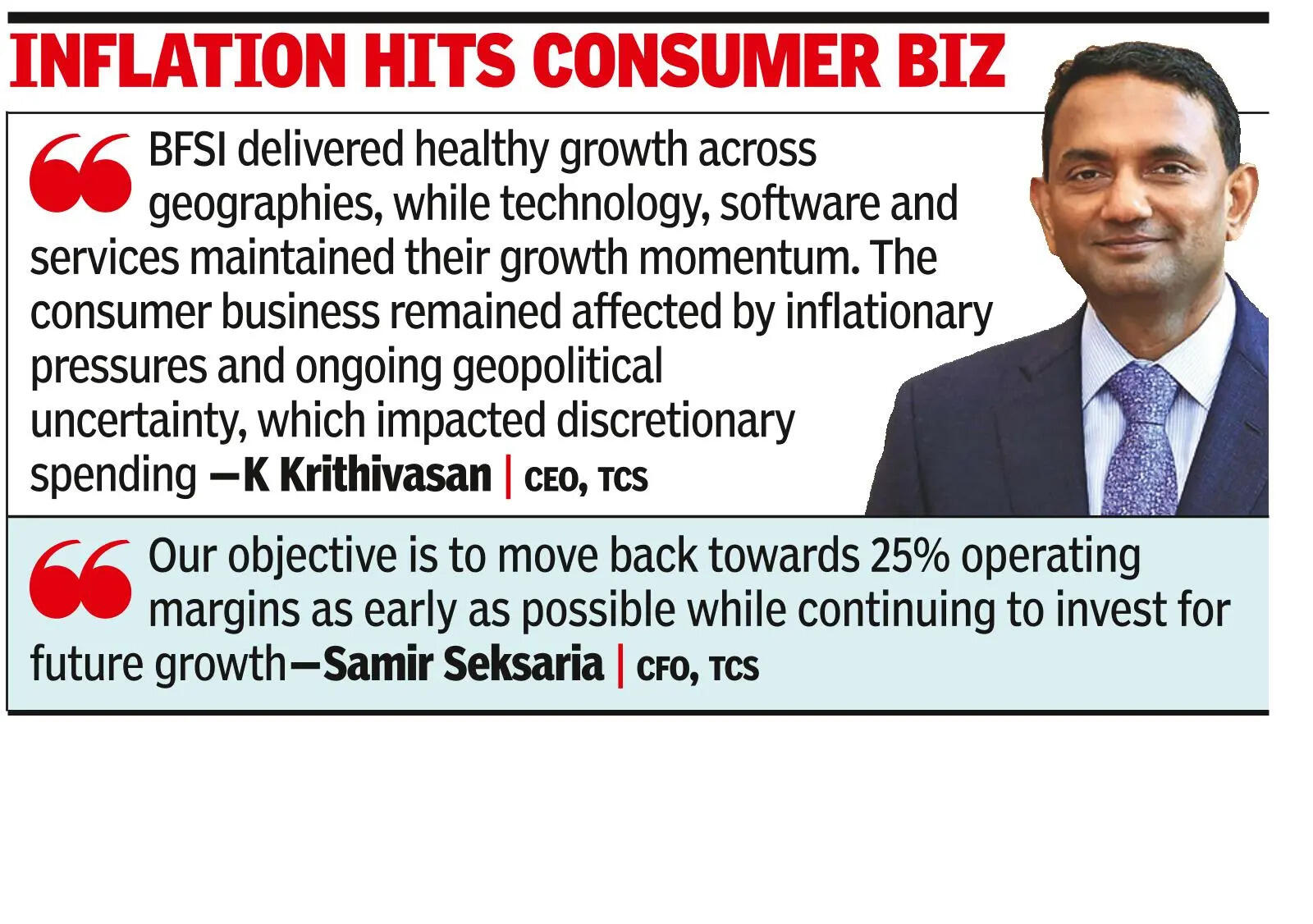
BENGALURU: TCS reported June-quarter revenue of $7.6 billion, up 2.7% year-on-year and largely flat sequentially. This reflects a cautious demand environment as global firms reassess technology spending amid macroeconomic uncertainty and rapid AI-led transformation. Revenue in constant currency, which discounts the impact of currency fluctuations, grew 0.4% sequentially and 3.2% year-on-year.The company reported a 2.7% sequential decline in consolidated net profit, after taking a one-time charge of Rs 668 crore following the rejection of its appeal in the DXC Technology trade secrets lawsuit. TCS reported an operating margin of 24%, down 130 basis points sequentially, primarily due to annual wage hikes. Chief financial officer Samir Seksaria said salary revisions typically create a first-quarter impact, after which margins improve through the year. “Our objective is to move back towards 25% operating margins as early as possible while continuing to invest for future growth,” Seksaria said.
Operating Margin Down At 24% As Cos Rethink Tech Spending
The results mirror broader trends across the IT services sector, where discretionary technology spending remains subdued even as enterprises accelerate investments in artificial intelligence to improve productivity and modernise operations.TCS CEO K Krithivasan said the company continued to demonstrate resilience despite geopolitical and macroeconomic headwinds.COO Aarthi Subramanian said customers are increasingly adopting outcome-based AI programmes.The company also resumed workforce expansion, adding 9,279 employees during the quarter-the highest quarterly net addition in nearly four years-taking its total headcount to 593,798. Voluntary attrition in IT services improved marginally to 13.6%. TCS onboarded around 14,000 campus graduates during the quarter.Responding to concerns that AI could reduce white-collar employment, Krithivasan said the company expects jobs to evolve rather than disappear. “We do not agree that AI will significantly reduce white-collar employment. Employees will increasingly work on prompt engineering, model training, testing, governance and lifecycle management. New roles will emerge as AI adoption expands. Our hiring strategy is driven by anticipated demand, and we want to ensure we have the right talent available as new opportunities emerge,” he said.


