
Tamil Nadu has a way of elevating folks that is unmatched anywhere in India, where stardom starts to transcend art and enters the dangerous neighbourhood of worship. One can be a bus conductor from Maharashtra, a starlet from Karnataka or a cricketer from Jharkhand, but once the masses embrace you, one becomes close to divinity. Yet even in a place like that, it is very hard for an actor to immediately make his mark in politics. The only one who truly crossed the proverbial Rubicon in Tamil Nadu was MG Ramachandran, and even he did not do it overnight. MGR joined the DMK in the 1950s, used cinema as a loudspeaker for social-justice politics, built a mass base over decades, and then, after his split with Karunanidhi in 1972, formed the AIADMK. Five years later, in 1977, he became chief minister of Tamil Nadu. Election Results 2026Election results: Bengal, Tamil Nadu, Assam, Kerala, Puducherry brace for voters’ verdictWest Bengal election results: Tight race expected as TMC faces BJP challengeTamil Nadu election results: Can Stalin retain power or will AIADMK stage a comeback?West BengalTamil NaduKeralaAssamPuducherry PreviousBJP LEADINGWest BengalParty ViewAlliance ViewSeats270/294Total: 294Note: Repolling for the Falta assembly constituency in West Bengal has been scheduled for May 21.L + WMajority: 148BJP0AITC0CONG0CPI(M)0OTH0TVK LEADINGTamil NaduParty ViewAlliance ViewSeats227/234Total: 234L + WMajority: 118TVK0AIADMK0DMK0BJP0CONG0OTH0CONG LEADINGKeralaParty ViewAlliance ViewSeats124/140Total: 140L + WMajority: 71CONG0CPI(M)0IUML0CPI0BJP0OTH0BJP LEADINGAssamParty ViewAlliance ViewSeats117/126Total: 126L + WMajority: 64BJP0CONG0AGP0AIUDF0OTH0BJP LEADINGPuducherryParty ViewAlliance ViewSeats22/30Total: 30L + WMajority: 16BJP0AINRC0CONG0DMK0OTH0 Next12345Source: PValueIn neighbouring Andhra Pradesh, NT Rama Rao managed the even more cinematic version of the feat, turning Telugu screen divinity into electoral power within months of launching the Telugu Desam Party. But Tamil Nadu’s own template remains MGR. And today, one of the starkest outliers in the early trends is the performance of Vijay’s TVK. But who is Vijay, who, if trends hold, could become the new Thalapathy of Tamil Nadu politics?From child actor to star For the uninitiated, Vijay is Joseph Vijay Chandrasekhar, born in Chennai in 1974, son of filmmaker S A Chandrasekhar and singer Shoba Chandrasekhar. He began as a child actor, stumbled into leading roles in the early 1990s, absorbed the criticism that comes with being dismissed in his early days and slowly became the Commander. There is something almost Chekhovian about that early phase, where nothing dramatic seems to happen and yet everything is being set in motion. The young Vijay struggled to convince audiences that he belonged. He did not enter Tamil cinema like Rajinikanth, whose very cigarette flick appeared to violate Newtonian physics, or Kamal Haasan, who seemed determined to turn every frame into a doctoral thesis. Vijay’s early appeal was more modest. He looked like someone who could have been in the next classroom, at the next bus stop, in the next wedding video, awkwardly dancing before the relatives took over the floor. That ordinariness mattered. Before Tamil cinema allowed Vijay to become a saviour, it first allowed him to become familiar. He was the young man who could love earnestly, suffer sincerely and look wounded without making it theatrical. In the early romantic and family dramas, his job was to win over the heroine, the family and the audience, in roughly that order. Stardom seemed far off, but the foundation was being poured. Then came Ghilli. Watch Appadi Podu – Video Song | Ghilli | Thalapathy Vijay | Trisha | Vidyasagar | Sun Music Every star has that one film where the audience stops asking questions. It was Ghilli for Vijay, the film that established the legend. What changed was not merely the scale of the film but the scale of the audience’s response. The hesitant young man had become a kinetic force. He could run, joke, fight, flirt and rescue without appearing to change species. That became Vijay’s great advantage. He could be larger than life while still seeming locally manufactured. He was the boy next door after the background score had been upgraded. The Commander rises From that point on, the Vijay film developed its own grammar. The hero enters, and the theatre behaves as if a democratic republic has briefly become a monarchy. There is a song, usually designed less as music and more as public infrastructure. There is comedy, because Vijay’s stardom has always required looseness. There is a villain who represents some social rot, private cruelty or institutional failure. There is a fight where bodies fly in a manner that would alarm both doctors and engineers. And somewhere in the middle of all this, there is Vijay doing the thing that made him Vijay: taking the ordinary man’s grievance and giving it a body. That is the key to his cinema. Vijay’s characters are rarely complicated in the literary sense, but they are extremely clear in the emotional sense. He stands where the audience wants someone to stand. Against the bully, the corrupt official, the predatory corporation, the rigged election, the medical racket, the system that has become so big that the common man can only shout at it. His films tell the viewer that anger is justified and that dignity can be restored, preferably after an interval block and before the final song. Watch Master – Vaathi Coming Video | Thalapathy Vijay | Anirudh Ravichander | Lokesh Kanagaraj As his career grew, the films became more muscular and more pointed. The lover became the fighter, and the fighter became the social avenger. The transformation was gradual enough to feel natural. The young man who once needed acceptance now gave assurance. The audience that had watched him plead now watched him command. The shift worked because he did not discard his earlier self. Even inside the mass hero, there remained traces of the familiar Vijay: the smile, the dance, the slightly teasing humour, the ability to soften a scene before the sermon arrived. This explains why his political undertone did not feel sudden. Long before he launched a party, Vijay’s films had begun to sound like campaign speeches smuggled inside commercial cinema. Farmers, corruption, healthcare, education, voting rights, women’s empowerment, corporate greed: the subjects changed, but the moral arrangement remained consistent. Society was failing. The people were waiting. Vijay had noticed. There is a reason that formula worked so well. Tamil cinema, particularly mass Tamil cinema, has never been embarrassed by moral clarity. It does not always want ambiguity. Sometimes it wants catharsis, and Vijay became one of its most reliable suppliers. His best-known screen persona is built on redemptive certainty. The world may be messy, but the Vijay film eventually knows where it stands. That does not mean he stayed frozen. The later Vijay had to survive a changing Tamil cinema, where younger directors brought darker textures, sharper violence and more controlled storytelling. He adjusted. The swagger became more contained. The hero could carry flaws before redemption arrived. The films could be moodier, the silences longer, the violence more stylised. Yet even in these newer worlds, Vijay remained recognisable. He did not chase change so much as absorb it. That is why his longevity is difficult to explain through box office alone. Many actors can dance, fight and deliver punch dialogues. Vijay’s real skill has been calibration. He gives the audience enough emotion to feel invested, enough humour to stay relaxed, enough action to feel rewarded, enough dance to create memory, and enough message to make the experience feel morally nourishing. It is commercial cinema as a full meal, with protein, spice, sugar and a little bit of sermon for digestion. He also grew with his audience. The children who watched the romantic Vijay of the 1990s became the young adults who cheered the action hero of the 2000s, then the voters who saw his 2010s films as social statements. By the time he reached the 2020s, his cinema had become less about individual characters and more about accumulated trust. People were no longer just watching the film in front of them. They were watching three decades of memory return in a new costume. The political journey His political journey follows that same arc of accumulation. It did not begin with Tamilaga Vettri Kazhagam’s formal launch in 2024. It began in fan clubs, welfare events, blood donation camps, relief work and the slow conversion of admiration into organisation. Vijay Makkal Iyakkam gave his fandom a ground-level shape before the party arrived. That matters because politics does not run on applause alone. It needs people who can stand in the sun, manage local resentment, identify voters and remain loyal after the theatre lights come on. When Vijay finally announced TVK, it felt less like an impulsive leap and more like the next scene in a long-running screenplay. He announced that he would step away from cinema and commit to politics, which gave the move a seriousness that celebrity politics often lacks. He has spoken in the broad language Tamil Nadu understands: social justice, secularism, anti-corruption, Tamil identity and governance that claims to centre the people. The danger, of course, is that every new entrant says some version of this. The difference is that Vijay arrives with an emotional bank account built over thirty years. The early trends in the Tamil Nadu election have made that bank account impossible to ignore. TVK is on the verge of turning curiosity into consequence, with Vijay’s political experiment showing signs of becoming a real disruption rather than a fan-club fantasy. Final numbers will decide the scale of the moment, but even the trends have altered the conversation. Tamil Nadu is no longer asking whether Vijay can draw crowds. It is asking whether he can redraw power. That is the essence of Vijay’s story. He began as a familiar young man trying to belong, became a mass hero who could make theatres erupt, then turned into a screen figure whose films carried the smell of politics long before the party flag arrived. The Commander was not created in one film or one speech. He was assembled patiently, through romance, rhythm, grievance, spectacle and trust. For three decades, Tamil cinema knew what happened when Vijay turned towards the camera. Now Tamil Nadu is waiting to see what happens when he turns towards Fort St George. Follow the latest election results 2026, live updates, winner lists, constituency-wise results, party-wise trends and full coverage for Tamil Nadu election results, West Bengal election results, Kerala election results, Assam election results and Puducherry election results results on Times of India.About the AuthorTOI News DeskThe TOI News Desk comprises a dedicated and tireless team of journalists who operate around the clock to deliver the most current and comprehensive news and updates to the readers of The Times of India worldwide. With an unwavering commitment to excellence in journalism, our team is at the forefront of gathering, verifying, and presenting breaking news, in-depth analysis, and insightful reports on a wide range of topics. The TOI News Desk is your trusted source for staying informed and connected to the ever-evolving global landscape, ensuring that our readers are equipped with the latest developments that matter most.”Read MoreEnd of ArticleFollow Us On Social MediaVideosIndia Rejects Nepal’s Objection To Kailash Mansarovar Yatra Route Via Lipulekh PassNepal Objects To India-China Plan To Conduct Kailash Mansarovar Yatra Via LipulekhIndia-Linked LPG Tanker MT Sarv Shakti Heads To Visakhapatnam After Crossing HormuzPassenger Opens Emergency Exit Door On Air Arabia Flight While Taxiing At Chennai Airport, ArrestedAhead Of Counting, Gunmen Open Fire At BJP Leader’s House In Bengal’s Noapara‘I Am Also A Victim’: Vinesh Phogat Identifies As Complainant In Brij Bhushan Sexual Harassment CaseBJP MP Sandeep Pathak Claims ‘No Information’ On FIRs, Alleges Misuse Of State Machinery In PunjabIndian Startup Launches Mission Drishti, World’s First OptoSAR Satellite, Aboard SpaceX Falcon 9Diljit Dosanjh Confronts Khalistan Supporters at Calgary Concert, Explains KBC AppearanceDelhi Approves ₹48,000 Crore Metro Expansion Plan To Connect Outer Regions With City Core123PhotostoriesEver wondered why sons often seem closer to their mothers and daughters to their fathers? The psychology behind itFrom cinema to power: Vijay’s TVK storms into Tamil Nadu politics with strong debutFrom eggshells to banana peels: 5 kitchen waste items for a healthy balcony gardenFrom vintage paintings to silver mandir, ornate mirror pieces: Cool art pieces inside Sonali Bendre’s house“Log kya kahenge”: How societal pressure shapes Indian childrenFrom Thane to Navi Mumbai: 5 booming real estate hotspots in Mumbai Metropolitan Region (MMR)Morning affirmation at 5 am: Thoughts that hit different when the world is still asleepYou’re brushing your teeth wrong: What dentist says most people missHow to make Pudina Paratha for summer breakfast5 Bengali breads every foodie should try123Hot PicksAssam key constituenciesKerala key constituenciesPuducherry election resultsTamil Nadu constituenciesPerambur election resultMamata Banerjee vs Suvendu AdhikariGold rate todayTop TrendingWest Bengal Assembly Election ResultsAssam Assembly Election ResultsTamil Nadu Assembly Election ResultsKerala Assembly Election ResultsPuducherry Assembly Election ResultsBhabanipur election results 2026CBSE Class 12th ResultNEET 2026: Exam-day guideHPBose 12th ResultGSEB HSC Result

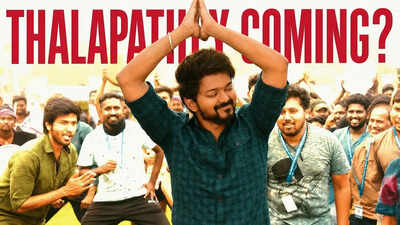
Tamil Nadu has a way of elevating folks that is unmatched anywhere in India, where stardom starts to transcend art and enters the dangerous neighbourhood of worship. One can be a bus conductor from Maharashtra, a starlet from Karnataka or a cricketer from Jharkhand, but once the masses embrace you, one becomes close to divinity. Yet even in a place like that, it is very hard for an actor to immediately make his mark in politics. The only one who truly crossed the proverbial Rubicon in Tamil Nadu was MG Ramachandran, and even he did not do it overnight. MGR joined the DMK in the 1950s, used cinema as a loudspeaker for social-justice politics, built a mass base over decades, and then, after his split with Karunanidhi in 1972, formed the AIADMK. Five years later, in 1977, he became chief minister of Tamil Nadu. In neighbouring Andhra Pradesh, NT Rama Rao managed the even more cinematic version of the feat, turning Telugu screen divinity into electoral power within months of launching the Telugu Desam Party. But Tamil Nadu’s own template remains MGR. And today, one of the starkest outliers in the early trends is the performance of Vijay’s TVK. But who is Vijay, who, if trends hold, could become the new Thalapathy of Tamil Nadu politics?From child actor to star For the uninitiated, Vijay is Joseph Vijay Chandrasekhar, born in Chennai in 1974, son of filmmaker S A Chandrasekhar and singer Shoba Chandrasekhar. He began as a child actor, stumbled into leading roles in the early 1990s, absorbed the criticism that comes with being dismissed in his early days and slowly became the Commander. There is something almost Chekhovian about that early phase, where nothing dramatic seems to happen and yet everything is being set in motion. The young Vijay struggled to convince audiences that he belonged. He did not enter Tamil cinema like Rajinikanth, whose very cigarette flick appeared to violate Newtonian physics, or Kamal Haasan, who seemed determined to turn every frame into a doctoral thesis. Vijay’s early appeal was more modest. He looked like someone who could have been in the next classroom, at the next bus stop, in the next wedding video, awkwardly dancing before the relatives took over the floor. That ordinariness mattered. Before Tamil cinema allowed Vijay to become a saviour, it first allowed him to become familiar. He was the young man who could love earnestly, suffer sincerely and look wounded without making it theatrical. In the early romantic and family dramas, his job was to win over the heroine, the family and the audience, in roughly that order. Stardom seemed far off, but the foundation was being poured. Then came Ghilli.
Every star has that one film where the audience stops asking questions. It was Ghilli for Vijay, the film that established the legend. What changed was not merely the scale of the film but the scale of the audience’s response. The hesitant young man had become a kinetic force. He could run, joke, fight, flirt and rescue without appearing to change species. That became Vijay’s great advantage. He could be larger than life while still seeming locally manufactured. He was the boy next door after the background score had been upgraded. The Commander rises From that point on, the Vijay film developed its own grammar. The hero enters, and the theatre behaves as if a democratic republic has briefly become a monarchy. There is a song, usually designed less as music and more as public infrastructure. There is comedy, because Vijay’s stardom has always required looseness. There is a villain who represents some social rot, private cruelty or institutional failure. There is a fight where bodies fly in a manner that would alarm both doctors and engineers. And somewhere in the middle of all this, there is Vijay doing the thing that made him Vijay: taking the ordinary man’s grievance and giving it a body. That is the key to his cinema. Vijay’s characters are rarely complicated in the literary sense, but they are extremely clear in the emotional sense. He stands where the audience wants someone to stand. Against the bully, the corrupt official, the predatory corporation, the rigged election, the medical racket, the system that has become so big that the common man can only shout at it. His films tell the viewer that anger is justified and that dignity can be restored, preferably after an interval block and before the final song.
As his career grew, the films became more muscular and more pointed. The lover became the fighter, and the fighter became the social avenger. The transformation was gradual enough to feel natural. The young man who once needed acceptance now gave assurance. The audience that had watched him plead now watched him command. The shift worked because he did not discard his earlier self. Even inside the mass hero, there remained traces of the familiar Vijay: the smile, the dance, the slightly teasing humour, the ability to soften a scene before the sermon arrived. This explains why his political undertone did not feel sudden. Long before he launched a party, Vijay’s films had begun to sound like campaign speeches smuggled inside commercial cinema. Farmers, corruption, healthcare, education, voting rights, women’s empowerment, corporate greed: the subjects changed, but the moral arrangement remained consistent. Society was failing. The people were waiting. Vijay had noticed. There is a reason that formula worked so well. Tamil cinema, particularly mass Tamil cinema, has never been embarrassed by moral clarity. It does not always want ambiguity. Sometimes it wants catharsis, and Vijay became one of its most reliable suppliers. His best-known screen persona is built on redemptive certainty. The world may be messy, but the Vijay film eventually knows where it stands. That does not mean he stayed frozen. The later Vijay had to survive a changing Tamil cinema, where younger directors brought darker textures, sharper violence and more controlled storytelling. He adjusted. The swagger became more contained. The hero could carry flaws before redemption arrived. The films could be moodier, the silences longer, the violence more stylised. Yet even in these newer worlds, Vijay remained recognisable. He did not chase change so much as absorb it. That is why his longevity is difficult to explain through box office alone. Many actors can dance, fight and deliver punch dialogues. Vijay’s real skill has been calibration. He gives the audience enough emotion to feel invested, enough humour to stay relaxed, enough action to feel rewarded, enough dance to create memory, and enough message to make the experience feel morally nourishing. It is commercial cinema as a full meal, with protein, spice, sugar and a little bit of sermon for digestion. He also grew with his audience. The children who watched the romantic Vijay of the 1990s became the young adults who cheered the action hero of the 2000s, then the voters who saw his 2010s films as social statements. By the time he reached the 2020s, his cinema had become less about individual characters and more about accumulated trust. People were no longer just watching the film in front of them. They were watching three decades of memory return in a new costume. The political journey His political journey follows that same arc of accumulation. It did not begin with Tamilaga Vettri Kazhagam’s formal launch in 2024. It began in fan clubs, welfare events, blood donation camps, relief work and the slow conversion of admiration into organisation. Vijay Makkal Iyakkam gave his fandom a ground-level shape before the party arrived. That matters because politics does not run on applause alone. It needs people who can stand in the sun, manage local resentment, identify voters and remain loyal after the theatre lights come on. When Vijay finally announced TVK, it felt less like an impulsive leap and more like the next scene in a long-running screenplay. He announced that he would step away from cinema and commit to politics, which gave the move a seriousness that celebrity politics often lacks. He has spoken in the broad language Tamil Nadu understands: social justice, secularism, anti-corruption, Tamil identity and governance that claims to centre the people. The danger, of course, is that every new entrant says some version of this. The difference is that Vijay arrives with an emotional bank account built over thirty years. The early trends in the Tamil Nadu election have made that bank account impossible to ignore. TVK is on the verge of turning curiosity into consequence, with Vijay’s political experiment showing signs of becoming a real disruption rather than a fan-club fantasy. Final numbers will decide the scale of the moment, but even the trends have altered the conversation. Tamil Nadu is no longer asking whether Vijay can draw crowds. It is asking whether he can redraw power. That is the essence of Vijay’s story. He began as a familiar young man trying to belong, became a mass hero who could make theatres erupt, then turned into a screen figure whose films carried the smell of politics long before the party flag arrived. The Commander was not created in one film or one speech. He was assembled patiently, through romance, rhythm, grievance, spectacle and trust. For three decades, Tamil cinema knew what happened when Vijay turned towards the camera. Now Tamil Nadu is waiting to see what happens when he turns towards Fort St George.


