
Supreme Court of India NEW DELHI: The Supreme Court on Friday questioned the continued grant of reservation benefits to children of economically and educationally advanced families within backward classes, observing that social mobility comes with empowerment and that reservation cannot continue indefinitely for such sections.A bench of Justices BV Nagarathna and Ujjal Bhuyan was hearing a plea challenging a Karnataka high court judgment that upheld the exclusion of a petitioner from reservation benefits because both his parents are state government employees.”If both parents are IAS officers, why should they have reservations? With educational and economic empowerment, there is social mobility,” the bench observed, according to PTI.”So then again, to seek reservation for the children, we will never get out of it,” the court added while issuing notice in the matter.The top court further remarked that if parents are employed in good jobs and earn handsome incomes, their children should move out of the reservation system.The bench noted that several government orders already provide for excluding affluent sections from reservation benefits, though such provisions are now being challenged.”For the economically weaker section and disadvantaged group, there is no social backwardness but only economic backwardness. There has to be some balance. Socially and educationally backward, yes, but once the parents have attained a level because of taking advantage of reservation,” the bench said.The petitioner had been selected for appointment as an assistant engineer (electrical) in the Karnataka Power Transmission Corporation Limited under the reserved category.However, PTI reported that the District Caste and Income Verification Committee denied him a caste validity certificate after concluding that he belonged to the creamy layer.The authorities noted that both of the petitioner’s parents were government employees and that their combined income exceeded the prescribed creamy layer limit of Rs 8 lakh.PollShould children of economically advanced families within backward classes continue to receive reservation benefits?Yes, they should receive benefitsNo, they should not receive benefitsBased on this classification, the caste certificate issued to the petitioner certifying him as belonging to the Kuruba community was revoked.The petitioner challenged this action, but the Karnataka HC upheld the authorities’ decision.In January 2025, the Supreme Court had refused to entertain a separate plea seeking exclusion of children of IAS and IPS officers from Scheduled Castes (SC) and Scheduled Tribes (ST) reservation benefits in Madhya Pradesh.At the time, the apex court had said that references to excluding the creamy layer from SC/ST quotas in the seven-judge Constitution bench verdict in the State of Punjab v. Davinder Singh case were merely observations and that any such decision would have to be taken by the legislature PTI reported.About the AuthorTOI News DeskThe TOI News Desk comprises a dedicated and tireless team of journalists who operate around the clock to deliver the most current and comprehensive news and updates to the readers of The Times of India worldwide. With an unwavering commitment to excellence in journalism, our team is at the forefront of gathering, verifying, and presenting breaking news, in-depth analysis, and insightful reports on a wide range of topics. The TOI News Desk is your trusted source for staying informed and connected to the ever-evolving global landscape, ensuring that our readers are equipped with the latest developments that matter most.”Read MoreEnd of ArticleFollow Us On Social MediaVideosHumayun Kabir’s Cow Slaughter Remarks Trigger Political Row Over Qurbani And Law In West BengalUnion Home Minister Amit Shah Calls For Strong Action To End Illegal Infiltration Across BordersMankind Pharma May Raise Condom Prices As Middle East Conflict Pushes Oil Costs Higher | WatchIndian Army Issues Fake Alert Over AAP-RJD’s Viral Presser, Says They Are Spreading MisinformationMuslim Clerics Across India Appeal For Restraint On Cow Sacrifice Ahead Of Eid-al-AdhaOn The Ground Viral ‘Cockroach Janta Party’ sparks buzz in Delhi: Real shift or social media storm?Why Shashi Tharoor Thinks The Viral ‘Cockroach Janata Party’ Reflects India’s Youth AngerPunjab Police Bust Suspected Spy Network; CCTV Camera Allegedly Used To Monitor Army MovementDelhi Government Issues Strict Bakrid Guidelines, Warns Of Criminal Action Over ViolationsVenezuela Overtakes Saudi Arabia As India’s Third-Largest Oil Supplier Amid Global Energy Turmoil123Photostories5 cooling essential oils perfect for stressful summer daysAshish Nehra’s luxurious Goa home is a multi-crore home designed for peaceful family living, away from fast-paced cricketing world5 giant fish that rule the ocean10 subtle mind games people play (And how to spot them)Gym wear to innerwear: How often should you wash your clothesCannes 2026: While others screamed for attention, Diana Penty let butter-yellow elegance do the talking at the French RivieraHow to make Mango Cookie for weekend indulgence5 fiber-rich yellow-colored foods can be the best addition to the daily dietBell Peppers vs Oranges: Which one really gives you more vitamin C?5 sugary drinks that are secretly ruining your skin123Hot PicksBandra demolition driveIPL Schedule 2026Vinesh PhogatUP HeatwaveHardoi fireNID DAT counselling 2026TN Ministers ListTop TrendingTN Finance Minister Marie WilsonNID DAT counsellingChristiano RonaldoPM ModiHardik PandyaJEE Advanced Response SheetIPL Orange Cap 2026Conor McGregor Net WorthNEET UG Paper LeakWest Bengal Annapurna Yojana

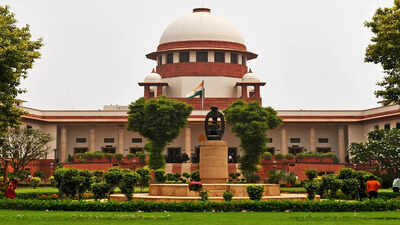
NEW DELHI: The Supreme Court on Friday questioned the continued grant of reservation benefits to children of economically and educationally advanced families within backward classes, observing that social mobility comes with empowerment and that reservation cannot continue indefinitely for such sections.A bench of Justices BV Nagarathna and Ujjal Bhuyan was hearing a plea challenging a Karnataka high court judgment that upheld the exclusion of a petitioner from reservation benefits because both his parents are state government employees.“If both parents are IAS officers, why should they have reservations? With educational and economic empowerment, there is social mobility,” the bench observed, according to PTI.“So then again, to seek reservation for the children, we will never get out of it,” the court added while issuing notice in the matter.The top court further remarked that if parents are employed in good jobs and earn handsome incomes, their children should move out of the reservation system.The bench noted that several government orders already provide for excluding affluent sections from reservation benefits, though such provisions are now being challenged.“For the economically weaker section and disadvantaged group, there is no social backwardness but only economic backwardness. There has to be some balance. Socially and educationally backward, yes, but once the parents have attained a level because of taking advantage of reservation,” the bench said.The petitioner had been selected for appointment as an assistant engineer (electrical) in the Karnataka Power Transmission Corporation Limited under the reserved category.However, PTI reported that the District Caste and Income Verification Committee denied him a caste validity certificate after concluding that he belonged to the creamy layer.The authorities noted that both of the petitioner’s parents were government employees and that their combined income exceeded the prescribed creamy layer limit of Rs 8 lakh.
Should children of economically advanced families within backward classes continue to receive reservation benefits?
Based on this classification, the caste certificate issued to the petitioner certifying him as belonging to the Kuruba community was revoked.The petitioner challenged this action, but the Karnataka HC upheld the authorities’ decision.In January 2025, the Supreme Court had refused to entertain a separate plea seeking exclusion of children of IAS and IPS officers from Scheduled Castes (SC) and Scheduled Tribes (ST) reservation benefits in Madhya Pradesh.At the time, the apex court had said that references to excluding the creamy layer from SC/ST quotas in the seven-judge Constitution bench verdict in the State of Punjab v. Davinder Singh case were merely observations and that any such decision would have to be taken by the legislature PTI reported.


