
Supreme Court of India New Delhi: A six-year-old girl went missing in 2018. She was last seen with her stepfather. When he was arrested eight days later, he led police to the place where her charred remains were found. Supreme Court found this evidence weak and acquitted him of the murder charge. Finding no other evidence to link the man to the murder except that he was the last person to be seen with the child according to a neighbour and he was the one to lead the police to the victim’s bones, a bench of Justices Sanjay Kumar and K Vinod Chandran acquitted him, saying the investigation was botched and left many questions unanswered. “In the present case, the murder of a six-year-old girl went unpunished and her stepfather was incarcerated on mere conjecture,” SC said. In the case from Chhattisgarh, what tilted the scales towards the stepfather, Rohit Jangde, was the peculiarity of the interpretation by SC in earlier judgments on the admissibility of a statement by an accused that leads to discovery of fact relating to the crime – in this case, the recovery of the girl’s body. More than 65 years ago, SC had ruled that the statement of an accused leading to discovery of facts relating to the crime would be admissible evidence only when it had been made in custody. Justices Kumar and Chandran also relied on a similar interpretation used in a nearly 100-year-old ruling by Calcutta HC. Interestingly in the 1931 judgment, the then CJ of Calcutta HC had expressed anguish that the law permitted reliance on a statement made to police that led to discovery of fact only when the person was in police custody and had termed it absurd, but left it to the legislature to make suitable amends. Relying on these decades-old judgments, SC termed weak the telltale evidence incriminating Jangde. Justice Chandran said even if the evidence was accepted, it would not by itself nail the guilt on the stepfather. “The knowledge of the accused, which led to the detection of the bone remnants though not acceptable under Section 27 would all the same be acceptable evidence under Section 8, which by itself is a weak piece of evidence. The evidence under Section 8 can only offer corroboration and cannot by itself result in a conviction,” he said. Acquitting the accused, the bench said, “The long gap when there was no complaint made about the missing child and the factum of none having questioned the accused, despite the family and police having been told that she went with the accused, tilts the scales in favour of the accused… Pertinent also is that since the corpus delicti was not recovered, there is no time of death specified. We are hence unable to uphold the conviction of the accused, and he has to be necessarily given the benefit of doubt.”End of ArticleFollow Us On Social MediaVideos‘Not Negotiated’: India Explains UN Statement on Israel’s West Bank ExpansionSam Altman Applauds India AI Summit, Calls PM Modi’s Vision InspiringMamata Banerjee vs Election Commission: Supreme Court Orders Judicial Oversight in Bengal SIRIndia Delivers Grim Terror Reminder To Pakistan After Khawaja Asif Alleges Delhi-Kabul Proxy NexusMEA’s Clears India’s Position On Russia Oil After US Envoy Conveys Trump’s Wish On Venezuelan OilHigh Drama At AI Summit Amid Congress’ Shirtless Protests, BJP Calls Party ‘Shameless’ | Headlines@8AI Prodigy Raul John Aju Thrilled After Meeting UN Chief in DelhiBJP Targets Rahul Gandhi Over AI Summit Protest RowBeyond Oil: How India & US Are Securing the Future of AI ChipsCongress Paradox: Tharoor Lauds AI Summit While Youth Stages Shirtless Protest at Venue123PhotostoriesJust one month to go for ‘Dhurandhar 2’ vs ‘Toxic’: Here’s what the big box-office clash promisesHow to make classic Gobhi Matar Pulao for lunchFrom being bullied for making rotis to watching his mother clean gutters; When MasterChef India judge Vikas Khanna spoke about his early struggles13 fermented dishes of India one absolutely needs to tryFrom ‘The Kerala Story’ to ‘Pathaan’: 12 Indian films that faced massive controversy before releaseTop 5 Tier-2 cities in India driving real estate growth in 20265 fascinating facts about Indian hill stationsFrom Shikhar Dhawan to Rashmika Mandanna: Indian celebrities who found love again after bitter divorce or break up6 animals that have mastered cave life and are rarely seen by humans10 best rated Jackfruit dishes from around the world123Hot PicksIndia-US trade dealGold rate todayDelhi traffic advisoryArjun’s wedding ceremonyIncome Tax CalculatorPublic holidays February 2026Bank Holidays februaryTop TrendingDan HookerAlysa Liu familyTommaso GiacomelMens Hockey OlympicsTravis Kelce MansionsSidney Crosby and Kathy Leutner Net WorthDillon GabrielNathan MacKinnonCade CunninghamMontreal Canadiens

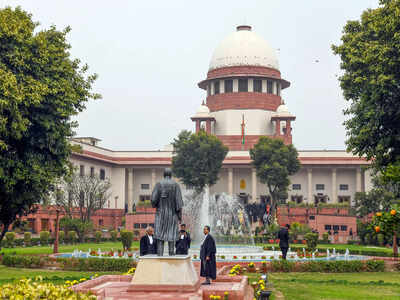
New Delhi: A six-year-old girl went missing in 2018. She was last seen with her stepfather. When he was arrested eight days later, he led police to the place where her charred remains were found. Supreme Court found this evidence weak and acquitted him of the murder charge. Finding no other evidence to link the man to the murder except that he was the last person to be seen with the child according to a neighbour and he was the one to lead the police to the victim’s bones, a bench of Justices Sanjay Kumar and K Vinod Chandran acquitted him, saying the investigation was botched and left many questions unanswered. “In the present case, the murder of a six-year-old girl went unpunished and her stepfather was incarcerated on mere conjecture,” SC said. In the case from Chhattisgarh, what tilted the scales towards the stepfather, Rohit Jangde, was the peculiarity of the interpretation by SC in earlier judgments on the admissibility of a statement by an accused that leads to discovery of fact relating to the crime – in this case, the recovery of the girl’s body. More than 65 years ago, SC had ruled that the statement of an accused leading to discovery of facts relating to the crime would be admissible evidence only when it had been made in custody. Justices Kumar and Chandran also relied on a similar interpretation used in a nearly 100-year-old ruling by Calcutta HC. Interestingly in the 1931 judgment, the then CJ of Calcutta HC had expressed anguish that the law permitted reliance on a statement made to police that led to discovery of fact only when the person was in police custody and had termed it absurd, but left it to the legislature to make suitable amends. Relying on these decades-old judgments, SC termed weak the telltale evidence incriminating Jangde. Justice Chandran said even if the evidence was accepted, it would not by itself nail the guilt on the stepfather. “The knowledge of the accused, which led to the detection of the bone remnants though not acceptable under Section 27 would all the same be acceptable evidence under Section 8, which by itself is a weak piece of evidence. The evidence under Section 8 can only offer corroboration and cannot by itself result in a conviction,” he said. Acquitting the accused, the bench said, “The long gap when there was no complaint made about the missing child and the factum of none having questioned the accused, despite the family and police having been told that she went with the accused, tilts the scales in favour of the accused… Pertinent also is that since the corpus delicti was not recovered, there is no time of death specified. We are hence unable to uphold the conviction of the accused, and he has to be necessarily given the benefit of doubt.“


