
Success Tips: Ankur Warikoo shares MrBeast’s simple rule for success: What happens when you do something 100 times?

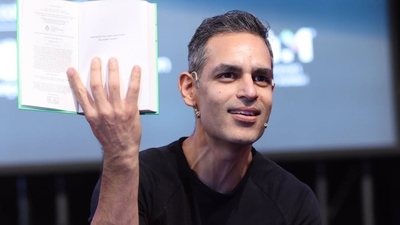
How many times do you try something before deciding that it is not for you? Three times? Ten? Maybe 20? Entrepreneur and finfluencer Ankur Warikoo recently shared a simple piece of advice attributed to YouTuber MrBeast that challenges this tendency to give up early. The advice was originally about content creators, but the idea behind it can apply to almost anything- writing, coding, fitness, learning a language, building a business or simply trying to get better at a skill.
MrBeast’s ‘Rule of 100 ’
Someone had apparently approached MrBeast asking for advice on YouTube. Instead of offering a complicated strategy involving algorithms, thumbnails or equipment, his answer was blunt: “Make 100 videos first, then we’ll talk.”Warikoo used the example to explain what he calls the “Rule of 100”- the idea that before expecting mastery, recognition or success, you should give yourself enough repetitions to actually learn.

Warikoo sums up the idea as “not a cheat code. It’s a rule of 100.”
Is it really about the numbers?
The most interesting part of the idea is that 100 is not a magical number.You do not suddenly become successful on the 100th attempt.The point is to stop judging your potential based on a handful of attempts.Want to become a better writer? Write 100 articles.Want to become better at editing? Edit 100 videos.Trying to become better at public speaking? Speak 100 times.Want to improve your cooking? Cook 100 meals.Learning a musical instrument? Practice hundreds of times.The same principle can extend to almost any skill. The objective is not simply to complete 100 tasks. It is to give yourself enough opportunities to make mistakes, understand them and improve.
Your first attempt was never supposed to be your best
One reason people abandon new pursuits quickly is that they expect competence almost immediately. The first time you do something, you are dealing with several unknowns at once. You do not yet know what works, what does not, where you are likely to make mistakes or how much time the task actually requires.That changes with repetition. Your first attempt gives you an introduction. The next few give you feedback. After several more, you begin recognising patterns. Eventually, things that once required conscious effort start becoming familiar.That is why repetition matters. You are not simply doing the same thing again and again; ideally, you are becoming a slightly different person with every attempt.
But there is one catch: repetition alone is not enough
The Rule of 100 should not be mistaken for a formula where doing something 100 times automatically guarantees success. If you repeat the same mistake 100 times without examining it, you may simply become very experienced at making that mistake. The useful version of the rule is deliberate repetition.
Why this matters in an age of instant results
The idea becomes particularly relevant in a world where success is often presented in its final form.We see the successful entrepreneur, not the failed businesses that came before. We see the polished athlete, not the years of training. We read the bestselling author’s book, not the manuscripts that were rejected. We see the expert, not the beginner they once were. Social media makes this comparison even harder. Someone else’s finished product is visible to us, while our own journey is happening in real time.The result can be impatience. We expect our first attempt to compete with somebody else’s hundredth. The Rule of 100 offers a useful antidote: give yourself permission to be a beginner for long enough.The experience changes the way you approach the next attempt. As Warikoo summed up the idea, “It’s not a cheat code. It’s a rule of 100.”


