
Should parents read their child’s chats? Experts weigh in

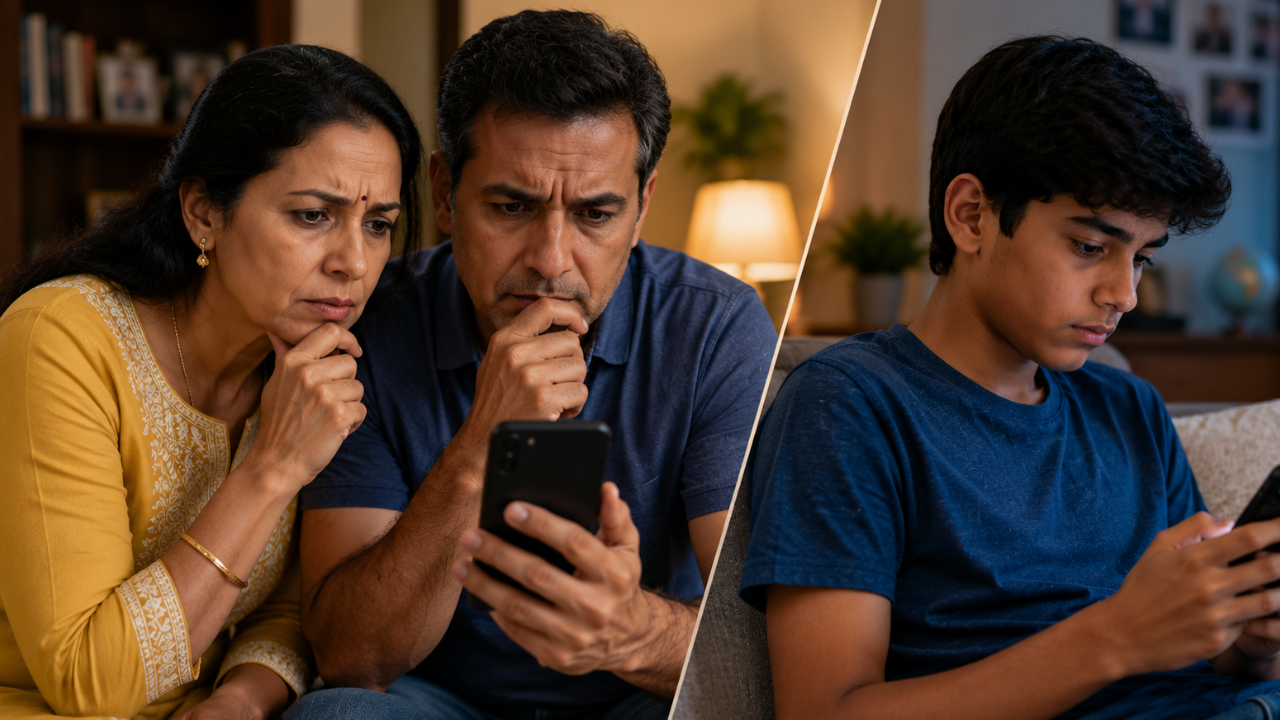
Parents do not need to read every message to stay alert. Behaviour often tells a story before text does. Sudden withdrawal, sleep changes, irritability, secrecy around devices, panic when a notification appears, a drop in school performance or a loss of interest in friends can all signal that something is wrong.
A child who refuses to hand over a phone once is not necessarily hiding danger. A child who becomes tense every time a device lights up may be signalling pressure or fear. The point is not to search for evidence in every case, but to notice patterns that justify a closer look.
Open-ended conversations help too. Parents who ask about online life the way they ask about school are usually more effective than parents who wait for a crisis. Questions like “Who do you talk to most online?” or “Has anyone made you uncomfortable in a chat?” create space for honesty without immediate judgment.
A healthier middle ground
The best answer may be neither total surveillance nor total freedom. A healthier middle ground looks like transparency, age-appropriate boundaries and an agreement that digital life is part of real life, not separate from it.
That can mean telling a child in advance that messages may be checked if there is a safety concern. It can mean setting up parental controls for younger children and easing them gradually. It can mean making it normal to talk about screenshots, group chat drama and online pressure without turning every conversation into an interrogation. Most of all, it means remembering that monitoring is a tool, not a relationship.
A parent who knows every chat but never knows how their child feels has missed the larger point. A parent who never checks anything, even when there are warning signs, may also be failing the child. The real task is not choosing between privacy and protection as if one must erase the other. It is learning when to step in, when to step back and how to keep trust alive while doing both. In the end, children do not need perfect parents. They need parents who are alert, honest and worth telling the truth to.


