
Scientists found South America’s first insect-bearing amber, a 112-million-year-old time capsule from a lost dinosaur-era forest

For more than a century, amber has helped scientists reconstruct vanished worlds by preserving tiny fragments of life that would otherwise have disappeared. Insects trapped inside these golden fossilised resins have revealed details about ancient forests across several continents, but South America remained a missing piece in that record. That changed with the discovery of amber deposits in central Ecuador containing the first known insect fossils preserved in amber from the continent. Dating back around 112 million years, the material captures a small but valuable snapshot of life in the forests of the Gondwanan supercontinent, offering clues about the plants, climate and creatures that existed during the Cretaceous period.
112-million-year-old amber reveals Gondwana’s hidden insect world
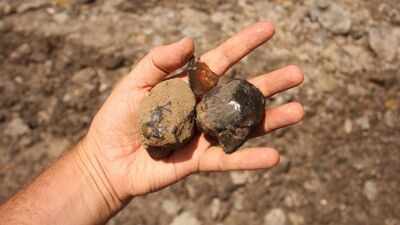
The study published in Communications Earth & Environment, titled ‘Cretaceous amber of Ecuador unveils new insights into South America’s Gondwanan forests’ revealed that the amber came from a quarry in the middle of Ecuador, where researchers sifted through strata of sandstone with significant oil deposits. Within these sediments, there were fossilized tree resins that hardened after oozing from the branches of ancient trees.While some regions have had their fair share of famous amber specimens, South America has not until now produced any insect-bearing amber from the Cretaceous Period. These new pieces of amber give us an idea of what the flora looked like back then and what kinds of small animals were present in the vegetation of that forested landscape.These pieces of amber are very unique in shape since some have elongated shapes resembling small stalactites. This is because these pieces of amber are the results of sticky resins from the trees that captured some insects and organic matter.
Cretaceous insects preserved in rare amber deposits
Among the collected items, scientists analysed 60 specimens of amber. Twenty-one samples revealed evidence of past life; among them, there were several groups of insects who used to crawl on the ground and in between trees and plants of the forest.As reported, these fossils contain flies, beetles, ants, and wasps. Among the flies found in amber is one of the Chironomidae species, which are also referred to as non-biting midges. Such insects still exist and usually dwell in freshwater habitats; therefore, their fossils provide some insights into the living conditions in the ancient forest.Furthermore, the amber samples revealed a part of the spider web with an unusual wheel-shaped construction. This evidence shows that the deposits contain not only insects but also other elements of the ecosystem.
Tracing the trees that produced the amber
Based on chemical studies, it appears the resin comes from large coniferous trees that belong to the relatives of modern Araucariaceae plants. Examples of modern species include monkey puzzle trees, which have tall stems and characteristic spiky leaves.These conifers were part of the flora during the Early Cretaceous period when Gondwana, the southern supercontinent which would split into different continents such as South America, Africa, Antarctica, Australia and India, existed.The sedimentary rocks also revealed fossils of spores and pollen which helped researchers form an idea about the overall environment. It seems that these sediments indicate a landscape of large conifers with ferns growing below them.
Clues about a humid Cretaceous environment
The insects found in the amber give us clues to the climatic conditions of the region millions of years back. The species of some of the insects have a life cycle which involves a need for moisture during the larval stage of development, indicating the presence of wet conditions in the region.The presence of insect fossils along with plant fossils and the geological information give us an insight into an ecosystem which had water playing a prominent role in the process of survival. The presence of water bodies, moisture on the soil and dense vegetation could have created a habitat which had small animal life along with the large animals which existed during the Cretaceous period.During the time when these insects got trapped in amber, the dinosaurs roamed around freely in the region and Gondwana was one huge landmass.


