
Scientists are dropping thousands of fish from airplanes into remote mountain lakes; here’s why the unusual conservation strategy has worked for decades

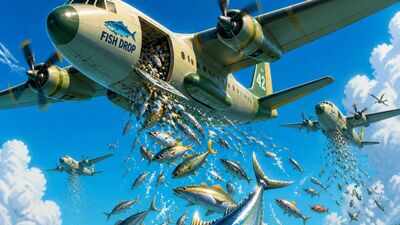
Every year, scientists drop thousands of fish out of airplanes over Utah’s mountains, and no, it’s not a stunt or a glitch in the weather. It’s a carefully planned conservation and recreation strategy that has quietly kept remote lakes fishable for decades.Every summer, Utah’s Division of Wildlife Resources (DWR) loads small trout and other species into specially designed tanks on light aircraft, flies over high‑elevation lakes, and releases the fish into the air so they fall into the water below, as per reports. From the ground, it can look like a spray of glitter or confetti coming from the plane’s tail. In reality, it’s an efficient way to stock lakes that would be almost impossible to reach with trucks or boats.Utah’s mountain lakes are popular with hikers and anglers, especially when the weather is good and trails are open. Many of these waters are far from roads and sit in rugged basins where no practical vehicle access exists. Historically, some of these lakes were naturally fishless, and others have very limited natural reproduction. When fishing pressure increases, the existing fish populations can be quickly depleted. Regular stocking is the only way to maintain enough fish to support recreational angling year after year, and planes have become the most practical way to get the job done.
AI generated image from Canva
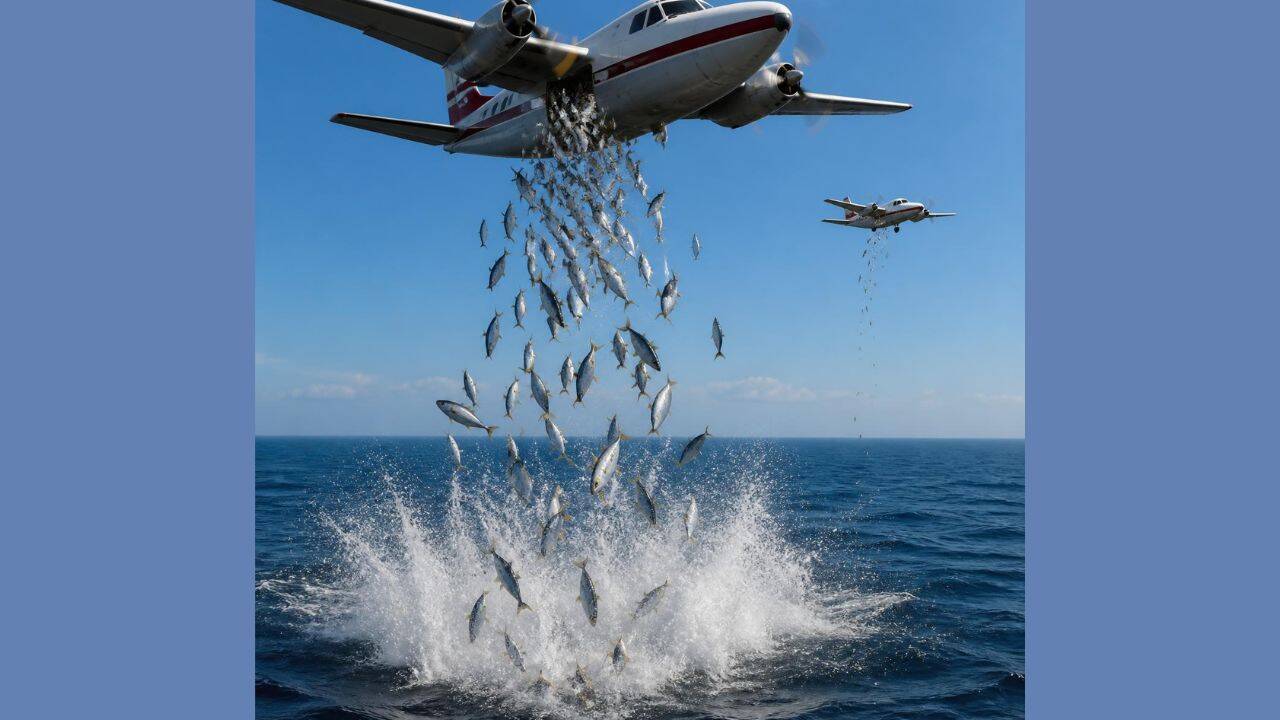
The idea of dropping fish from the sky sounds risky, but the method has been refined over more than half a century. The fish used for aerial stocking are tiny, usually one to three inches long, and are carried in hundreds of pounds of water inside the aircraft. Pilots fly low, just above the tree line, and release the fish along with the water over the target lakes. Because the fish are small and light, air resistance slows their fall, so they flutter down rather than crash. DWR says post‑stocking net surveys show survival rates above 95 percent, meaning almost all of the fish survive the drop and go on to live in their new lake.The fish themselves are carefully chosen. The species mix often includes rainbow trout, cutthroat trout, brook trout, tiger trout, splake and Arctic grayling, all popular among anglers. Many of the non‑native species are raised specifically for fishing and are frequently sterile, which means they cannot reproduce. Stocking sterile fish allows biologists to control numbers precisely and reduces long‑term impacts on any native fish that might be present downstream. In lakes that have native cutthroat trout, managers may focus on cutthroat stocking to support that native species while still providing a good fishing experience, as per reports.

AI generated image from Canva
Utah and other western states have been restocking remote lakes for decades. Before airplanes were involved, wildlife staff hauled fish into the mountains using milk cans strapped to horses, pack animals, dirt bikes or even in backpacks. It was slow, physically demanding work, and stressful for the fish, which had to endure long trips on rough trails. With aerial stocking, the entire state of Utah can be restocked in days instead of months, and a single flight can deliver tens of thousands of fish. Some lakes are stocked every year, while others are stocked on a three‑ or five‑year rotation depending on how heavily they are fished, how accessible they are and how well fish survive and grow in those particular waters.Video footage released by Utah’s DWR has helped the public see how the process works. Clips show crews loading small fish into compartments, planes lifting off and then streams of water and fish pouring from the rear of the aircraft over blue mountain lakes. From above, the fish fall like leaves and disappear into the surface. Follow‑up surveys using nets and sampling gear have confirmed that aerially stocked fish not only survive but also thrive, growing into the larger trout that anglers hope to catch.Of course, this approach raises questions about the ecology of mountain lakes. Many high‑elevation lakes were historically fishless ecosystems, home to amphibians, aquatic insects, plankton and other life that evolved without fish predators. Introducing fish can change the balance of those communities. That is why modern stocking programs, including Utah’s, increasingly use sterile fish, avoid stocking certain species in sensitive waters, and adjust stocking plans based on ongoing research. The aim is to find a balance between providing outdoor recreation opportunities and protecting native species and natural food webs wherever possible.Despite its unusual appearance, aerial fish stocking has become a routine part of fisheries management in Utah. The scientific reasoning is straightforward: small fish survive low‑altitude drops very well, planes can reach remote lakes quickly and cheaply, and careful choice of species and stocking schedules can limit ecological harm while supporting angling. In other words, what looks like “fish falling from the sky” is actually a practical solution to a logistical problem in wild, mountainous terrain.The next time you see a clip of fish raining from an airplane over a remote lake, it might feel strange, but it represents decades of trial, error and refinement in wildlife management. Knowing that, how do you personally feel about using technology like airplanes to shape remote ecosystems for recreation: does it seem like an acceptable tradeoff, or do you think more of these lakes should be left entirely alone?


