
Revolutionary Cell Rejuvenation Therapy in Humans: The Future of Aging Treatment |

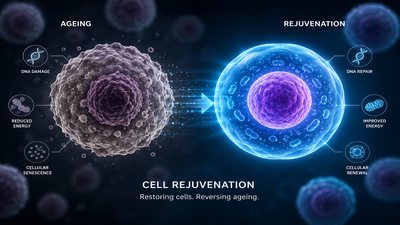
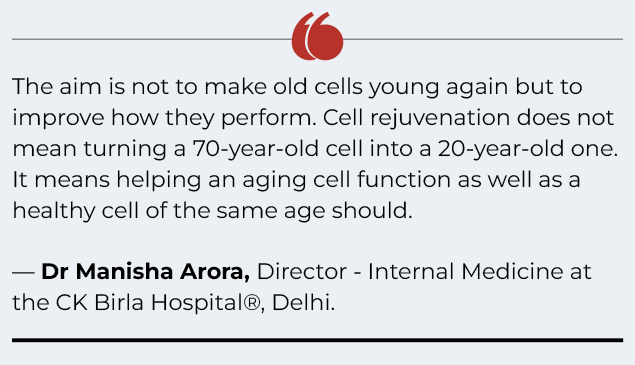
For generations, ageing has been accepted as an unavoidable part of human life. While modern medicine has helped people live longer and healthier lives, it has largely focused on treating age-related diseases rather than ageing itself.Now, a new development in the field of regenerative medicine is challenging that approach. What is being described as the world’s first “cell rejuvenation” therapy, is a treatment designed to make ageing cells function more like younger ones.The breakthrough has sparked global interest and raised a fascinating question: could ageing one day be treated like any other medical condition?To get the answers of a number of questions in the minds of people, TOI talked to a few experts.But first let’s discuss how much progress has been made in the timeline of ageing research.The anti-ageing approach is based on the groundbreaking work of Japanese scientist Shinya Yamanaka, who discovered that mature adult cells can be reprogrammed into a more youthful, stem-cell-like state using a group of proteins now known as the Yamanaka factors.Building on this discovery, scientists are exploring a more controlled technique called partial cellular reprogramming.According to a report published in Nature on April 7, 2026, researchers are launching the world’s first human clinical trial of partial cellular reprogramming, marking a significant milestone in the effort to develop therapies that could one day slow or reverse aspects of ageing.ER-100In a major milestone for longevity research, Boston-based biotech firm Life Biosciences has begun what is believed to be the world’s first human clinical trial of partial cellular reprogramming.The experimental therapy, ER-100, is being tested in patients with glaucoma and age-related optic nerve damage, with the aim of rejuvenating ageing cells and restoring some of their lost function.The study marks the first time a cellular reprogramming-based treatment, previously limited to laboratory and animal research, has entered human trials.What is ‘Cell Rejuvenation’ ?According to Dr Manisha Arora, Director – Internal Medicine at the CK Birla Hospital®, Delhi, Cell rejuvenation focuses on restoring the health and function of ageing cells rather than replacing them.“The aim is not to make old cells young again but to improve how they perform. Cell rejuvenation does not mean turning a 70-year-old cell into a 20-year-old one. It means helping an aging cell function as well as a healthy cell of the same age should,” she says.
Can it actually reverse ageing?
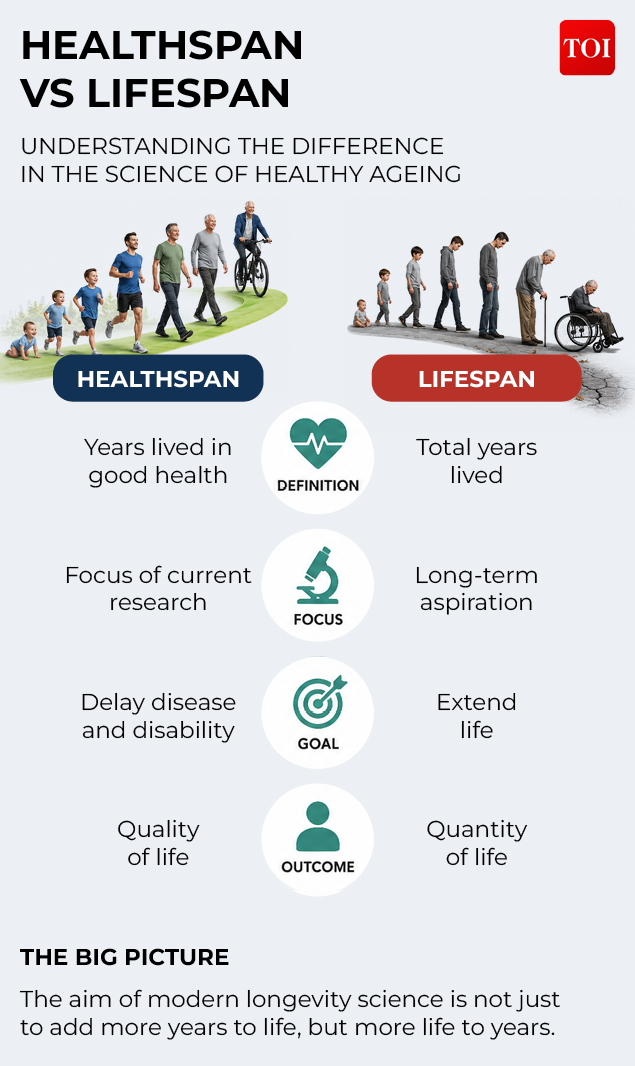
This is where experts urge caution.While some studies have shown encouraging results in laboratory settings and animal models, there is currently no evidence that any therapy can reverse ageing in humans.“Current studies show that cell rejuvenation therapies have the ability to slow down certain parts of the ageing process and repair specific types of cellular damage. However, the term ‘age reversal’ should be used cautiously, as it may not accurately reflect what is achievable,” says Dr Arora.Jagriti Yadav, Medical Director – Lab Operations, Cryoviva Life Sciences agrees, noting that the focus remains on improving healthspan, the number of years people spend in good health, rather than reversing age.“The primary focus of ongoing research is to better understand mechanisms that may contribute to healthier ageing and improved healthspan rather than achieving complete reversal of the ageing process,” she says.
Why is this being called a breakthrough?
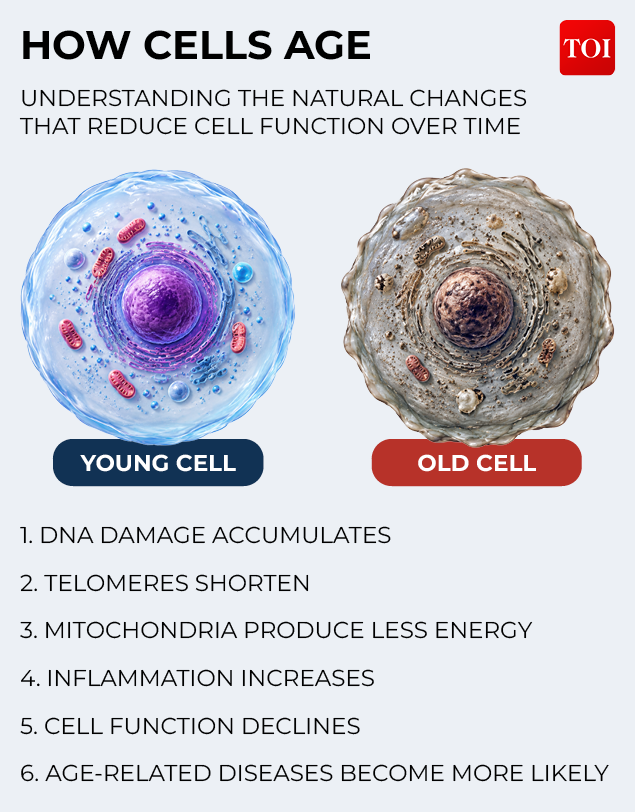
What makes cell rejuvenation different is that it targets the biological processes behind ageing rather than the diseases that appear later in life.As cells grow older, DNA repair mechanisms become less efficient, energy production declines and inflammation increases. These changes gradually reduce the body’s ability to function optimally and are linked to many age-related conditions.Dr Yadav says the field is attracting attention because it seeks to address the root causes of age-related decline.“While early findings are encouraging, further research is required to establish whether these approaches can safely translate into meaningful clinical benefits,” she says.Dr Arora points out that studies in animals have already produced intriguing results.“Researchers have found that as cells age, telomeres shorten, DNA repair becomes less efficient, mitochondrial function declines and chronic inflammation increases. Experimental studies have shown that targeting some of these mechanisms can improve tissue function in animal models, although these findings still require validation in humans,” she says.
Could it help prevent diseases like Alzheimer’s and heart disease?One reason the field has generated excitement is that many age-related diseases share common biological pathways, including chronic inflammation, cellular stress and declining cellular function.If scientists can safely address these underlying mechanisms, it could potentially influence a wide range of conditions linked to ageing.“The long game is definitely the goal. Many diseases associated with ageing, like Alzheimer’s and heart disease, share common biological pathways. If we can safely address these mechanisms, it might be possible to slow disease progression or provide protection against multiple age-related conditions,” says Dr Arora.However, experts stress that such outcomes remain theoretical for now.“There is currently no conclusive evidence that cell rejuvenation therapies can prevent, cure or reverse age-related diseases,” says Dr Yadav.What are the risks?As promising as the science sounds, significant challenges remain.Most of the evidence supporting cell rejuvenation comes from laboratory studies and animal experiments. Questions about long-term safety, effectiveness and who might benefit most from such therapies have yet to be answered.There are also concerns about unintended consequences, including abnormal cell growth and potential cancer risks if cellular pathways are altered incorrectly.“Important questions regarding long-term safety, durability of effect and patient selection remain unanswered,” says Dr Yadav.For now, experts emphasise that rigorous testing and regulatory oversight will be critical before these therapies can move into mainstream healthcare.
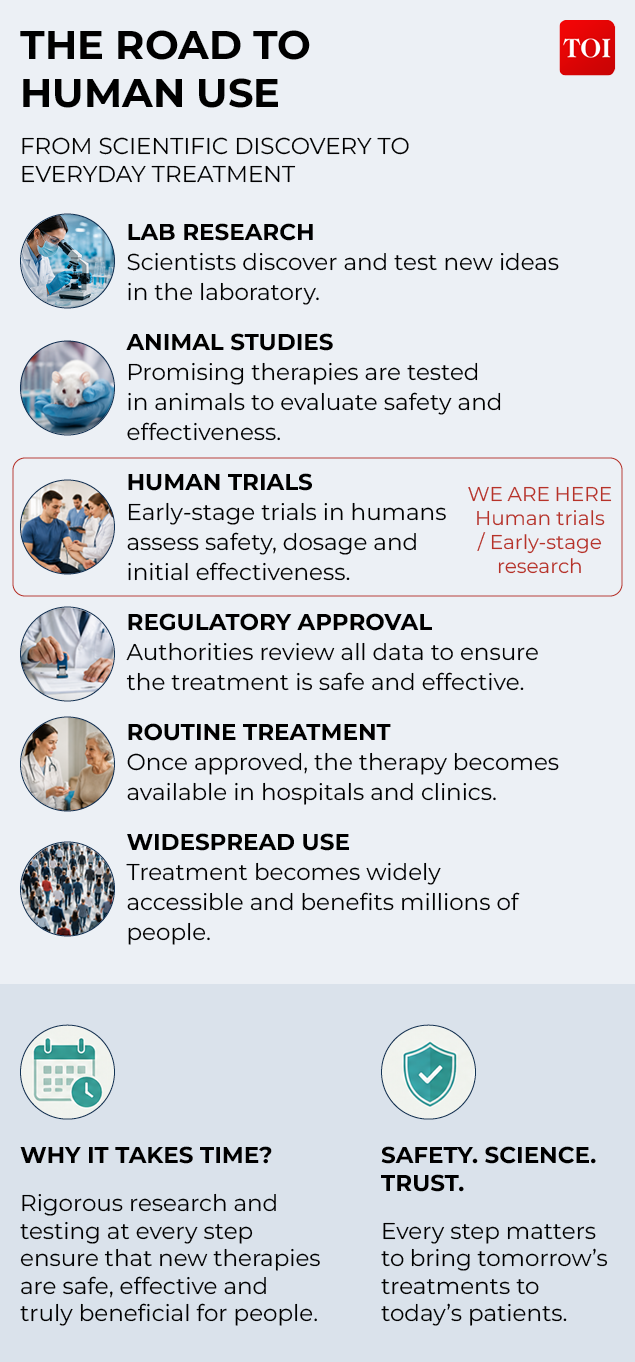
Are people already asking for these treatments?Interest in longevity science and regenerative medicine has surged in recent years, and doctors say patients are increasingly asking whether anti-ageing treatments are available.“Patients frequently seek information regarding the availability, safety and scientific validity of these approaches. We encourage individuals to consult qualified healthcare professionals and exercise caution regarding unverified claims related to age reversal or regenerative therapies,” says Dr Yadav.Dr Arora says curiosity is understandable, but expectations need to be realistic.“There are currently no approved clinical therapies for cell regeneration that have demonstrated an ability to reverse human ageing. Patients should be cautious about unsubstantiated anti-ageing claims and focus instead on proven measures such as regular exercise, a healthy diet, good sleep, preventive health checks and effective management of chronic conditions,” she says.
So, can ageing finally be treated?
Not yet.Cell rejuvenation represents one of the most intriguing frontiers in modern medicine, but it remains an emerging field rather than a proven anti-ageing solution. What it has done, however, is challenge a long-held assumption, that ageing is simply something that happens to us.Whether these therapies eventually help people stay healthier for longer, delay age-related diseases or transform the way medicine approaches ageing will depend on years of further research. For now, the science offers promise, but not a cure for growing old.


