
Representative image‘Practising Digital Hygiene Can Reverse Effects’Representative image‘Practising Digital Hygiene Can Reverse Effects’Representative image12 NEW DELHI: It begins innocently. One short video while waiting for a cab. Another before dinner. A few more before sleeping. Somewhere between swipe and scroll, 40 minutes pass.Short-form videos are everywhere – on Instagram Reels, YouTube Shorts and similar platforms. But a global review of nearly 98,000 people, published in Psychological Bulletin, suggests that heavy, compulsive use may be affecting how we focus and how we feel.The analysis combined 71 studies across countries and age groups, including teenagers and adults, with the average participant in their early twenties. It does not claim that short videos cause permanent harm. But it finds consistent links between heavier scrolling and weaker attention, poorer impulse control and higher stress and anxiety.In simple terms, the more compulsive the scrolling, the harder it may be to concentrate on slower tasks – reading, studying or finishing work without checking the phone. Researchers suggest when every swipe delivers something new, the brain begins to expect constant stimulation. When that pace slows, boredom may set in faster.Clinicians say the design of these platforms plays a role. Short bursts of novelty, colour and instant reward repeatedly activate the brain’s reward pathway, reinforcing the urge to keep watching. Most people can step away with conscious effort, but those predisposed to addictive or obsessive traits may find it harder to disengage, says Dr Paramjeet Singh, consultant psychiatrist at PSRI Hospital, who notes that excessive scrolling is increasingly showing up in clinics as fatigue, reduced focus and even strain in relationships.From a psychological standpoint, the concern is not dramatic harm but gradual shifts in how the brain responds to stimulation. Dr Jyoti Mishra, senior consultant – Psychology at Apollo Spectra Hospital, Delhi, says short-form videos are engineered around novelty and instant gratification. Compulsive watching can slowly erode attention span and impulse control. Prolonged exposure to fast, emotionally charged content keeps neural networks in a heightened state of alert, she explains, which may manifest as restlessness, poor concentration and anxiety, particularly in young adults. The good news, she adds, is that practising digital hygiene – limiting screen time, taking breaks and protecting sleep – can reverse many of these effects.The review found that addictive or hard-to-control use had stronger links with these effects than total screen time alone.Importantly, the research shows association, not proof of cause. People already struggling with attention or anxiety may be more drawn to fast-paced content. Still, when dozens of studies point in the same direction, the pattern deserves attention. The scroll is effortless. Sustained attention takes work. And that balance may be worth preserving.About the AuthorAnuja JaiswalAnuja Jaiswal is a Senior Assistant Editor at The Times of India, with an impressive 18-year career in narrative journalism. She specializes in health and heritage reporting, expertly simplifying complex health information to make it engaging and understandable for readers. Her deep dives into heritage topics are well-researched, resulting in captivating narratives that resonate with her audience. Over the years, she has worked in Chandigarh, Chhattisgarh and West UP, gaining diverse on-ground experience that shapes her storytelling.Read MoreEnd of ArticleFollow Us On Social MediaVideosRed Carpet Welcome For PM Modi In Israel, Congress Slams Visit Over Gaza ‘Genocide’ | Headlines@8Big Honour for India: PM Modi Becomes First to Receive Knesset Speaker’s Medal”Zero Tolerance For Terrorist Acts…”Jaishankar Sends Strong Message Against Terror at UNHRC’We Feel Your Pain’: PM Modi Shares ‘Pain Of Terror’ With Israel, Slams Hamas And October 7 Attack‘More Than A Friend, A Brother’: Israel PM Benjamin Netanyahu Hails PM Modi During Knesset AddressPM Modi’s Visit to Israel End IAF’s Need For Tanker Aircrafts | Watch“Pride and Emotion”: Indian Diaspora Welcomes PM Modi to IsraelRed Carpet Optics In Tel Aviv: Israel PM Benjamin Netanyahu Offers Grand Welcome To PM ModiPM Modi’s Israel Menu Revealed: From Gujarati Dishes to Local DelightsLondon-Based Indian Eatery Shuts Down After Owner Blames Pakistani Threats And Diaspora Tensions123Photostories7 modern Indian films that broke barriers and won international praiseMayank Pawar to Danish Zehen: Reality show contestants whose deaths shocked fansPCOS-related inflammation: 7 yoga poses that may support hormonal balance and metabolic healthKatie Leung,Regé-Jean Page to Freddie Stroma: Every ‘Harry Potter’ actor who starred in ‘Bridgerton’How to make Dhaba-style Panchmel Dal for dinner at home5 iconic real estate streets of Delhi; where all the elite livesFrom ‘Paa’ to ‘Kalki 2898 AD’: 12 performances that prove Amitabh Bachchan is Bollywood’s ultimate chameleon10 interesting ways to pack basi roti for school or office tiffin5 ultra-luxury SUVs designed for effortless long-distance touring5 best wildlife experiences that prove Rajasthan is more than forts and palaces123Hot PicksMumbai BMC BudgetTrump’s State of the UnionGold rate todayBihar wedding shootIncome Tax CalculatorPublic holidays February 2026Bank Holidays februaryTop TrendingKayla NicoleTyler LucasBrittany MahomesJosh Allen and Hailee Steinfeld Net WorthWinter OlympicsMegyn KellyPatrik LaineNFL Combine 2026Mel Owens DivorceNFL Trade News

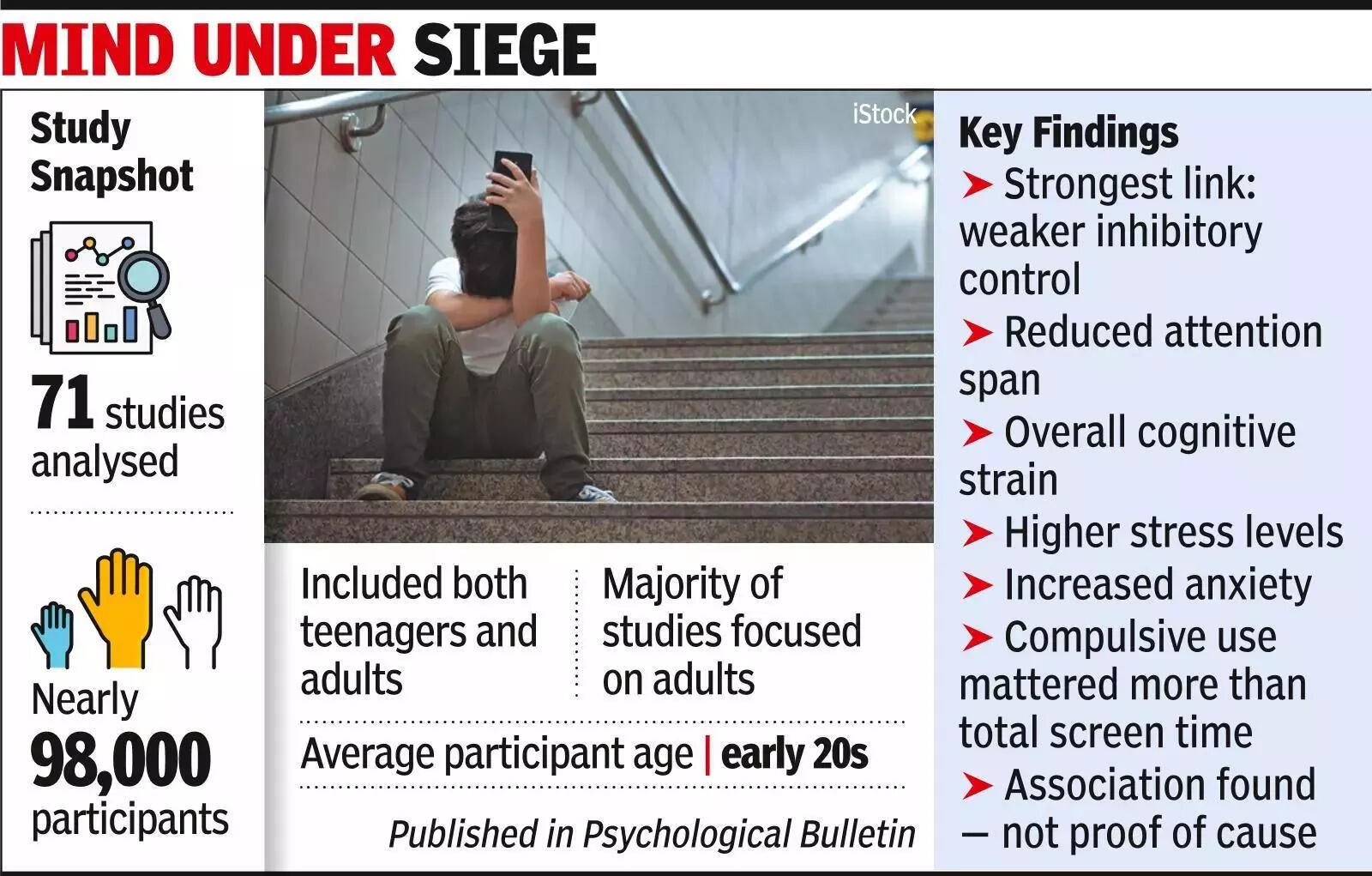
In simple terms, the more compulsive the scrolling, the harder it may be to concentrate on slower tasks – reading, studying or finishing work without checking the phone. Researchers suggest when every swipe delivers something new, the brain begins to expect constant stimulation. When that pace slows, boredom may set in faster.Clinicians say the design of these platforms plays a role. Short bursts of novelty, colour and instant reward repeatedly activate the brain’s reward pathway, reinforcing the urge to keep watching. Most people can step away with conscious effort, but those predisposed to addictive or obsessive traits may find it harder to disengage, says Dr Paramjeet Singh, consultant psychiatrist at PSRI Hospital, who notes that excessive scrolling is increasingly showing up in clinics as fatigue, reduced focus and even strain in relationships.From a psychological standpoint, the concern is not dramatic harm but gradual shifts in how the brain responds to stimulation. Dr Jyoti Mishra, senior consultant – Psychology at Apollo Spectra Hospital, Delhi, says short-form videos are engineered around novelty and instant gratification. Compulsive watching can slowly erode attention span and impulse control. Prolonged exposure to fast, emotionally charged content keeps neural networks in a heightened state of alert, she explains, which may manifest as restlessness, poor concentration and anxiety, particularly in young adults. The good news, she adds, is that practising digital hygiene – limiting screen time, taking breaks and protecting sleep – can reverse many of these effects.The review found that addictive or hard-to-control use had stronger links with these effects than total screen time alone.Importantly, the research shows association, not proof of cause. People already struggling with attention or anxiety may be more drawn to fast-paced content. Still, when dozens of studies point in the same direction, the pattern deserves attention. The scroll is effortless. Sustained attention takes work. And that balance may be worth preserving.


