
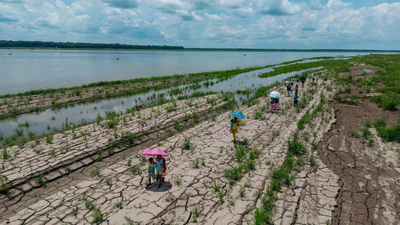
Representative image (AP) NEW DELHI: There doesn’t appear to be any respite from El Nino’s impact over the monsoon, with the latest update of World Meteorological Organisation (WMO) Friday indicating a “rapid development” of this climatic phenomenon during July-Sept, increasing the likelihood of heatwaves, droughts and other extreme weather events in many parts of the globe, including the Indian subcontinent.India is already facing El Nino’s influence with June recording a huge rainfall deficit of 40% for the month, affecting the ongoing sowing operations of almost all kharif (summer-sown) crops, thereby reducing the overall acreage in the country by around 23% compared to the corresponding period last year.El Nino – a naturally occurring climate pattern characterised by above-average sea-surface temperatures in the central and eastern equatorial Pacific Ocean – is invariably associated with a weak monsoon and a harsher summer in India. These events typically occur every two to seven years and usually last between nine and 12 months.”El Nino conditions are already under way and are forecast to strengthen rapidly into a strong event… This will intensify the chances of drought and heavy rainfall and the risk of heatwaves on land and sea in many regions of the world,” said WMO secretary general Celeste Saulo.Though the rainfall deficit in India will gradually be reduced with the spread of monsoon over the entire country and due to other meteorological factors during July-Sept, the status of the kharif acreage will depend on both the quantitative as well as spatial distribution of rains in the ‘monsoon core zone’ – the rain-fed area where farming is largely dependent on seasonal rains.The agriculture ministry’s acreage data shows the total area sown at 182 lakh hectares as on June 25 – 23% less compared to 236 lakh hectares a year ago. All major crops – paddy, pulses, oilseeds, coarse cereals (millets and maize) and cotton – have seen lower acreage so far this year compared to the corresponding period last year. Acreage of oilseeds has seen the highest decline of 53%.Get the latest India news and live updates. Download the TOI App.About the AuthorVishwa MohanVishwa Mohan is Senior Editor at The Times of India. He writes on environment, climate change, agriculture, water resources and clean energy, tracking policy issues and climate diplomacy. He has been covering Parliament since 2003 to see how politics shaped up domestic policy and India’s position at global platform. Before switching over to explore sustainable development issues, Vishwa had covered internal security and investigative agencies for more than a decade.Read MoreEnd of ArticleFollow Us On Social MediaVideosCentre Directs Apple, Google To Remove 7 Apps From Their Stores Over E-Rickshaw Shutdown ScareCentre To Summon Meta Over Instagram Ads Promoting Child Sexual Abuse: Report’Police Are Not Servants Of CM Or PM’: Bombay High Court Quashes SDPI Leader’s ExternmentFour Former AIADMK Ministers Switch To TVK; Fresh Political Churn Leaves Six Assembly Seats VacantKarur Stampede Flashpoint: TVK-DMK Clash; Former CM Allegedly Blamed For Loss Of LivesTwin-Flower Symbol Under Threat As EC Examines Mamata And Ritabrata Faction ClaimsRam Mandir Donation Row Deepens As Vinay Katiyar Claims Trust Officials Could Face Jail’Unfortunate, We Are All Hurt’: RSS Issues First Statement On Ayodhya Ram Temple ‘Donation Theft’SC Raises Questions But Grants Relief To Sonam In Raja Raghuvanshi Murder Case Appeal’Will Surrender Before Court’: Jailed Gangster Anmol Bishnoi Wants To Join Salman Khan Firing Trial123PhotostoriesFrom his bond with Dilip Joshi to watching IPL match with SRK in his vanity: When Taarak Mehta Ka Ooltah Chashmah’s Goli aka Kush Shah spoke about his journey8 traditional South Indian rice dishes for a light, healthy summer dinner (with calories)BLACKPINK’s Lisa and Tamannaah Bhatia serve Yin and Yang-inspired ensembles at the Shiseido launch eventMany men ignore these symptoms until it’s too late: Doctor explain the warning signs of prostate problemsGood or bad? Here’s what psychology really says about live-in relationshipsAlia Bhatt and Sharvari Wagh just declared utility dressing the ultimate ‘Alpha’ promotion uniformWhat happens before prayers are answered? 5 signs mentioned in spiritual traditions7 traditional Indian foods that can naturally improve your gut health, according to nutritionist10 types of travel partners that can turn a dream trip into hard workHusband filed for divorce? Here are 7 legal rights he cannot take away from wife123Hot PicksTrump tariffsLuka Modric Net WorthEPF Scheme 2026Amarnath Yatra 2026Income Tax Return FilingMumbai rainUS unemploymentMicrosoft layoffsIndia Japal TradeTop TrendingBrittany MahomesTravis KelceKansas CityFIFA World Cup 2026GTA 6 Estimated SizeNew England PatriotsCandace OwensFIFA War DecisionCA Toppers ListAnitha Radhakrishnan

NEW DELHI: There doesn’t appear to be any respite from El Nino’s impact over the monsoon, with the latest update of World Meteorological Organisation (WMO) Friday indicating a “rapid development” of this climatic phenomenon during July-Sept, increasing the likelihood of heatwaves, droughts and other extreme weather events in many parts of the globe, including the Indian subcontinent.India is already facing El Nino’s influence with June recording a huge rainfall deficit of 40% for the month, affecting the ongoing sowing operations of almost all kharif (summer-sown) crops, thereby reducing the overall acreage in the country by around 23% compared to the corresponding period last year.El Nino – a naturally occurring climate pattern characterised by above-average sea-surface temperatures in the central and eastern equatorial Pacific Ocean – is invariably associated with a weak monsoon and a harsher summer in India. These events typically occur every two to seven years and usually last between nine and 12 months.“El Nino conditions are already under way and are forecast to strengthen rapidly into a strong event… This will intensify the chances of drought and heavy rainfall and the risk of heatwaves on land and sea in many regions of the world,” said WMO secretary general Celeste Saulo.Though the rainfall deficit in India will gradually be reduced with the spread of monsoon over the entire country and due to other meteorological factors during July-Sept, the status of the kharif acreage will depend on both the quantitative as well as spatial distribution of rains in the ‘monsoon core zone’ – the rain-fed area where farming is largely dependent on seasonal rains.The agriculture ministry’s acreage data shows the total area sown at 182 lakh hectares as on June 25 – 23% less compared to 236 lakh hectares a year ago. All major crops – paddy, pulses, oilseeds, coarse cereals (millets and maize) and cotton – have seen lower acreage so far this year compared to the corresponding period last year. Acreage of oilseeds has seen the highest decline of 53%.


