
Quote of the day by Winston Churchill: “We are masters of the unsaid words, but slaves of…” – a timeless reminder from one of history’s greatest orators to think before you speak | World News

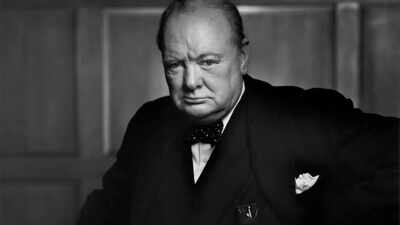
There is a strange power in the words we never say. As long as a thought stays inside our head, it belongs entirely to us. We can shape it, hold it back, or let it go. But the instant we say it out loud, everything changes. The words are out in the world, and we can never truly call them back. Winston Churchill, a man who understood the power of language as well as anyone in history, captured this beautifully. Before we speak, we are in charge. After we speak, we are at the mercy of what we said.
Quote of the day by Winston Churchill
“We are masters of the unsaid words, but slaves of those we let slip out.”
Winston Churchill: A man who knew the power of words
Winston Churchill was the British prime minister who led his country through the Second World War, and he is remembered as one of the most powerful speakers of all time. His wartime speeches rallied an entire nation when things looked hopeless, proving that the right words at the right moment can change the course of history.He was also a gifted writer who won the Nobel Prize in Literature, largely for his speeches and historical works. So this quote carries extra weight coming from him. Churchill knew firsthand that words could inspire millions, but he also knew they could wound, embarrass and betray. Few people were better placed to understand both the enormous power and the real danger of simply opening one’s mouth.
The freedom in what we don’t say
The quote rests on a clever contrast between two states. Before we speak, we are masters. The unsaid words are completely under our control. We can weigh them, improve them, decide they are unwise and quietly drop them. Nobody can hold us to a thought we never expressed.The moment we speak, though, the power flips. Now we are slaves to those words, because we can no longer control where they go or what they do. They can be repeated, remembered, misunderstood, or thrown back at us years later. We have to live with their effects, whatever they turn out to be. That is the heart of Churchill’s point. Real control over our words exists only in the brief moment before we say them. After that, we are simply along for the ride.
Why it matters more than ever
If anything, this idea is even more relevant today than in Churchill’s time. We now speak not only out loud, but in texts, emails, comments and posts, often in a hurry and often when emotions are running high.The trouble is that these words are even harder to take back than spoken ones. A message fired off in anger can be screenshotted, forwarded and saved forever. A careless comment online can follow someone for years. The spoken word at least fades from memory over time, but the typed word can become permanent in an instant. Churchill’s warning about becoming a slave to the words we let slip applies twice over in a world where almost everything we say can be recorded and shared.
How to master your own words
The good news is that the power the quote describes is always available to us, right up until the moment we speak. A few simple habits help us keep it.
- Pause before you speak, especially when upset. Those few seconds of silence are when you are still the master. Use them to decide whether the words are worth letting go.
- Treat every message as if it could be read aloud one day. Texts, emails and posts can be saved and shared long after your mood has changed. Write them with that in mind.
- Remember that silence is also a reply. You do not have to respond to everything. Choosing not to say something is often the wisest and strongest move available to you.
- When in doubt, hold it back. We rarely regret the sharp remark we did not make, but we often regret the one we did. If you are unsure, keep it among your unsaid words a little longer.
Other famous quotes by Winston Churchill
Churchill left behind some of the most stirring lines ever spoken in the English language. Here are a few of his genuine ones.
- “Never give in, never give in, never, never, never, never, in nothing great or small, large or petty.”
- “I have nothing to offer but blood, toil, tears and sweat.”
- “We shall fight on the beaches, we shall fight on the landing grounds, we shall fight in the fields and in the streets; we shall never surrender.”
- “Democracy is the worst form of government, except for all the others that have been tried.”
The words we cannot take back
There is a lovely irony in the fact that a man so famous for his words was also so aware of their dangers. Churchill could move a nation with a single sentence, and precisely because he respected that power, he understood how easily words could be misused or regretted.His lesson is not that we should stay silent. A life of never speaking up would be a poor one, and Churchill himself certainly never lived it. The point is subtler. Speaking is a one-way door. Once you walk through it, you cannot come back. So choose your words while they are still yours to choose, in that quiet moment before they slip out and become something you can no longer control.


