
Quote of the day by Robert Boyle: “A blind man will suffer himself to be led, though by a dog, or…” – a lesson in the humility to accept help

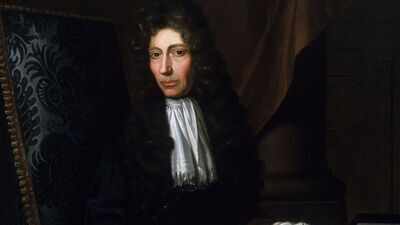
Picture the scene the quote paints. A man who cannot see is offered a guide. It is not a wise elder or a great expert, just a dog, or a small child. And yet he takes the help gladly, because he knows he needs it. He does not let pride get in the way. Robert Boyle, one of the founders of modern science, used this simple image to make a quiet but powerful point. The people willing to be guided are the ones honest enough to admit they cannot see everything for themselves. Humility, not pride, is what opens the door to help.
Quote of the day by Robert Boyle
“A blind man will suffer himself to be led, though by a dog, or a child.”
Robert Boyle: The father of modern chemistry
Robert Boyle, who lived in the 1600s, is often called the father of modern chemistry. He pushed science away from guesswork and superstition and toward careful experiment and evidence, and he gave us the famous law, still taught today, describing how the pressure and volume of a gas are linked.He was also a deeply thoughtful and religious man who wrote widely on faith, knowledge and the natural world. One thing ran through his life: a real humility about how much any person can truly know. He once argued that learned scholars should not look down on the practical wisdom of ordinary tradesmen, because there was genuine knowledge to be gained from humble, working people. This quote fits that outlook perfectly. Boyle believed that being willing to learn from anyone, however lowly, was a strength.
What is the meaning of the quote
At its heart, the quote is about the link between honesty and help. The blind man in the picture is not a figure to pity. In a way, he is the wise one. He knows his own limits, accepts that he needs a guide, and so he actually gets where he is going.The detail about the dog or the child matters. The guide is humble, even lowly, yet the man does not refuse the help on those grounds. He cares about reaching his destination, not about how impressive his helper is. Boyle is showing us that once you truly accept you cannot see something on your own, you stop being fussy about where the help comes from. You take good guidance wherever you find it.
The hardest blindness to admit
There is a sharper edge to this idea, one that writers of Boyle’s era liked to draw out. The blind man who knows he is blind is in a fine position, because he accepts a guide and is led safely along. The real danger is the opposite kind of person, the one who cannot see clearly but is utterly convinced that they can.That second person scorns all guidance, because they do not believe they need any. And so they stumble on, lost, while refusing the very help that could save them. This is the blindness that does the most harm, the failure to know that we are missing something. It is easy to get help for a problem you admit you have. It is almost impossible to get help for one you refuse to see. Boyle’s gentle image carries that warning inside it. The worst blind spot is the one you are sure you do not have.
How to stay open to being led
This old idea is surprisingly practical. It is really about staying humble enough to keep learning.
- Start by admitting what you cannot see. The first step to getting help is honestly accepting that you need it. Pretending to understand something you do not only keeps you stuck for longer.
- Be willing to learn from anyone. Good guidance can come from a junior colleague, a child, or someone with far less status than you. Judge the advice on its merits, not by who is giving it.
- Treat the words “I don’t know” as a strength. The people who admit the limits of their knowledge are the ones who keep growing. False certainty is what slams the door on learning.
- Watch for the blindness you cannot feel. The most dangerous gaps in our understanding are the ones we are not even aware of. Stay curious, and welcome being corrected rather than resenting it.
Other famous quotes by Robert Boyle
Boyle wrote thoughtfully about nature, knowledge and human life. Here are a few more of his lines.
- “The book of nature is a fine and large piece of tapestry rolled up, which we are not able to see all at once, but must be content to discover its beauty and symmetry little by little.”
- “There is no less invention in aptly applying a thought found in a book, than in being the first author of the thought.”
- “As the sun is best seen at his rising and setting, so men’s native dispositions are clearest seen when they are children, and when they are dying.”
- “In an arch, each single stone, which if severed from the rest would be perhaps defenceless, is sufficiently secured by the solidity and entireness of the whole fabric of which it is a part.”
The humility to be guided
It is striking that one of the sharpest scientific minds of his age chose this humble image to capture a deep truth. Boyle spent his life uncovering the secrets of nature, and he understood better than most that real knowledge begins with admitting how little we see on our own.The blind man in his quote is quietly wise. He accepts that he needs help, takes the guide in front of him, and moves forward. The true fools are the ones too proud to be led at all. Admitting our own blindness is not a weakness to hide. It is, more often than not, the very beginning of sight.


