
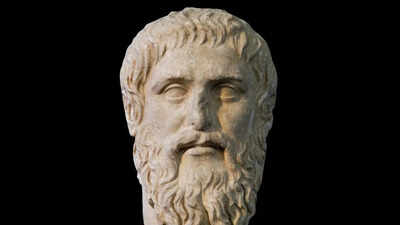
Quote of the day by Plato: “A fool is one who is governed by his passions and does not act with reason.” | World News

Several years ago, a senior football manager was asked about the worst decision he had made during his career. The journalist expected a tactical explanation or perhaps a discussion about player transfers. Instead, the manager described a moment of anger. After a disappointing defeat, he lashed out publicly at a player. The comments made headlines. The relationship never fully recovered.Looking back, he admitted that the mistake had nothing to do with football. It was about emotion. For a few minutes, frustration spoke louder than judgment.Stories like this appear in every walk of life. A business deal collapses because of wounded pride. A friendship ends after words spoken in anger. An investor rushes into a risky decision because excitement overpowers caution. Human beings have always been vulnerable to such moments, which is perhaps why Plato’s observation still feels familiar more than two thousand years after it was first expressed.The ancient philosopher was not discussing intelligence or education. He was talking about something far more universal. People may possess knowledge, experience and talent, yet still make poor decisions when emotions take complete control. In Plato’s view, wisdom depended on the ability to prevent that from happening.
Quote of the day by Plato
“A fool is one who is governed by his passions and does not act with reason.”
The deeper meaning of Plato quote
The quote revolves around a distinction that remains relevant today: the difference between feeling something and being ruled by it.Plato understood that emotions are a normal part of life. No one moves through the world without experiencing anger, fear, ambition, excitement or desire. These feelings influence relationships, motivate achievement and help people respond to challenges. The problem begins when emotions stop being advisers and start becoming rulers.Consider the difference between feeling angry and acting entirely out of anger. The first is unavoidable. The second is a choice.A person may be furious after receiving criticism. If that anger immediately dictates their response, they may damage a valuable professional relationship. Another person may feel the same emotion yet take time to reflect before speaking. The feeling remains, but the outcome changes.That distinction sits at the centre of Plato’s argument. Emotions are part of being human. Allowing them to dominate every decision is something else entirely.
Why Plato’s idea still matters
Many ancient quotations survive because they sound impressive. Plato’s observation has endured because people repeatedly see evidence of it in real life.Financial history provides countless examples. During periods of market excitement, investors sometimes become convinced that prices will continue rising indefinitely. Rational caution disappears. When reality eventually intervenes, losses follow.Politics offers similar lessons. Leaders who become consumed by ambition or personal pride occasionally ignore warnings that might have prevented serious mistakes. The consequences can affect entire nations.Yet the quote is just as relevant in ordinary circumstances. Most people can remember a situation where an emotional reaction created a problem that calm thinking would likely have avoided.That experience is so common because human beings are not purely rational creatures. They never have been.
The challenge of thinking clearly
One reason Plato’s insight remains powerful is that reason rarely arrives as quickly as emotion.Emotional reactions are immediate. Someone says something offensive and irritation appears almost instantly. An opportunity presents itself and excitement follows. Bad news arrives and anxiety takes hold.Reason operates differently. It asks questions. It weighs alternatives. It examines consequences.This process usually requires time.The difficulty is that modern life often rewards speed rather than reflection. Social media encourages instant responses. News cycles move rapidly. Opinions are formed and shared within minutes.Under these conditions, emotional reactions can easily take precedence over thoughtful analysis.Plato would probably recognise the pattern immediately, even if he would be bewildered by the technology involved.
How to apply this quote by Plato in daily life
The practical value of the quote lies in its simplicity. It encourages people to create a small gap between emotion and action.That gap does not need to be dramatic. Sometimes it means postponing an important reply until the next morning. Sometimes it means taking a walk before making a significant decision. Sometimes it means asking whether the current emotion is likely to feel as powerful twenty-four hours later.Many regrettable decisions share a common feature: they were made in moments that felt urgent but were not.Creating space for reflection can change outcomes considerably.Experienced negotiators understand this principle. Successful leaders often understand it too. They recognise emotions without automatically obeying them.
Why passion and reason are not enemies
A common misunderstanding is that Plato wanted people to suppress their emotions completely. Nothing in his philosophy suggests that.Passion plays an important role in human achievement. Artists, athletes, entrepreneurs and scientists often rely on intense commitment to pursue difficult goals. Without passion, many accomplishments would never occur.The issue is balance.An entrepreneur driven entirely by enthusiasm may ignore obvious risks. One guided by both enthusiasm and careful judgement has a better chance of success. Passion supplies energy. Reason helps direct it.The relationship between the two is not a competition. They work best together.
A lesson that grows more relevant with age
Interestingly, many people appreciate Plato’s observation more as they grow older.Youth often encourages confidence in immediate reactions. Experience introduces complexity. People begin to recognise how frequently situations contain information that was not visible at first glance.They learn that first impressions can be misleading. They discover that strong emotions sometimes distort reality rather than clarify it.This does not make them less passionate. If anything, it often makes them more thoughtful about when and how emotions should influence decisions.That is one reason the quote continues to resonate across generations.
Why Plato’s warning about passion and reason still matters today
Plato’s words have survived for centuries because they address a recurring feature of human behaviour rather than a temporary trend. Technology changes. Societies evolve. Political systems rise and fall. Yet people continue to wrestle with the same internal tensions that existed in ancient Greece.Anger still demands immediate action. Pride still whispers that criticism should be ignored. Fear still encourages retreat when courage may be required.The philosopher’s warning was never that emotions are dangerous in themselves. His concern was what happens when they become the sole authority.Reason does not eliminate emotion, nor should it. Its role is to provide perspective when feelings threaten to narrow it. The people who navigate life most effectively are rarely those who feel the least. More often, they are the ones who recognise their emotions, acknowledge them and then decide that those emotions will not be making the final decision alone.


